Sheep vs Goats - Animals 04
Sheep are the domesticated form of the mouflon (Ovis orientalis), which was domesticated around 11,000-9,000 BC and represents one of the earliest instances of domestication after dogs. As with all domestications, it is important to keep in mind that this was most likely not a single event, rather several attempts taking place in different locations and time periods.
Sheep husbandry quickly spread across Europe from the Near East. Up until the Iron Age, sheep would have largely been small, short tailed and varied in colour.
Goats were most likely domesticated in South West Asia, possible South East Europe. They are hardy and versatile animals which require relatively little care. Primitive goats would have had coarse hair and large horns. One such example is the present day British Primitive Goat, a rare breed now limited to few feral herds and captive individuals.
Sheep were a staple domesticate and, as such, used for a variety of products. In antiquity, wool was generally one of the most important products deriving from sheep farming. Goats would have also been kept for their hair and skins. Milk and meat would have also been important to different extents, and we can gage such extent based on what we recover archaeologically. Based on the kill off pattern of the specimens recovered within our assemblage, we can in fact argue what products sheep and goats would have been likely kept for. For instance, a high percentage of culled juvenile males suggest a milk-based economy
Sheep and goat are both Caprinae, and as such they will have uncannily similar morphological characteristics. The two can actually hybridise but this will inevitably result in infertile offspring, known as sheep/goat hybrids or geep. Telling the two species apart in the archaeological record is a task that requires outstanding observational skills and plenty of practice, and has been the focus of intensive research in recent years. Separating the two species is important as they will provide different information about the economy and environment they were part of.
A by no means exhaustive list of how to distinguish between sheep and goat bones is provided below:
1) Horns: Sheep horns tend to be parallel while goat horns are more divergent.
2) Teeth: In sheep, the third cusp of the third molar presents a small lip, while the third premolars appears square in sheep and triangular in goat.
3) Other diagnostic postcranial elements include the astragalus, distal humerus, calcaneum and metapodials.
Guest Interview: Albína Hulda Pálsdóttir
Find out more about our guest and her projects
Reference collection: https://www.icelandiczooarch.is/
Project website: https://www.mn.uio.no/cees/english/research/projects/690456/index.html
Follow Albina on twitter: https://twitter.com/AlbinaIcelander
Further Reading
Seder, M. , Latham, H. (2010) ‘Assessing the reliability of criteria used to identify postcranial bones in sheep, Ovis, and goats, Capra’
Journal of Archaeological Science (2010) 1-19
Crabtree, Pam J. 1995 The symbolic role of animals in Anglo-Saxon England: Evidence from burials and cremations. In The Symbolic Role of Animals in Archaeology. K. Ryan and P. J. Crabtree, eds. Pp. 20-6. MASCA Research Papers in Science and Archaeology. Philadelphia: University of Pennsylvania, University Museum
Russel, N. (2012) Social Zooarchaeology: Humans and Animals in Prehistory
Cambridge: Cambridge University Press
King, A. (1978) A Comparative Survey of Bone Assemblages from Roman Sites in Britain. Institute of Archaeology - London 15
Salvagno, L. And Albarella, U. (2017) ‘A morphometric system to distinguish sheep and goat postcranial bones’. PLoS ONE 12(6): e0178543.
https://journals.plos.org/plosone/article?id=10.1371/journal.pone.0178543
Fagan, B. (2015) The Intimate Bond: How animals shaped human history
London: Bloomsbury Press
Contact
Alex Fitzpatrick
Twitter: @archaeologyfitz
Simona Falanga
Twitter: @CrazyBoneLady
Music
"Coconut - (dyalla remix)"
Studying Human Evolution without the Humans - TAS 51
Can you study human evolution without looking at humans or human ancestors specifically? Our guest on this show is doing just that. By studying old world monkeys in the fossil record, ASU graduate student Irene Smail is learning about how humans and monkeys ate and lived on the African landscape.
Links
Contact
Chris Webster
Disappearing Data - ArchaeoTech 91

What happens to archaeological data when the project is over? Are we doing all we can? Where does it go and how can we help? This is a response to a recent article.
Links
App of the Day
Webby and Paul: Shortcuts
Drone Giveaway!
Contact
Chris Webster
Twitter: @archeowebby
Paul Zimmerman
Twitter: @lugal
Email: paul@lugal.com
CRM Archaeology, The Lovecraft Edition - CRMArch 148

H.P. Lovecraft wrote many stories. I bet he never thought about archaeology while he was writing them. Well, we did. Here's another random encounters episode where we roll the dice and pair archaeology with horror. It'll be a wild ride where we talk about field stories, racism, and more.
Follow Our Panelists On Twitter
Bill @succinctbill; Doug @openaccessarch; Stephen @processarch; Bill A. @archaeothoughts; Chris W @Archeowebby, @DIGTECHLLC, and @ArchPodNet
Blogs:
Bill White: Succinct Research
Doug Rocks-MacQueen: Doug’s Archaeology
Stephen Wagner: Process - Opinions on Doing Archaeology
Chris Webster: Random Acts of Science
The Earliest North Americans with Dr. David Kilby - TAS 50
The people known to archaeologists as "Clovis" were widely thought to be the first people to migrate to North America. Where did they come from and how did they get here? Also, when did they get here? These questions remain unanswered in North American Prehistory but we're getting a lot closer. Dr. David Kilby joins us to talk theories and some of the latest evidence.
Lincoln Harschlip - Profiles 76
Profiles in CRM features short interviews with CRM professionals from all experience levels and educational levels. I ask a standard list of questions and see how each person answers them based on their experience.
The Questions
What is your name and who do you work for? (this question is omitted for those that wish to be anonymous)
What's the highest degree you've earned?
How long have you been working in CRM?
Where have you worked?
What is the position you usually have in CRM and what is the highest position you've attained?
What is the best thing that's happened to you that's related to being a CRM Archaeologist?
What is the biggest thing you would change that would make being a CRM professional better?
What is your career goal in CRM?
If you could give an undergrad thinking about CRM one piece of advice, what would it be?
Greater Chaco Landscape - Heritage Voices 22

On today’s podcast we are hugely honored to have three special guests who spoke with Jessica about the Greater Chaco Landscape during their advocacy trip to Washington D.C. The first segment features All Pueblo Council of Governors (APCG) Chairman Edward Paul Torres and former Governor of the Pueblo of Tesuque and co-chair of the APCG’s Natural Resources Committee, Mark Mitchell. In the second segment we have Keegan King, an advocate for the Greater Chaco Landscape from the Pueblo of Acoma. They speak about what Chaco means to them as individuals and to their Pueblos, how they would like to see the area managed, their local and national advocacy efforts, collaborating with the Navajo Nation on these efforts, and appropriate behavior at places like Chaco Canyon. Finally we talk about, what they would like to see in tribal consultation in general and specifically how you can support their efforts to protect the Greater Chaco Landscape.
Links
APCG: https://www.apcg.org/
Protect Greater Chaco Facebook: https://www.facebook.com/ProtectChaco/
Senate bill 2907: https://www.congress.gov/115/bills/s2907/BILLS-115s2907is.pdf
Chaco Canyon National Historic Park Website: https://www.nps.gov/chcu/index.htm
Archaeology Southwest and the Greater Chaco Landscape: https://www.archaeologysouthwest.org/projects/oil-development-and-the-chaco-cultural-landscape/
Articles about Governors' DC Trip: https://www.hcn.org/articles/opinion-tribal-affairs-we-traveled-2-000-miles-to-save-chaco-canyon and https://nativenewsonline.net/currents/tribal-leaders-travel-to-d-c-protect-chaco-canyon/
Contact
So You Want To Be A Drone Pilot? - ArchaeoTech 90
Drones are fast becoming a standard archaeological tool. Their cool factor is undeniable, but maybe you're on the fence about their actual utility. Or, maybe you're sold on their usefulness and want to jump in but don't know where to start. In today's episode of the ArchaeoTech Podcast, we'll help get you up to speed.
Links
App of the Day
Webby: B4UFly
Contact
Chris Webster
Twitter: @archeowebby
Paul Zimmerman
Twitter: @lugal
Email: paul@lugal.com
Micah Smith - Profiles 75
Profiles in CRM features short interviews with CRM professionals from all experience levels and educational levels. I ask a standard list of questions and see how each person answers them based on their experience.
The Questions
What is your name and who do you work for? (this question is omitted for those that wish to be anonymous)
What's the highest degree you've earned?
How long have you been working in CRM?
Where have you worked?
What is the position you usually have in CRM and what is the highest position you've attained?
What is the best thing that's happened to you that's related to being a CRM Archaeologist?
What is the biggest thing you would change that would make being a CRM professional better?
What is your career goal in CRM?
If you could give an undergrad thinking about CRM one piece of advice, what would it be?
Is CRM Ready for Synthesis? - CRMArch 147

Sarah Herr joins us to discuss synthesis in CRM and the Coalition for Archaeological Synthesis.
Links
Follow Our Panelists On Twitter
Bill W. @succinctbill; Doug @openaccessarch; Stephen @processarch; Bill A. @archaeothoughts; Chris W @Archeowebby,@DIGTECHLLC, and @ArchPodNet;
Blogs:
Bill White: Succinct Research
Doug Rocks-MacQueen: Doug’s Archaeology
Stephen Wagner: Process - Opinions on Doing Archaeology
Chris Webster: Random Acts of Science
What's New in Apple : Sept 2018 - ArchaeoTech 89
Apple had their usual September announcement recently and Paul and Chris break down what the new tech is and what it means for archaeology. Should you upgrade to the new phone? Do you need the new watch? Will the new operating system crash your hard drive? We'll talk about all that and our experiences with iOS 12, Watch OS 5, and MacOS Mohave, 10.14.
Links
Contact
Chris Webster
Twitter: @archeowebby
Paul Zimmerman
Twitter: @lugal
Email: paul@lugal.com
A 5000 Year Old Burial Site in Kenya with Elizabeth Sawchuk - TAS 49
5000 years ago pastoralists in Kenya created a burial site with a specific plan. For at least the next 400 years, possibly as long as 800 years, over 500 people of all ages and classes were buried with amazing precision and care. With no system of writing it's unclear how they accomplished this. Dr. Elizabeth Sawchuk, one of the researchers on the project, gives us some insight into life around Lake Turkana 5000 years ago and about the people buried there.
Links
https://www.cnn.com/2018/08/23/health/ancient-burial-ground-kenya-africa/index.html
Elizabeth Sawchuk
Contact
Chris Webster
Who Let The Dogs Out? Animals 03
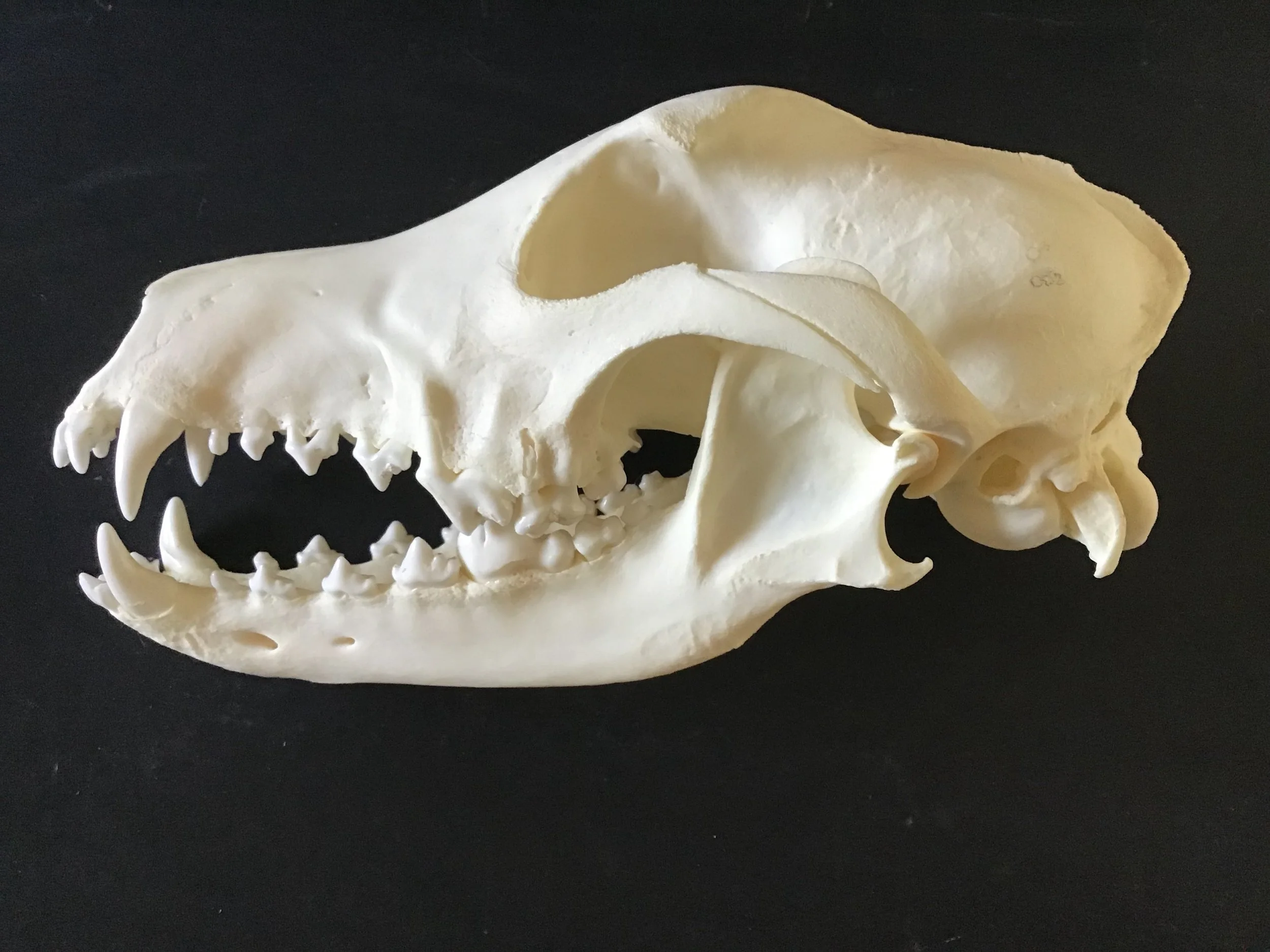
The skeletal remains of dogs are simultaneously very distinct in their characteristics, but also very similar to other animals. Compare a dog skull to grey seals or foxes to see what we mean!
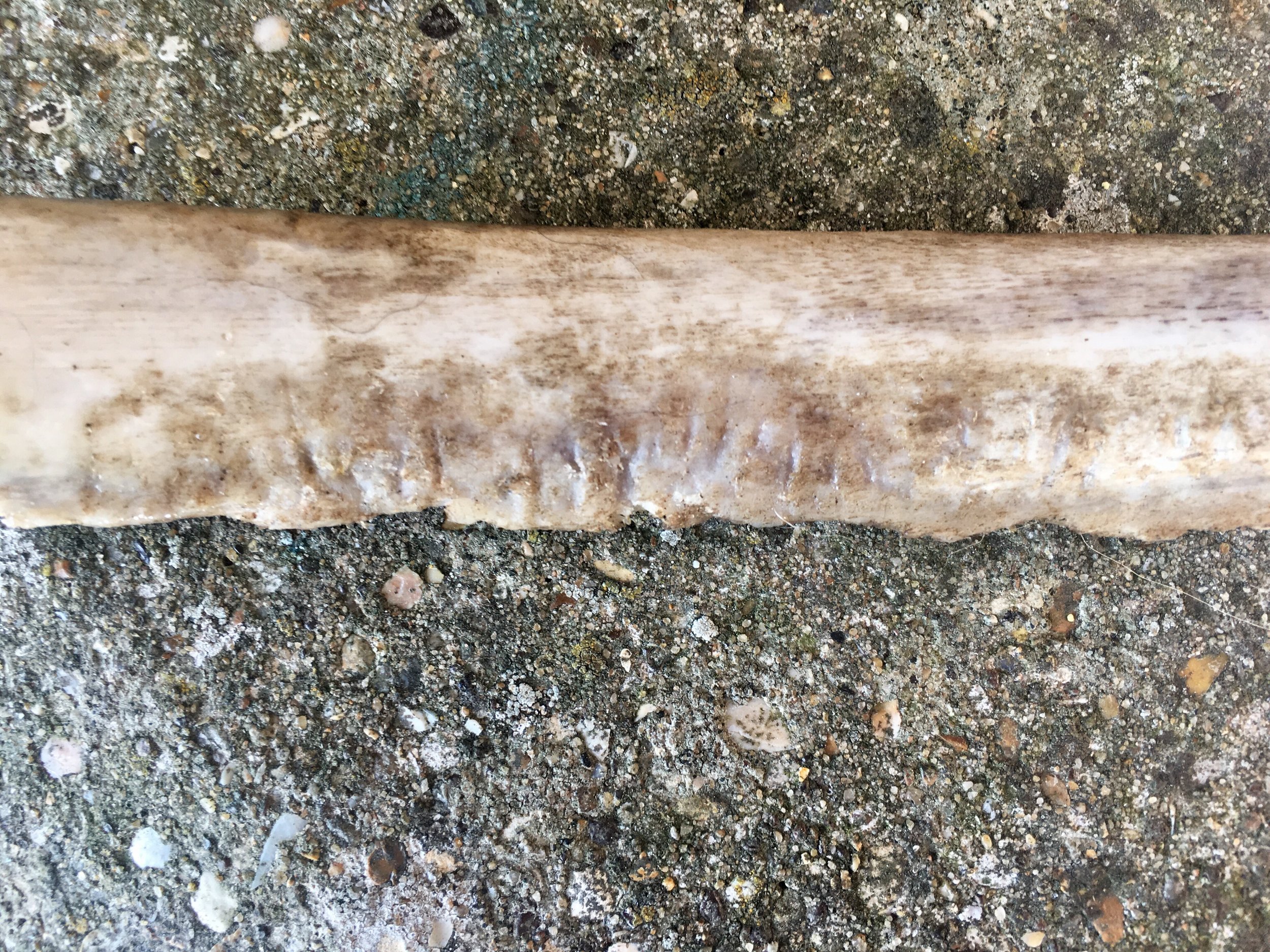
Dogs seem to have had a special relationship with humans - this can be observed in some burial and ritual rites involving dog remains. There is currently a lot of interesting research happening that combines aDNA (ancient DNA) analysis with zooarchaeology to better understand human-dog relations and the domestication of the dog over time.
Due to breeding techniques, the skulls of certain modern dogs have been transformed beyond recognition - if you're brave enough, Google some of the breeds we mention in the episode.
And we unfortunately have no idea who let the dogs out still...sorry.
Further Reading
Fagan, B. (2015) The Intimate Bond: How animals shaped human history
London: Bloomsbury Press
Toynbee, J.M.C. (2013) Animals in Roman Life & Art
Barnsley: Pen & Sword
Merrifield, R. (1987) The Archaeology of Ritual and Magic
London: Guild Publishing London
Van Grouw, K. (2018) Unnatural Selection
Oxfordshire: Princeton University Press
Houlbrook, C. and Armitage, N. (2015) The Materiality of Magic. Oxford: Oxbow Books.
Links

Contact
Alex Fitzpatrick
Twitter: @archaeologyfitz
Simona Falanga
Twitter: @CrazyBoneLady
Music
"Coconut - (dyalla remix)"
Random Encounter Episode II - CRMArch 146
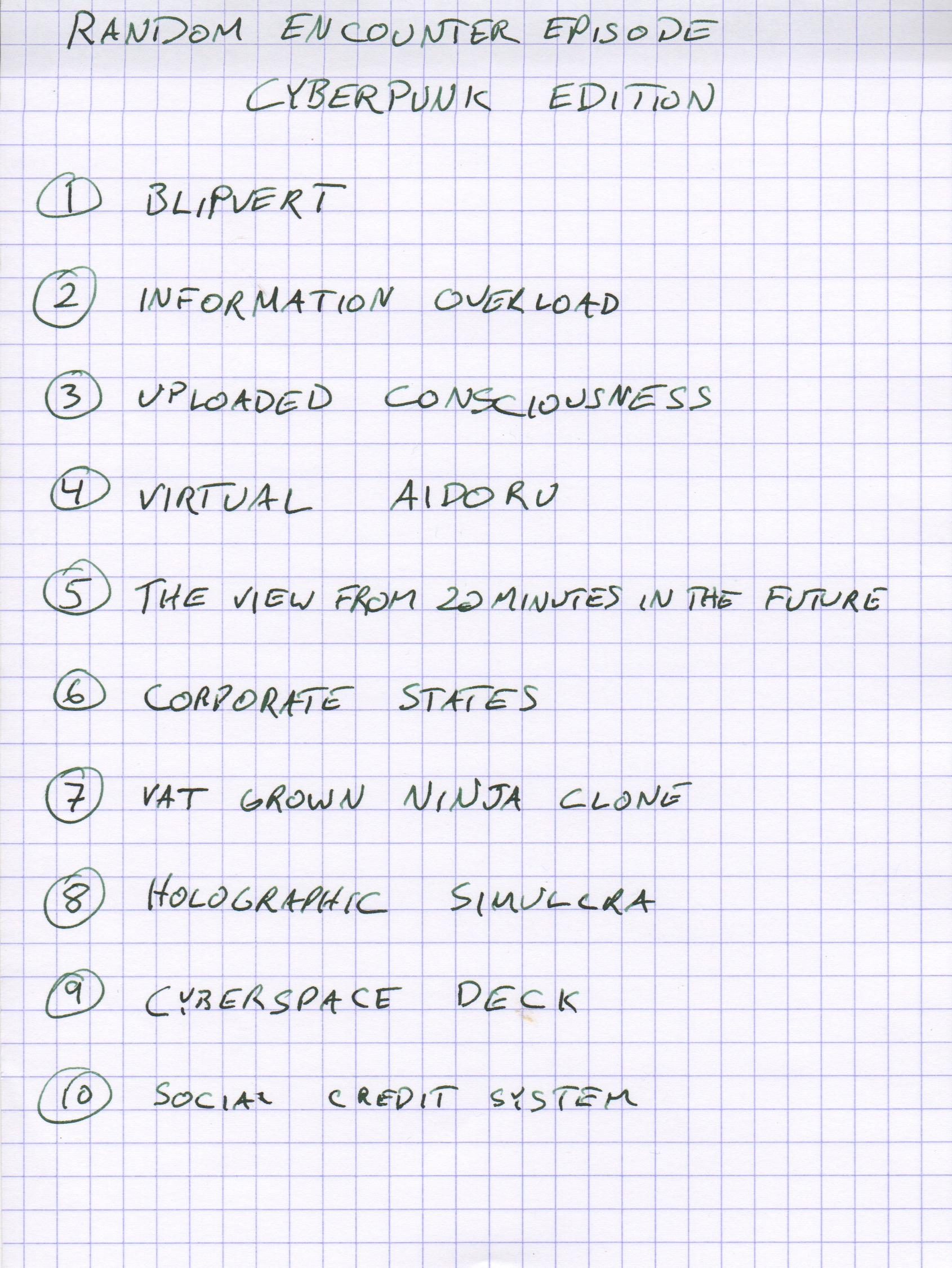
Our special guest rolls a die and we pick a brief topic to discuss. Always steeped in roll-playing tradition, this game takes a cyberpunk setting.
Links
Follow Our Panelists On Twitter
Bill @succinctbill; Doug @openaccessarch; Stephen @processarch; Chris W @Archeowebby,@DIGTECHLLC, and @ArchPodNet;
Blogs:
Bill White: Succinct Research
Doug Rocks-MacQueen: Doug’s Archaeology
Stephen Wagner: Process - Opinions on Doing Archaeology
Chris Webster: Random Acts of Science
Bill Whitehead on Using Drones in Contract Archaeology - ArchaeoTech 88
Drones are here to stay in CRM Archaeology. Archaeologist Bill Whitehead of SWCA in New Mexico talks about how they're using drones and other technology to enhance the products they can return to customers and increase the accuracy of their maps. At some point in the near future we're going to see a requirement for an FAA Part 107 UAS license on a job advertisement. No is the time to start learning about these so you aren't left in the dust later on.
Links
App of the Day
Contact
Chris Webster
Twitter: @archeowebby
Paul Zimmerman
Twitter: @lugal
Email: paul@lugal.com
Food Sovereignty and Natives Outdoors - HeVo 21
On today’s podcast we have Ashleigh Thompson (Miskwaagamiiwi-zaaga’igan- Red Lake Anishinaabe Nation), a fourth year PhD student at Jessica’s alma mater, the University of Arizona. She talks about how she came to anthropology and the importance of representation. We talk about food sovereignty and not oversimplifying the way we talk about people based on their food practices. We also go into what it’s like to reconnect with your culture and language as an adult and the importance of education both to have a larger impact and what it can teach you about yourself. Finally, we close out by hearing more about Natives Outdoors (a public benefit corporation trying to increase Native American representation in the recreation industry that gives 5% of the profits on their gear back to Native American run non-profits focusing on language & cultural preservation, outdoor recreation, and environmental issues), cultural appropriation, and how we can balance recreation, preservation, and being respectful at culturally important places.
Links
Bears Ears Opinion piece-American Anthropological Association
https://www.sfu.ca/ipinch/resources/teaching-resources/think-before-you-appropriate/
Ashleigh’s Email: ashleighthompson@email.arizona.edu
Ashleigh’s Instagram
Contact
It's Unethical to NOT Go Digital - CRMArch 145
Going digital is, in Chris’ opinion, a morale and ethical imperative. We are the stewards of other people’s history and it’s our job to ensure their data are secure for as long as it takes. This quote regarding the destruction of the Brazil Museum in September of 2018 says it all:
“Folks, there’s nothing left from the Linguistics division. We lost all the indigenous languages collection: the recordings since 1958, the chants in all the languages for which there are no native speakers alive anymore, the Curt Niemuendaju archives: papers, photos, negatives, the original ethnic-historic-linguistic map localizing all the ethnic groups in Brazil, the only record that we had from 1945. The ethnological and archeological references of all ethnic groups in Brazil since the 16th century… An irreparable loss of our historic memory. It just hurts so much to see all in ashes.”
Follow Our Panelists On Twitter
Bill @succinctbill; Doug @openaccessarch; Stephen @processarch; Chris W @Archeowebby,@DIGTECHLLC, and @ArchPodNet;
Blogs:
Bill White: Succinct Research
Doug Rocks-MacQueen: Doug’s Archaeology
Stephen Wagner: Process - Opinions on Doing Archaeology
Chris Webster: Random Acts of Science
Getting Things Done - ArchaeoTech 87
There is a lot to do and think about in business and in the business of archaeology. We often don't think of common business tools when trying to finish a project - mostly because we just want to think about archaeology. However, modern tools like team communication apps and project management apps are great at helping everyone organize, get on the same page, and get the work done on time and under budget. We have to be careful that we don't use TOO much in our work flow and that we don't get "notification paralysis" with everything turned on. Learn what to use, how to use it, and how to dial in the notifications so they come at just the right times and tell you what you need to know.
Links
- Calendly
- Trello
- Slack
- Brain Toss
- Dropbox
- Just Press Record
- Nutshell
- Asana
- You Can Book Me
- Getting Things Done - Book by David Allen
- Remember the Milk
Contact
- Chris Webster
- Twitter: @archeowebby
- Email: chris@archaeologypodcastnetwork.com
- Paul Zimmerman
- Twitter: @lugal
- Email: paul@lugal.com
Old McDonald Had A Farm - Animals 02
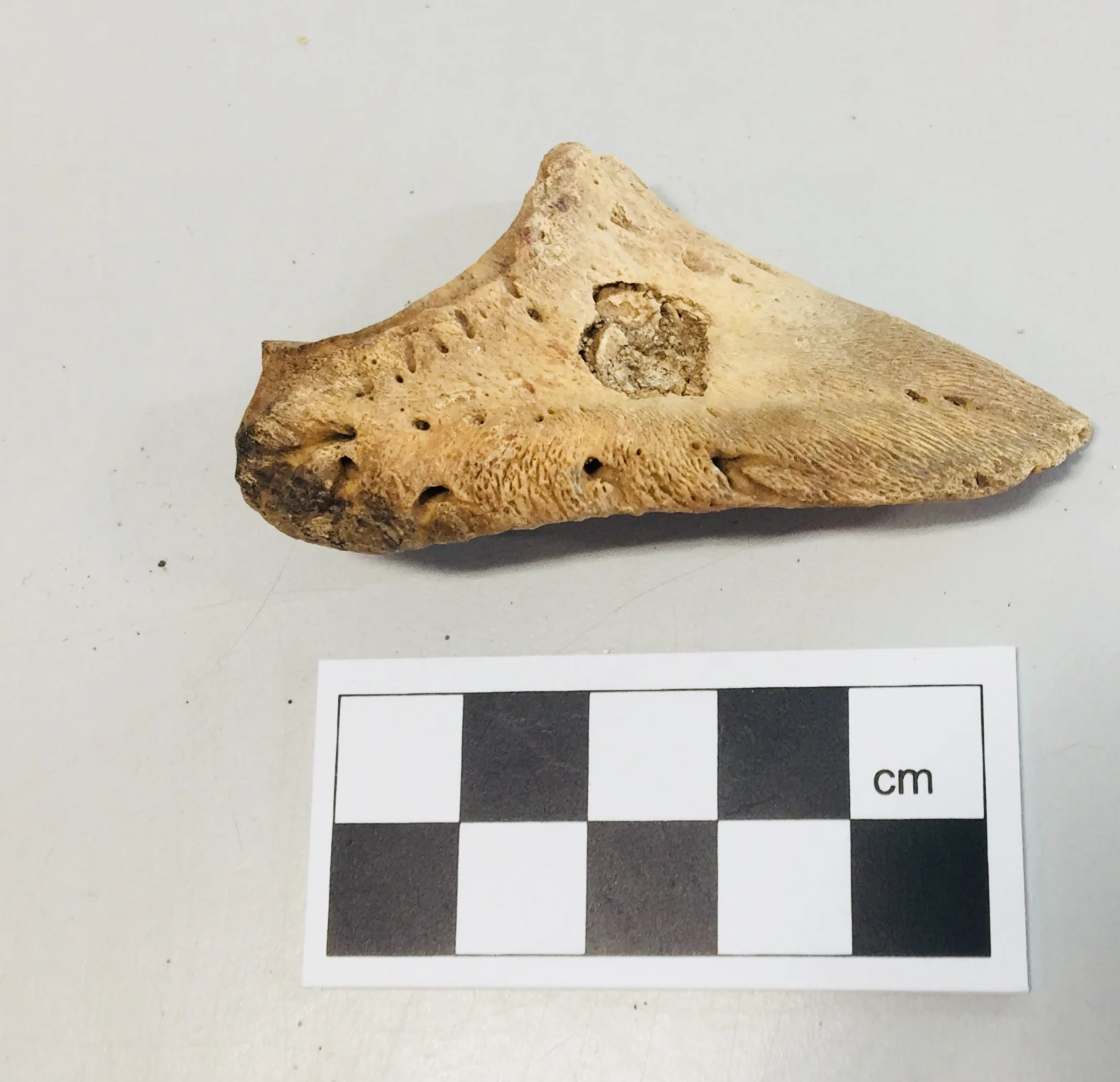
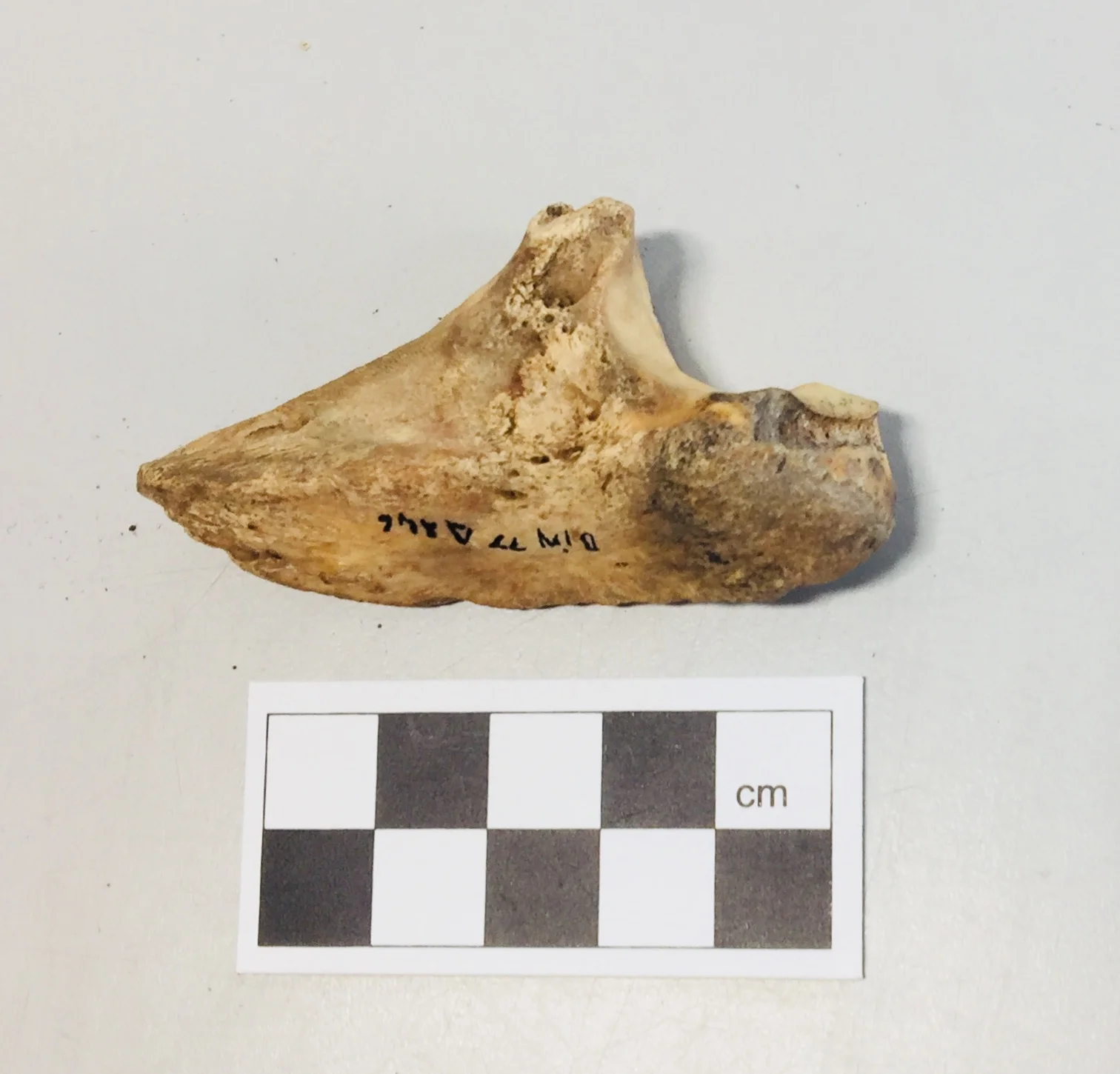
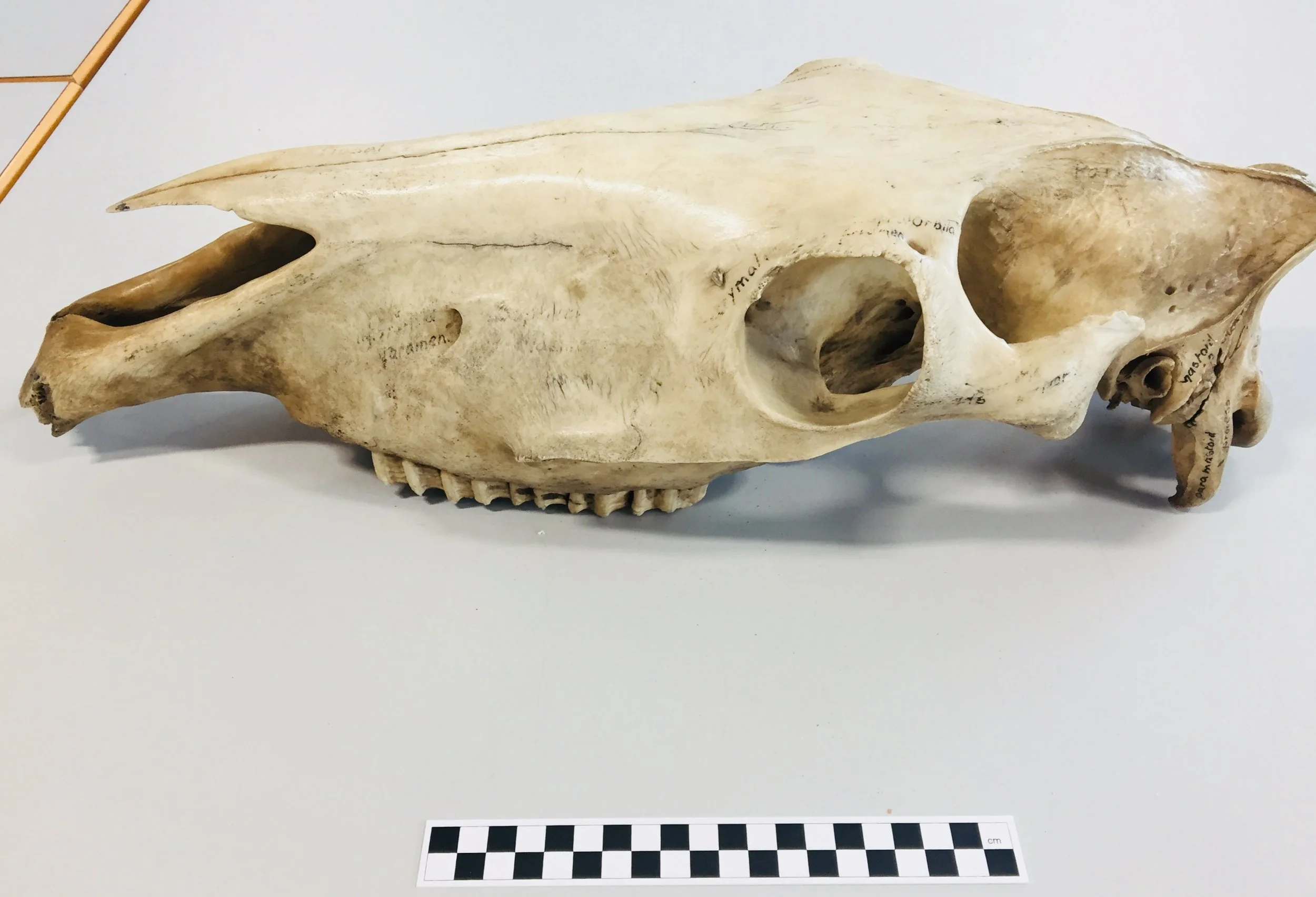
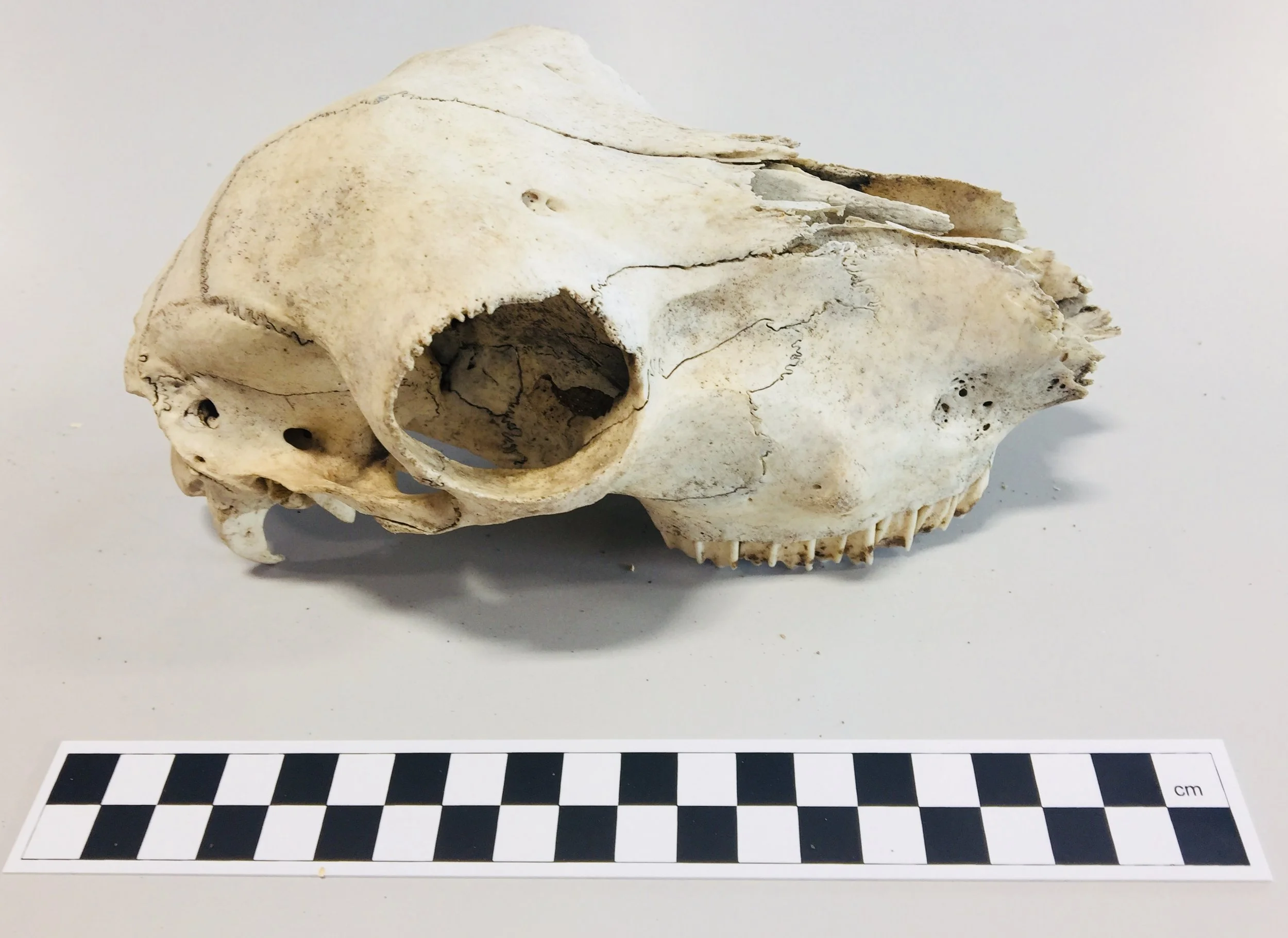
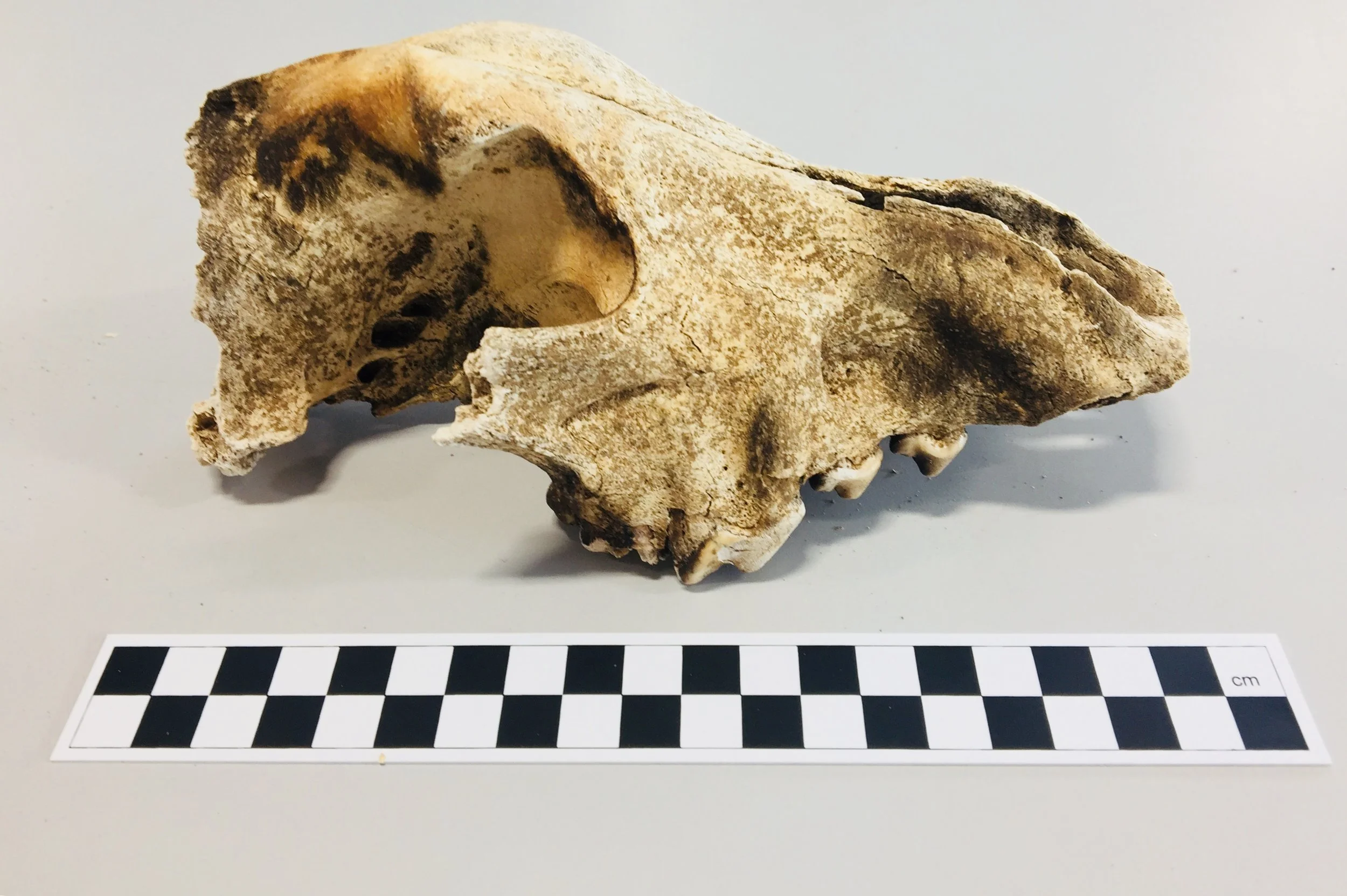
The distinction between domestic and wild animals is sometimes difficult, especially if the domesticated species is still morphological very similar to its wild counterpart. Cat being a notorious example. Size is usually a good indicator (wild counterparts often being bigger). Differentiation is usually achieved by means of biometry, which consists of set measurements taken from the bones. Previous research has established standards for measurements taken from individuals of known ID (wild and domestic), to compare your assemblage to. However one needs to bear in mind that modern animals may not look exactly like they used to, and things become even complicated when a species also presents several different breeds bearing distinct morphological differences (e.g. domestic dog
Further Reading
- http://www.mustfarm.com/progress/site-diary-35-the-must-farm-menu/
- http://www.cam.ac.uk/research/news/latest-archaeological-finds-at-must-farm-provide-a-vivid-picture-of-everyday-life-in-the-bronze-age
- Journal of Archaeological Science 35 (2008) 1828e1848 The development of animal husbandry from the Late Iron Age to the end of the Roman period: a case study from South-East Britain Umberto Albarella a,*, Cluny Johnstone b, Kim Vickers a
- Davis (1987) The Archaeology of Animals. Yale
Contact
- Alex Fitzpatrick
- Twitter: @archaeologyfitz
- Simona Falanga
- Twitter: @CrazyBoneLady
- Music
- "Coconut - (dyalla remix)"
- https://www.youtube.com/watch?v=_2UiKoouqaY
Zooarchaeology 101 - Animals 01
Zooarchaeology is, as the word suggests, the study of animal remains from archaeological sites. It is a relatively new discipline that has been steadily gaining popularity since the 1970s. Zooarchaeology can provide inference on past people’s economy, dietary habits, society and culture.
Faunal remains recovered from archaeological sites are initially processed, identified to element and species whenever possible and finally used in quantitative and qualitative analyses to further our understanding of a given archaeological site. Zooarchaeologists will frequently attempt to gather information on the animals’ age, sex and season of death as well as looking out for bone modification (either pathological or taphonomical i.e. signs of disease and butchery/burning/gnawing). This data will then be analysed within the regional and historical context of the site.
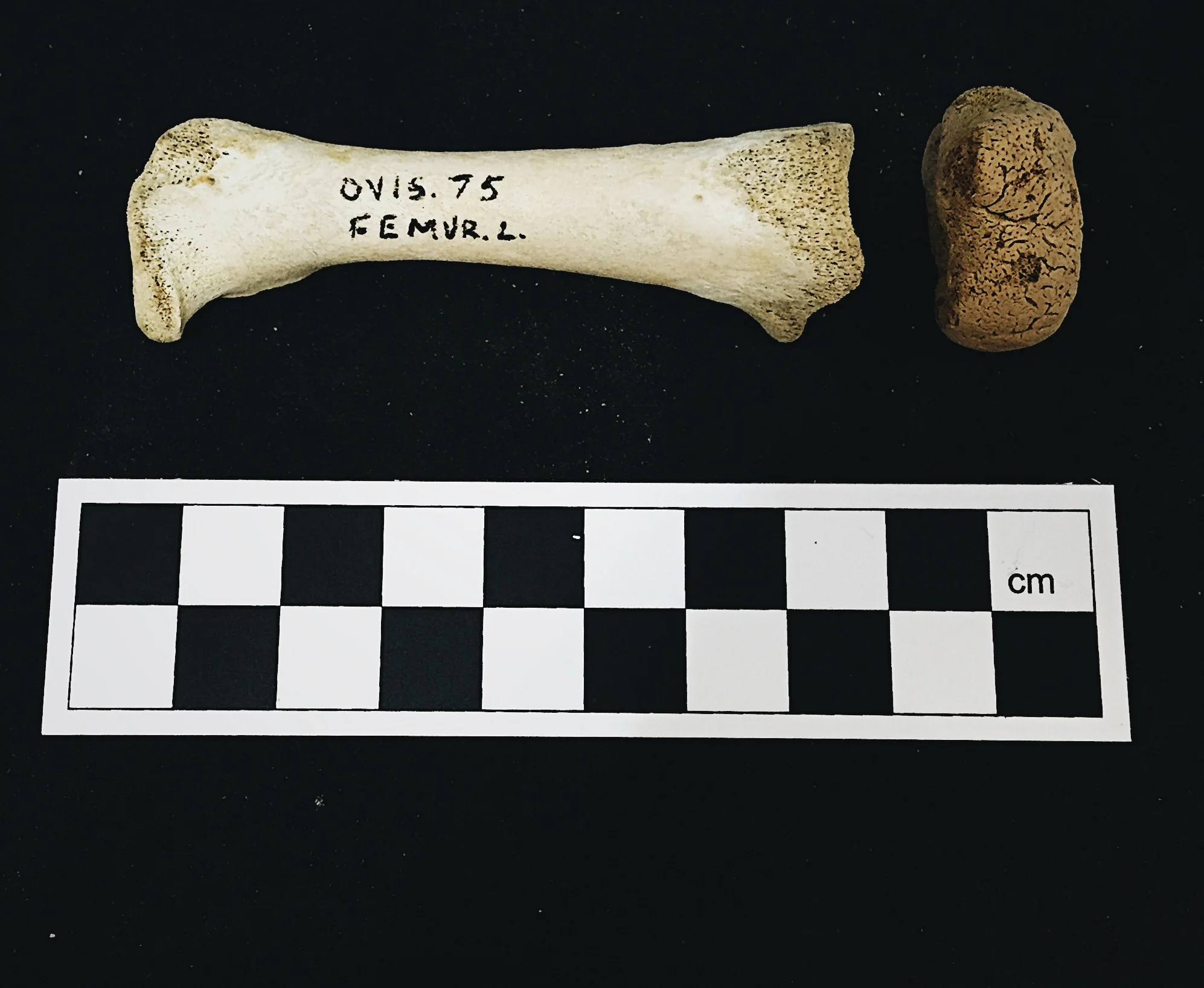
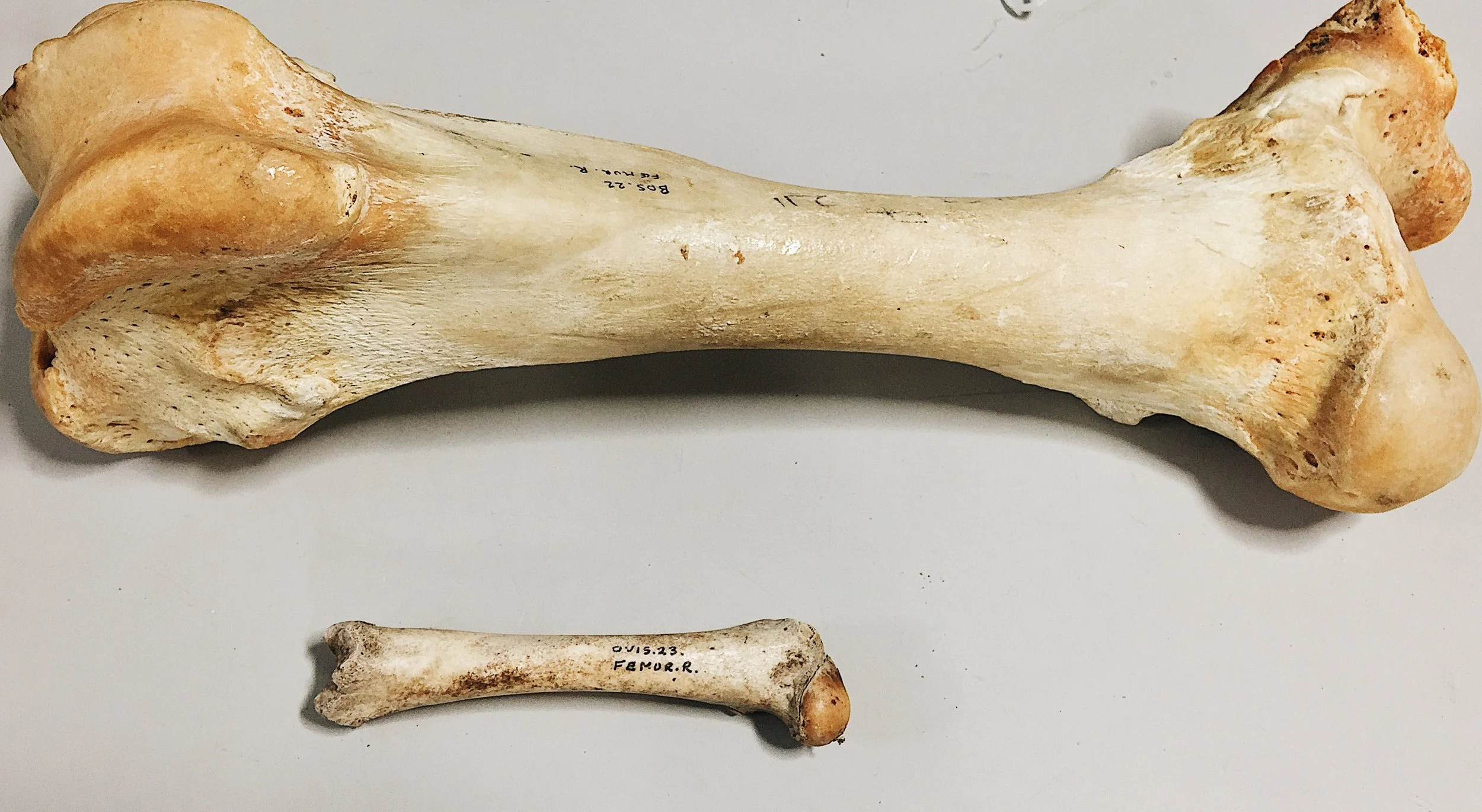
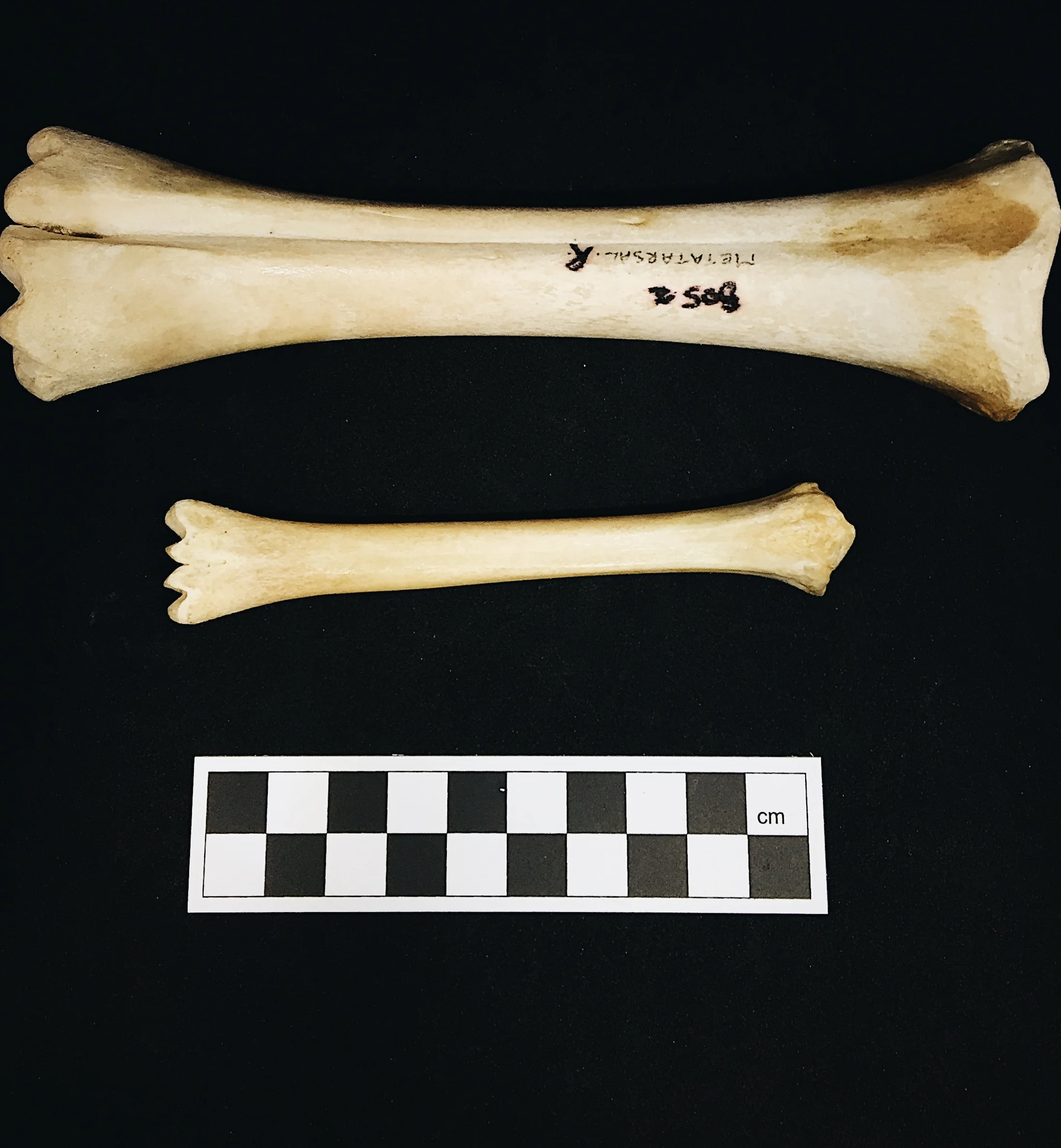
When carrying out the analysis of a faunal assemblage, the first step is to identify as many bone fragments as possible to element and species. It is important for this process to be as accurate as possible, thus if in doubt it is best to label the specimen as unidentifiable rather than risking biasing your sample). As not all recovered fragments will not have retained enough diagnostic characteristic for confident ID, the whole sample is somewhat biased from the very beginning, hence it’d be best not to add to that with potential misidentifications. Identification of skeletal remains is largely carried out by morphological analysis, though species which present a similar anatomy may require additional tools such as biometry (which relies on measurements): this is the case for sheep/goat, to mention a few. Morphological ID is a skill that takes a lot of practice to refine, and reference collections represent an invaluable asset in order to learn and maintain your knowledge of comparative skeletal anatomy. These will be mostly comprised of modern specimens of known ID. It is important to bear in mind, however, that the morphology of a given species is unlikely to have remained static throughout time and your archaeological material may thus slightly differ to the modern reference specimen. Some species also present remarkable morphological and size variations (dogs, for instance), so these are all factors to be mindful of when analysing an archaeological assemblage.
The age at death of an animal is frequently determined based on epiphyseal fusion. For those who are unfamiliar with the concept, most bone is comprised of two parts: the central diaphysis (commonly known as the shaft) and the two epiphysis, which stand at the periphery of the bone. In several bones, these three parts are not fused together at birth, and research has been carried out to determine fusion age stages for different elements and species.
Another frequently used method for ageing is tooth eruption and wear.
Assigning age at death is useful in order to determine kill off patterns, which ultimately provide inference on animal exploitation. For instance, a sample mostly comprised by adult/elderly cattle indicates that they may have been used as working animals. Similarly, if the sample is comprised by numerous juveniles as well as adults, dairy production is a likely candidate.
Further inference on exploitation is provided by sexing the animals, which is usually carried out by looking for sexually dimorphic traits (i.e. morphological traits which will differ between males and female - e.g. antler in male cervids, with the exception of reindeer).
Pathology is the study of disease. It can provide information on animal exploitation and sometimes pet keeping. The latter hypothesis is for instance argued when an individual presents numerous pathologies which required constant human care and that would render the animal economically unviable to keep, yet it was still looked after.
A common marker of animal exploitation which is not uncommon in cattle remains is a bone growth within the metatarsal/tarsal articulation, known as spavin. The latter is caused by chronic inflammation, most likely induced by traction.
Taphonomy is a huge subject and an academic discipline in its own right. Within zooarchaeology, the aspects of taphonomy which are mostly looked at are man/animal induced bone modification. This can take the form of butcher marks, scorching caused by cooking, and gnawing from domestic animals and scavengers alike.
Further Reading
- "Identifying and Interpreting Animal Bones: A Manual" - April M. Beisaw (2013)
- "The Archaeology of Animal Bones" - Terry O'Connor (2000)
- "On the Average Day of a Zooarchaeologist, or Like, So What Do You Even Do?" - Alex Fitzpatrick https://animalarchaeology.com/2017/11/09/