Your Side Hustle and Raising Kids in Archaeology - CRMArch 158

We’ve got two very different guests on the show today. The first is Seth Hymes. Seth runs a digital marketing online course and we’ve partnered with him to get CRM Archaeologists a little bit of a side career. Take the course, make a little extra money, and have something to do in the off season. Our second guest is Karry Blake. She’s a CRM professional, runs an environmental department, and is raising two kids the entire time. We talk about the challenges of raising kids while managing your career.
Links
Follow Our Panelists On Twitter
Bill @succinctbill; Doug @openaccessarch; Stephen @processarch; Bill A. @archaeothoughts; Chris W @Archeowebby, @DIGTECHLLC, and @ArchPodNet
Blogs:
Bill White: Succinct Research
Doug Rocks-MacQueen: Doug’s Archaeology
Stephen Wagner: Process - Opinions on Doing Archaeology
Chris Webster: Random Acts of Science
Creating a Digital Future with Wildnote CEO Kristen Hazard - TAS 58
Kristen Hazard is the CEO and founder of Wildnote, a digital data collection and management platform that is helping environmental firms to their work faster and more accurately. Chris interviews her on The Archaeology Radio Show on KNVC, Carson City Media.
Links
Contact
Chris Webster
The Future of Archaeology in a World That's Tidying Up - ArchaeoTech 99

In the wake of Marie Kondo and her tidying-up mentality we started wondering about the archaeology of the future. Guest host Richie Cruz and host Chris Webster talk about the future in a tidied-up world. What will be left? How do we think about and interact with “things” as compared to our ancestors and ancient people around the world?
Links
Archaeological Fantasies
Richie Cruz
Twitter: @FTBVsAndUPTTs
App of the Day
Webby: Streaks
Richie: Affinity Designer
Contact
Chris Webster
Twitter: @archeowebby
Paul Zimmerman
Twitter: @lugal
Email: paul@lugal.com
Archaeology Outreach in local Maya communities in the Yucatan - HeVo 26

On today’s podcast Jessica hosts Dr. Adolfo Iván Batún-Alpuche (Maya) Professor and Investigator at the Universidad del Oriente, Valladolid, Yucatán, and Dr. Khristin Landry-Montes, Project Facilitator and Affiliated Researcher with InHerit: Indigenous Heritage Passed to Present at the University of North Carolina, Chapel Hill. Drs. Batún and Landry-Montes have been working on archaeology outreach in local Maya communities in the Yucatan peninsula of Mexico. They have been working with local middle school teachers to teach students about cenotes, underground freshwater aquifers, and their cultural, archaeological, and ecological importance. As one of my favorite part of this project, naturally, they are having students conduct oral history interviews with elders in their communities. Dr. Batún also shares about a previous community archaeology project that resulted not only in a community museum and heritage trail, but also reconnecting the community to their beekeeping heritage. In addition to their specific work in the Yucatán, we talk about what it’s like to be indigenous in Mexico and what it means to be “Maya”, still here, but not a stereotype or single entity
Links
https://arqueologiamexicana.mx/tahcabo (“Tiempo y paisaje en Tahcabo” Adolfo Iván Batún Alpuche, Patricia A. McAnany y Maia Dedrick- Article about Dr. Batún, Dr. McAnany, and Dr. Dedrick’s archaeology work at Tahcabo)
National Geographic Open Explorer Cenote Conservation and History
https://openexplorer.nationalgeographic.com/expedition/cenoteconservationandhistory
February 2019 InHerit newsletter with more updates on and pictures of cenotes projects
Contact
The Longest Running Podcast about Professional Archaeology - 6 Years Old - CRMArch 157
For the last six year's we've been podcasting about the field of CRM Archaeology. We've had our ups and downs, just like the industry, but through it all we've continued to bring you awesome topics, great interviews, and educated commentary. Thanks for the past six years and here's to another six!
Special thanks to Bill’s kids, Ruckus the Cat, and all the partners and families of the hosts that allow us to do this every two weeks!
Links
Follow Our Panelists On Twitter
Bill @succinctbill; Doug @openaccessarch; Stephen @processarch; Bill A. @archaeothoughts; Chris W @Archeowebby, @DIGTECHLLC, and @ArchPodNet
Blogs:
Bill White: Succinct Research
Doug Rocks-MacQueen: Doug’s Archaeology
Stephen Wagner: Process - Opinions on Doing Archaeology
Chris Webster: Random Acts of Science
ChatBot or Human and Does it Matter? - ArchaeoTech 98
Today on the show Paul and I discuss chat bots and whether they can good, bad, or indifferent for heritage communication. We also discuss a Munsell reader and Paul’s new drone!
Links
App of the Day
Webby: Autonomous.AI Standing Desks
Paul: Munsell CapSure
Contact
Chris Webster
Twitter: @archeowebby
Paul Zimmerman
Twitter: @lugal
Email: paul@lugal.com
California Rock Art with Dr. Alan Garfinkel - TAS 57
Today’s episode is actually a recording of the first interview I did as a radio host at KNVC 95.1 in Carson City Nevada. They cut off the first few minutes so we pick it up with one of my next questions. I talk to Dr. Garfinkel about Rock Art, his career and how he got into it, and what it all means in the greater cultural context.
Links
Contact
Chris Webster
The Cat's Out Of The Bag - Animals 07
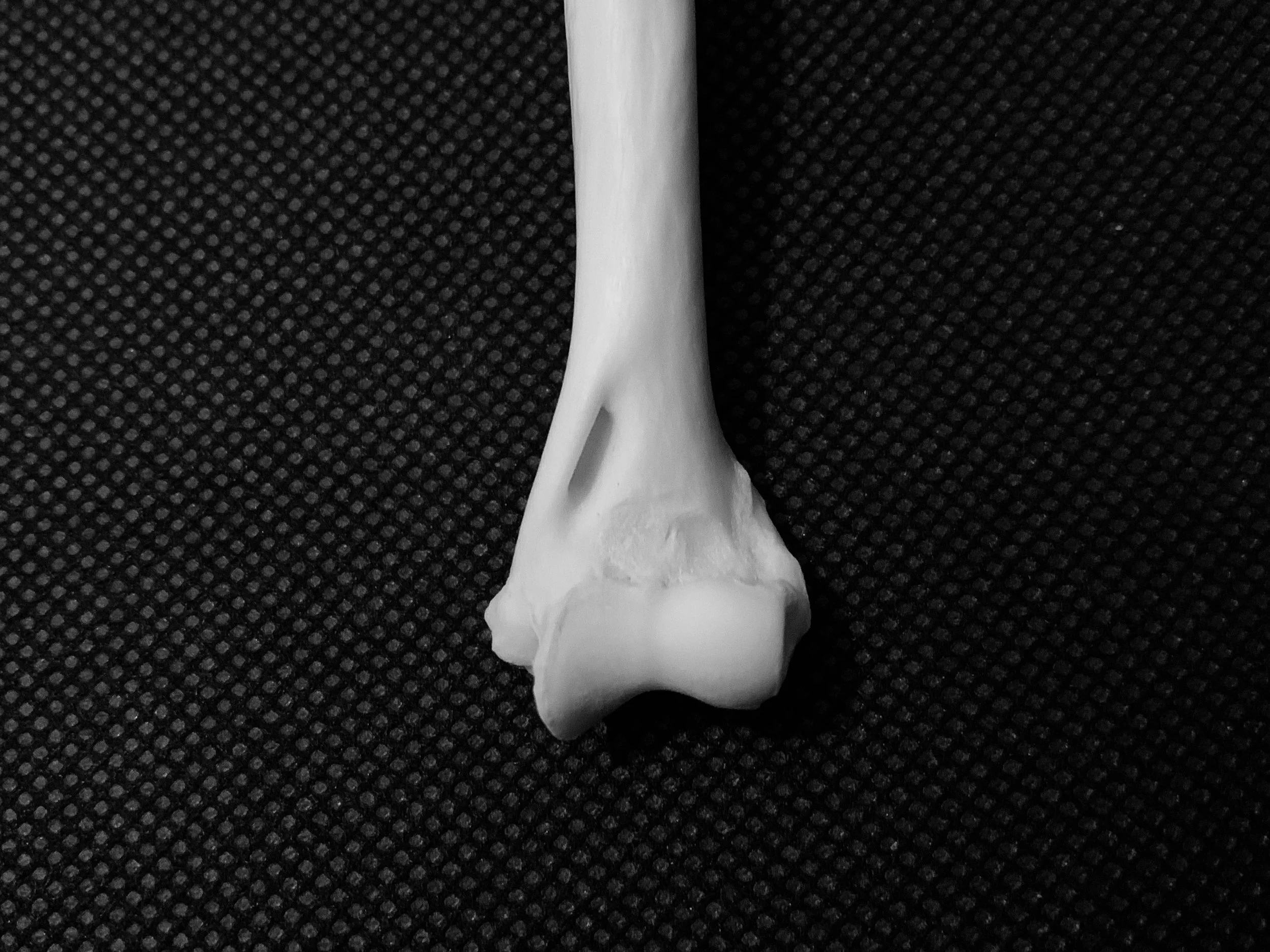
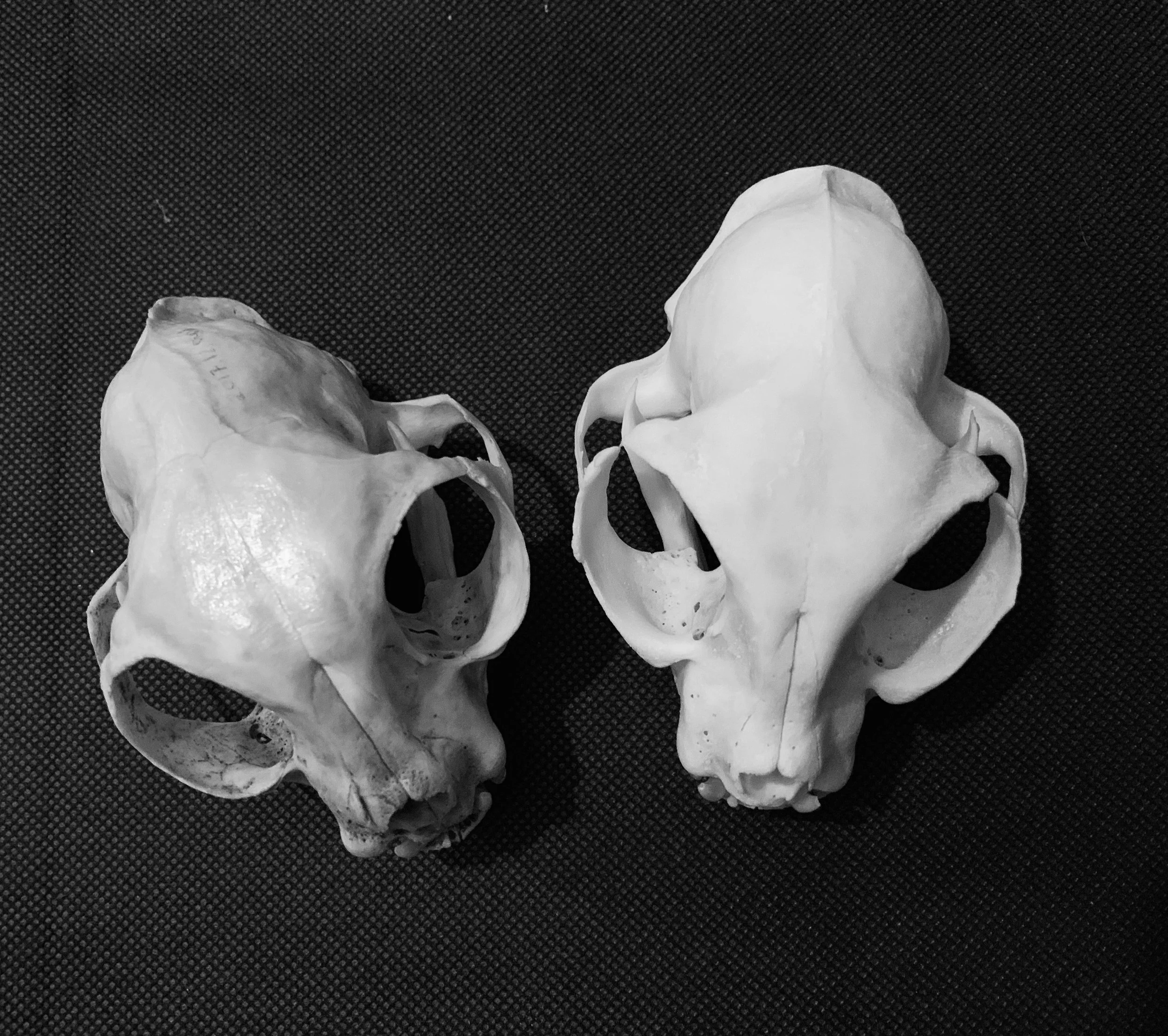
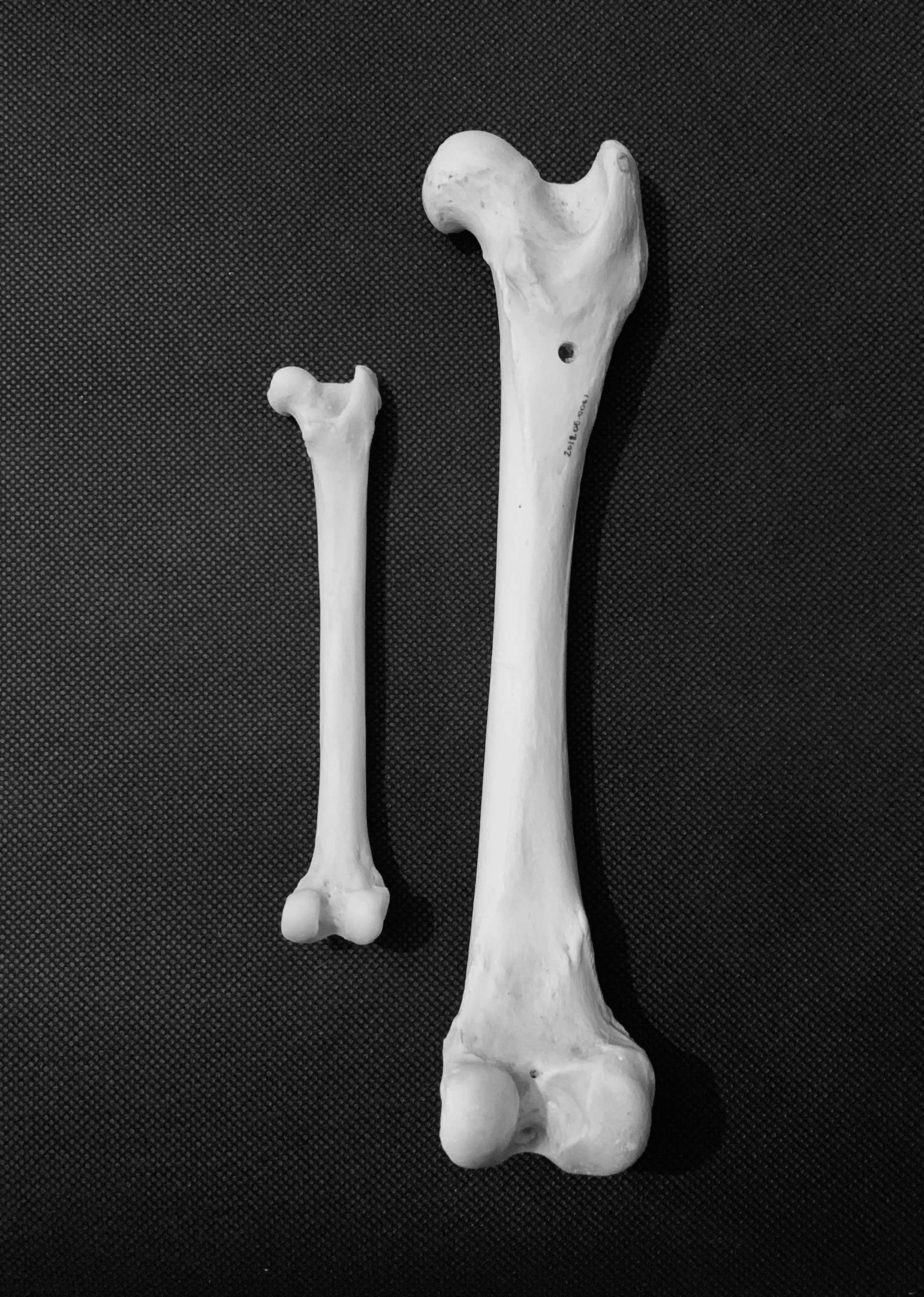
Felis catus is the domesticated form of the African wildcat Felis s. lybica. The latter is believed to have been domesticated in the Near East at the time of the Neolithic agricultural revolution, where keeping pests away from grain storage would have been paramount. It likely that, much like other domesticates, several domestication attempts would have taken place across time and geographical regions.
As rodents such as the rat and house mouse hitchhiked their way across Europe, cats were soon to follow. One notable case is perhaps Cyprus, which was never attached to the mainland and had no native cat population. Cats’ sudden appearance around 7500BCE (most notably with a young adult individual associated with a human burial) thus imply that these would have been tamed wildcats at the very least which had been brought to Cyprus by boat.
Perceptions of domestic cats were somewhat ambivalent, as can still be perceived from contemporary folklore. This led to them being viewed as creatures imbued with supernatural abilities, both revered and reviled. Cats were notably worshipped in Ancient Egypt, yet killed by the hundreds to be sold as mummies; persecuted in the Medieval period for supposedly being witches’ familiars, or simply being viewed as ratters or even pests. While their ‘dog cousins’ were being selectively bred for a variety of functions, cats merely lingered at the edge of human settlements - though cases of companionship exist. It was in fact not until the late 18th century that the cat fancy developed along with the vast majority of the breeds we see today.
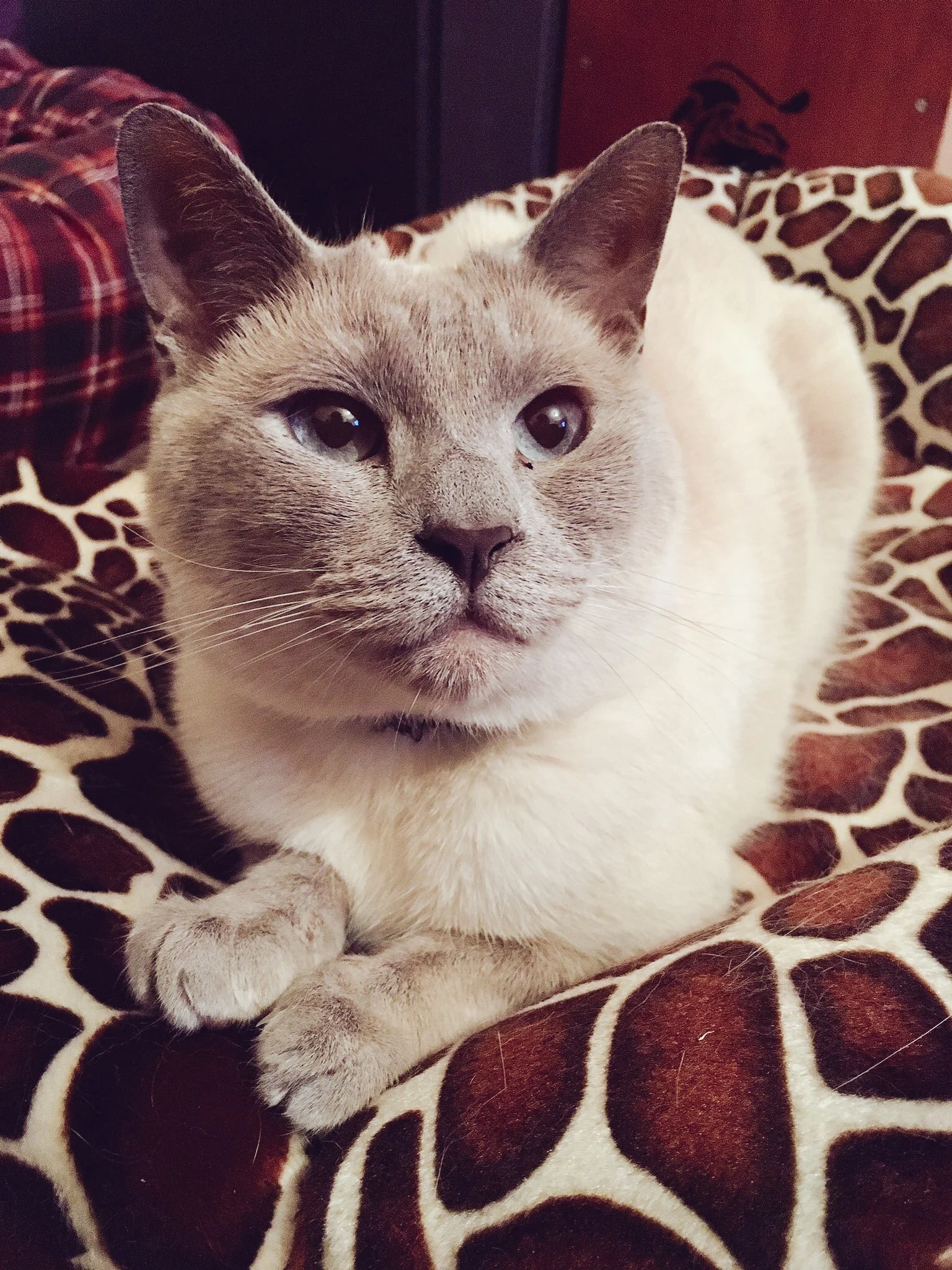
It’s not easy being a cat.
Case Studies
Gussage All Saints
Dried Cats
Cyprus cat burials
Further Reading
https://archaeologydataservice.ac.uk/archives/view/eh_monographs_2014/contents.cfm?mono=1089034
Brian Hoggard, 'Concealed Animals', in Ronald Hutton, The Physical Evidence for Ritual Acts, Sorcery and Witchcraft in Christian Britain, 2015, Palgrave, pp106-117.
Brian Hoggard, 'The archaeology of counter-witchcraft and popular magic', in Owen Davies & Willem de Blecourt, Beyond the Witch-Trials, 2004, Manchester University Press, pp167-186.
Margaret M Howard, ‘Dried Cats’, Man, no 252, November 1951, pp149-151.
Ralph Merrifield, The Archaeology of Ritual and Magic, 1987, Batsford, London.
Bradshaw, J. (2013) Cat sense: The Feline Enigma Revealed. London, Penguin Books
Clutton-Brock, J. (1994) The British Museum Book of Cats. London, The British Museum Press
Fagan, B. (2015) The Intimate Bond: How animals shaped human history. London: Bloomsbury Press
Toynbee, J.M.C. (2013) Animals in Roman Life & Art. Barnsley: Pen & Sword
Van Grouw, K. (2018) Unnatural Selection. Oxfordshire: Princeton University Press
Houlbrook, C. and Armitage, N. (Eds.) (2015) The Materiality of Magic. Oxford: Oxbow Books.
Contact
Alex Fitzpatrick
Twitter: @archaeologyfitz
Simona Falanga
Twitter: @CrazyBoneLady
Music
"Coconut - (dyalla remix)"
The Modern Myth Of Brexit with Kenny Brophy - Modern Myth - Episode 1
Brexit, it's a word we hear all too often, no doubt we are fatigued by it. But in the cusp of its realization perhaps we should look how we got here. What helped create the narrative and what information was drawn upon in order to make it seem that leaving the EU was the decision to vote for, at least for three majority of people.
I speak to Kenny Brophy from the University of Glasgow about his paper Brexit And Prehistory about the ways in which narratives were created and how people use symbols of the past to create their own narratives, and in some cases their own cairns.
This show is supported by our Members, Join Us
References
The Brexit Hypothesis and Prehistory - Kenny Brophy
https://doi.org/10.15184/aqy.2018.160
Response to ‘Brexit, Archaeology and Heritage: Reflections and Agendas’ - Lorna Richardson & Thomas Booth
http://doi.org/10.5334/pia-545
Credit:
Music - Danny Boyle
Modern Myth
Alone at a Bar at 3am
Twitter/Instagram:
@Anarchaeologist
RPA Grievances and Traveling for Work - CRMArch 156
The fourth quarter, 2018, grievance statistics are out and they're a bit shocking. We talk about how to file a grievance and why you should file a grievance. We also talk about moving across the country for work. Is it worth it? What's more important - length of the job or the money? There are many factors that you have to look at and we try to help you navigate the decision matrix and get the best bang for your buck.
Links
Follow Our Panelists On Twitter
Bill @succinctbill; Doug @openaccessarch; Stephen @processarch; Bill A. @archaeothoughts; Chris W @Archeowebby, @DIGTECHLLC, and @ArchPodNet
Blogs:
Bill White: Succinct Research
Doug Rocks-MacQueen: Doug’s Archaeology
Stephen Wagner: Process - Opinions on Doing Archaeology
Chris Webster: Random Acts of Science
Creating Archaeological TV That Doesn't Suck - TAS 56
I met up with Dr. Monty Dobson, creator of the TV series, America From The Ground Up, now in its second season. We spoke at the Society for Historical Archaeology Meetings in St. Charles Missouri in January of 2019 about his production studio and what it takes to make good TV for archaeology.
Links
Monty Dobson on Twitter: @lemont
Contact
Chris Webster
3D Printing Ancient Structures for Reconstruction - ArchaeoTech 97
Through the power of the internet we interview Alexei Vranich from from the ruins of Angkor in Cambodia about work he did in Bolivia! This podcast is based on a paper (linked below) about reconstructing an ancient structure at Tiwanaku in Bolivia. This structure was incomplete and they had no idea what it was supposed to look like. But, through some high tech methods and good old fashioned elbow grease they figured it out.
Links
“Reconstructing Ancient Architecture at Tiwanaku, Bolivia: the potential promise of 3D-Printing”
App of the Day
Webby: Thingiverse
Paul: Munsell Viewer
Contact
Chris Webster
Twitter: @archeowebby
Paul Zimmerman
Twitter: @lugal
Email: paul@lugal.com
2019 Society for Historical Archaeology Conference - CRMArch 155
The Society for Historical Archaeology conference was held in St. Charles, Missouri this year (2019) and despite the 15 inches of snow, the government shutdown, and a fire in the terminal at St. Louis International, the conference went pretty well! Bill White and Chris Webster sit down with two women that started a Facebook group to be a safe place for people that are victims of the #metoo phenomenon and the talk to each other about other things they saw at the conference.
Links
Follow Our Panelists On Twitter
Bill @succinctbill; Doug @openaccessarch; Stephen @processarch; Bill A. @archaeothoughts; Chris W @Archeowebby, @DIGTECHLLC, and @ArchPodNet
Blogs:
Bill White: Succinct Research
Doug Rocks-MacQueen: Doug’s Archaeology
Stephen Wagner: Process - Opinions on Doing Archaeology
Chris Webster: Random Acts of Science
Technology - HeVo 25
On today’s podcast Jessica hosts a panel on technology in the Heritage/Cultural Resource Management fields. Panelists include Aaron Brien (Apsáalooke), a member of the Night Hawk Dance Society and faculty in Salish Kootenai College’s Tribal Historic Preservation and Native American Studies programs, Emily Van Alst (Sihasapa Lakota descent), a PhD student at Indiana University, and Briece Edwards, Manager of the Tribal Historic Preservation Office of the Confederated Tribes of Grande Ronde. The panelists discuss how they use technology in their work, the positives and negatives of technology for tribes and heritage preservation, and tribes and Indigenous Archaeologist’s innovative adaptations of technology to serve their needs. They shared some especially exciting ways they are using technology to share information back to the communities they work with and as non-invasive or destructive alternatives.
Links
Aaron Brien
Contact
Can Your ClipBoard Do That? - TAS 55
Today play another episode of the live-on-Facebook show “You Call This Archaeology” with Chris Webster and Richie Cruz. We talk about contract archaeology, wireless chargers, Megan Fox, and the digital archaeology transition, among other things. Get notified when we go live on Facebook by liking the page!
Links
Contact
Chris Webster
Using Drones for Survey with Kyle Olson - ArchaeoTech 96
We talk about drones a lot on this show. And for the record, they're officially called UAVs (Unmanned Aerial Vehicles) or UASs (Unmanned Aerial Systems). What we don't often talk about is the nuts and bolts of actually using a UAV in the field.
Today we have a guest, Kyle Olson, who was on a team that used a DJI Mavic Pro to conduct aerial survey and mapping in central Asia. But, the article doesn't necessarily talk about the results of the survey. They instead talk about HOW they did the survey and what worked and what didn't. That's what we need more of.
So, take a listen and give us your feedback.
Links
“Beginners Guide to Mesoscale-Survey with Quadrotor UAV Systems”
DOI - 10.1017/aap.2018.26
App of the Day
Webby: iConnectHue
Paul: WWF Free Rivers
Drone Giveaway!
Contact
Chris Webster
Twitter: @archeowebby
Paul Zimmerman
Twitter: @lugal
Email: paul@lugal.com
Working Ourselves and the Industry Out of Work - CRMArch 154
Whether we're talking about a single archaeology project or the industry as a whole, we're always worried about working ourselves out of work. What does that mean? Well, we talk about it on today's episode. To help counter this, though, check out our sponsors, Wildnote and Team Black.
Links
Sponsors
Follow Our Panelists On Twitter
Bill @succinctbill; Doug @openaccessarch; Stephen @processarch; Bill A. @archaeothoughts; Chris W @Archeowebby, @DIGTECHLLC, and @ArchPodNet
Blogs:
Bill White: Succinct Research
Doug Rocks-MacQueen: Doug’s Archaeology
Stephen Wagner: Process - Opinions on Doing Archaeology
Chris Webster: Random Acts of Science
Cow-abunga! - Animals 06
Cattle domestication
Modern domestic cattle descends from the aurochs (Bos primigenius). The dynamics of aurochs domestication is, as always when domestication is concerned, not well understood as of yet. They were supposedly domesticated in SW Asia some 8,000 years BP.
How do we identify cattle bones?
Cattle bones are usually identified by their large size (compared to most animals encountered within archaeological assemblages) and a number of morphological features which distinguish them from other large mammals, such as horse and red deer (C. elaphus). The latter are in fact often mistaken for cows, the reason for this being threefold. Firstly, the fragmented nature of archaeological remains and a bias towards cattle ID (due to their higher frequency when compared to deer) means red deer elements are sometimes identified as cattle. Secondly, prehistoric cattle was smaller than their modern counterparts, making it easier to confuse their remains with those of red deer. When complete specimens are present, the morphological differences between cattle, horse and red deer are however easily distinguishable.
What do cattle remains often indicate in an assemblage?
They can provide inference on the economy of the settlement (e.g. meat or dairy production), although it is important to remember that in the past many settlements probably had a somewhat mixed economy. This is usually carried out by analyzing the age profiles of your assemblage.
Cattle remains may be able to offer insight on the culture of a particular settlement. For instance, in Britain, more romanized sites are likely to have a higher number of cattle within their assemblages. A high number of cattle remains are sometimes also indicative of a military site.
THAT BIG COW MEME
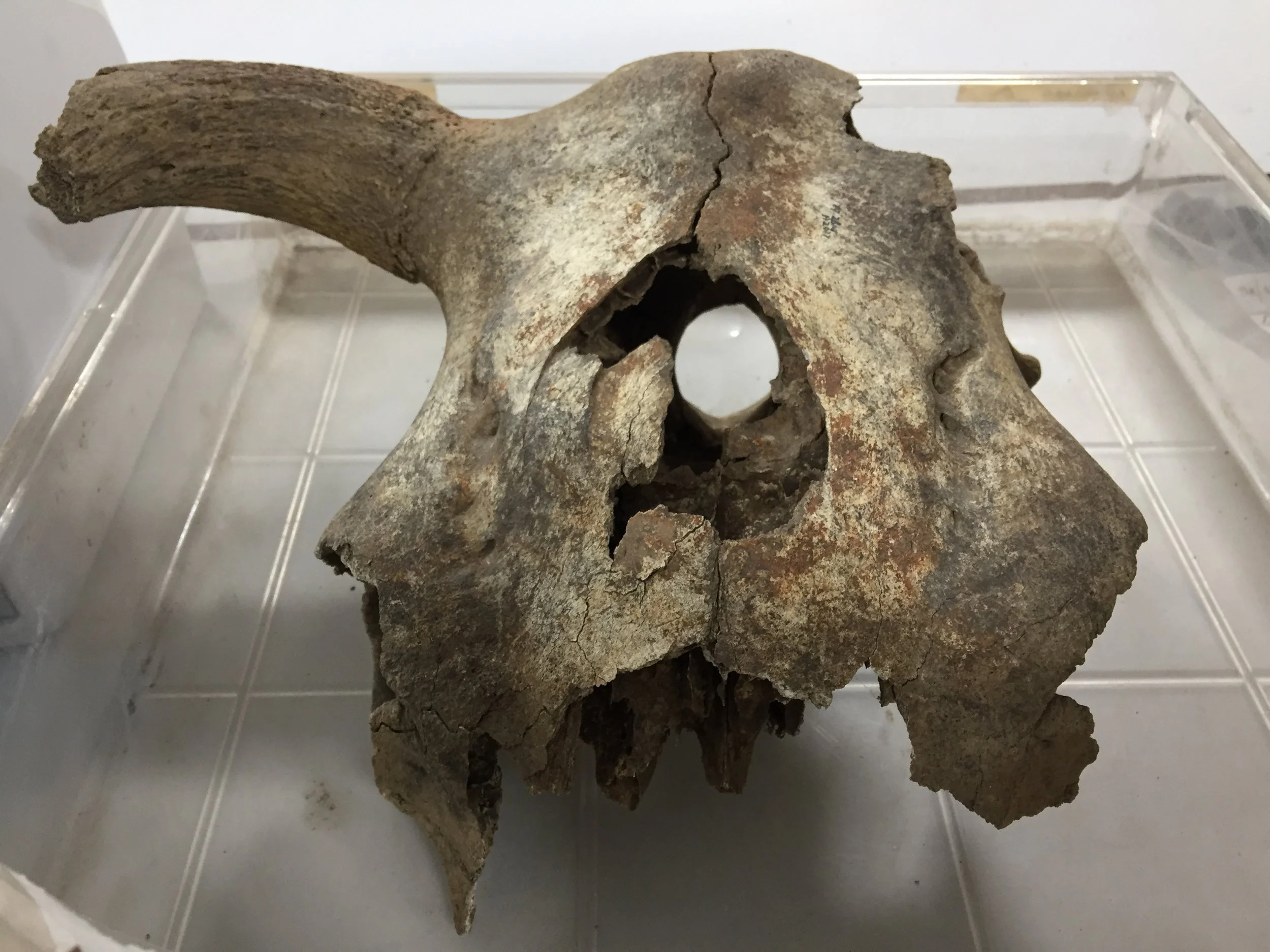
Fig. 1. Iron Age Cow Skull with Pole Axe Damage.
Further Reading
Bloody Slaughter: Ritual Decapitation and Display At the Viking Settlement of Hofstaðir, Iceland
By Gavin Lucas and Thomas McGovern
European Journal of Archaeology, Vol. 10, No. 1 (2007)
[Online at http://www.nabohome.org/publications/Bloody%20Slaughter%2008.pdf]
Morris, J. (2011) Investigating Animal Burials: Ritual, mundane and beyond
BAR British Series 535
-Hillson, S. (1992) Mammal Bones and Teeth: An Introductory Guide to Methods of Identification
London: University College London Institute of Archaeology
O’Connor, T. & Sykes, N. (Eds.) (2010) Extinctions and Invasions: A Social History of British Fauna
Windgather Press
Fagan, B. (2015) The Intimate Bond: How animals shaped human history
London: Bloomsbury Press
Toynbee, J.M.C. (2013) Animals in Roman Life & Art
Barnsley: Pen & Sword
Merrifield, R. (1987) The Archaeology of Ritual and Magic
London: Guild Publishing London
Van Grouw, K. (2018) Unnatural Selection
Oxfordshire: Princeton University Press
Knickers (2018) Knickers, the magical Australian steer
Cleavers Press
Contact
Alex Fitzpatrick
Twitter: @archaeologyfitz
Simona Falanga
Twitter: @CrazyBoneLady
Music
"Coconut - (dyalla remix)"
Megan Fox Teaches Archaeology - TAS 54
So, Megan Fox likes archaeology and wants to tell us all about it. Well, our host Chris Webster has a few things to say about that. They're, surprisingly, not all bad. Check out the show if you haven't - it won't be on for long.
Links
Contact
Chris Webster
Implementing a Tablet-Based Recording System for Ceramic Classification - ArchaeoTech 95
Many people are writing papers about "going digital" and the results from doing so. However, not too many are writing about the effects of going digital on a crew. For example, do people work better together or separately when recording artifacts with a tablet. On today's episode we talk to the authors of a paper about going digital on a project in Peru and how recording ceramics was changed by using tablets.
Links
Mobilization as Mediation: Implementing a Tablet-Based Recording System for Ceramic Classification, Parker VanValkenburgh, Luiza O. G. Silva, Chiara Repetti-Ludlow, Jake Gardner, Jackson Crook, and Brian Ballsun-Stanton
DOI:
10.1017/aap.2018.12
Advances in Archaeological Practice 6(4), 2018, pp. 342-356
Contact
Chris Webster
Twitter: @archeowebby
Paul Zimmerman
Twitter: @lugal
Email: paul@lugal.com