That’ll Do, Pig - Animals 15
On this episode of ArchaeoAnimals, (a very hungry) Alex faces one of her many nemeses: pig teeth! Learn more about pig domestication, the wealth of information you may gather from archaeological pig remains and some exciting archaeological projects featuring pigs. Simona’s fascinating insight into Roman tax law is a bonus ;)
Sources:
https://www.sciencemag.org/news/2015/08/taming-pig-took-some-wild-turns
King (1978) A comparative analysis of bone assemblies from Roman sites in Britain. The Institute of Archeology, London.
https://www.sciencemag.org/news/2015/08/taming-pig-took-some-wild-turns
http://www.rubiconheritage.com/2011/06/14/cooking-a-pig-bronze-age-style-part-1/
https://www.archaeology.co.uk/articles/neolithic-food-miles.htm
https://www.naturkundemuseum.uni-halle.de/forschungsprojekte/sus_100/
Contact
Alex Fitzpatrick
Twitter: @archaeologyfitz
Simona Falanga
Twitter: @CrazyBoneLady
Music
"Coconut - (dyalla remix)"
Listening to the Oldies - Ep 62

This week, Anna and Amber sing you a little tune about musical instruments in the archaeological record, and the ways that we can access ancient music today. From the discoveries of the earliest known flutes, to jamming out with Homer, to some mind-blowing takes on sound and silence, consider it our first movement in this composition.
Links
Scales from Around the World (How Music Really Works)
A Biological Rationale for Musical Scales (PLOSOne)
A Voice from the Past (The New Yorker)
The European Music Archaeology Project Recreates Instruments of Old (New York Times)
Ice and Longboats: Ancient Music of Scandinavia (European Music Archaeology Project, Volume 2)
Ancient Greek music: now we finally know what it sounded like (The Conversation)
8 Oldest Musical Instruments in the World (Oldest.org)
Oldest Greek Fragment of Homer Discovered on Clay Tablet (Smithsonian)
Sing like you mean it! - the Linguistics of Tonal Languages
Listen to Sappho Read By Stephen G. Daitz (The New Yorker Podcast)
Hear What Homer’s Odyssey Sounded Like When Sung in the Original Ancient Greek (Open Culture)
We can tell where a whale has travelled from the themes in its song (New Scientist)
Contact
CRM Masterminds, Possible? - CRMArch 173
Masterminds - are they right for CRM? A mastermind group is a group of people that help each other learn and grow. The most beneficial groups have a cost because paying for it makes you attend. What Chris Webster proposes is an affordable mastermind series in four levels that will help advance anyone in the group.
Give us your thoughts at chris@archaeologypodcastnetwork.com
Follow Our Panelists On Twitter
Bill @succinctbill; Doug @openaccessarch; Stephen @processarch; Bill A. @archaeothoughts; Chris W @Archeowebby, @DIGTECHLLC, and @ArchPodNet
Blogs:
Bill White: Succinct Research
Doug Rocks-MacQueen: Doug’s Archaeology
Stephen Wagner: Process - Opinions on Doing Archaeology
Chris Webster: Random Acts of Science
Story Time with Anna: Olaus and the Chamber of Confirmation Bias - Dirt 61
Snuggle on down in your jimjams with a mug of your favorite warm beverage, as Anna tells Amber a bedtime story about a great moment in archaeological discovery. This week, we travel back to 17th century Sweden, where a professor named Olof Rudbeck changed the world with his research. No spoilers, so check out thedirtpod.com for this week's show notes and recommended reading.
Contact
New Apple Hardware and Software for Sept 2019 - ArchaeoTech 112
Every September Apple releases at least the new iPhone for the year. Sometimes, like this year, they release a bit more. Today Chris gives you an update on the new Watch, iPhones, and iPad. This isn’t just an Apple fan-boy perspective but a look at what the new upgrades can do for archaeology and fieldwork.
Links
Contact
Chris Webster
Twitter: @archeowebby
Paul Zimmerman
Twitter: @lugal
Email: paul@lugal.com
Northern European Rock Art with Rauno Lauhakangas - TAS 73
Rauno Lauhakangus is the president of the Finnish Rock Art Society and a physicist. He’s on TAS to talk about northern European Rock Art and how we interpret that past through the rock carvings. Also, there’s no pictographs in Finland?
Links
Contact
Chris Webster
History of Fabric Pt 2 - Yarns 02
Part 2!!
Have you ever looked at a piece of knitting and wondered, “How did they figure out how to DO that with just two needles and string?” Whether you’re a picker or a thrower, those techniques had to come from somewhere, and their origins may surprise you.
Rachel Roden and Heather Boyd look at knitting techniques with the eyes of designers, through the lens of archaeology: each episode travels the world to dig up and discuss a different technique, and then applies it to a clever pattern designed by Rachel.
Links
To get your copy of the pattern, and knit-a-long head over to Rachel’s pattern store on Ravelry (https://www.ravelry.com/designers/rachel-roden)
To get the yarn Rachel recommends, head over to Jimmy Beans Wool (https://www.jimmybeanswool.com/knitting/yarn/BichesetBuches/LePetitLambswool.asp?showLarge=true&specPCVID=91487)
Contact
History of Fabric Pt 1 - Yarns 01
Have you ever looked at a piece of knitting and wondered, “How did they figure out how to DO that with just two needles and string?” Whether you’re a picker or a thrower, those techniques had to come from somewhere, and their origins may surprise you.
Rachel Roden and Heather Boyd look at knitting techniques with the eyes of designers, through the lens of archaeology: each episode travels the world to dig up and discuss a different technique, and then applies it to a clever pattern designed by Rachel.
Links
To get your copy of the pattern, and knit-a-long head over to Rachel’s pattern store on Ravelry (https://www.ravelry.com/designers/rachel-roden)
To get the yarn Rachel recommends, head over to Jimmy Beans Wool (https://www.jimmybeanswool.com/knitting/yarn/BichesetBuches/LePetitLambswool.asp?showLarge=true&specPCVID=91487)
Contact
Listener Questions - Dirt 60
This week, Anna and Amber tackle some questions submitted from you, the listener! It's a lightning round of stories about ghost puppers, citizen archaeology, glimpses of what happens behind closed doors, Stone Age musicians, and much more!
Links
Archaeology, folklore, and the skeletal remains of a hellhound (Strange Remains)
Leiston: Are these the bones of devil dog, Black Shuck? (East Anglia Daily Times)
What To Do If You Find A Site (Archaeological Society of Virginia)
How Climate Change May Have Shaped Human Evolution (Smithsonian Magazine)
A Vest Pocket Guide to Brothels in 19th-Century New York for Gentlemen on the Go (New York Times)
A Guide to Houses No Gentleman Would Dare to Frequent (New York Times)
Contact
Cross Communication in CRM - Ep 172
We start with a definition of historical archaeology in segment one. The next two segments are about communication in archaeology. Are there really trade secrets? Should we be sharing information as well as business information?
Follow Our Panelists On Twitter
Bill @succinctbill; Doug @openaccessarch; Stephen @processarch; Bill A. @archaeothoughts; Chris W @Archeowebby, @DIGTECHLLC, and @ArchPodNet
Blogs:
Bill White: Succinct Research
Doug Rocks-MacQueen: Doug’s Archaeology
Stephen Wagner: Process - Opinions on Doing Archaeology
Chris Webster: Random Acts of Science
Meersbrook Hall: An iconic Sheffield Building with Ken Dash - Arch and Ale 26

This month Archaeology and Ale proudly present:
Ken Dash on “Meersbrook Hall: An iconic Sheffield building”
Ken has spent his life studying Sheffield heritage. In this talk, Ken brings us through his experience excavating around Meersbrook Hall. Once the home of the Roebuck and Shore families, Meersbrook Hall would later house the collection of Victorian art critic and patron, John Ruskin.
About
Archaeology and Ale is a monthly series of talks presented by Archaeology in the City, part of the University of Sheffield Archaeology Department’s outreach programme. All talks take place at the Red Deer pub on Pitt Street in Sheffield.
Fun-A with Fauna - Dirt 59
Anna and Amber talk about animal bones and what you can learn from them about domestication! Learn about how selective breeding affects animals' bodies (and also learn that Amber is very afraid of pigs). We also take a detour into Spookytown with some bizarre Iron age animal burials, and top it off with a lovely story about a kitten.
Links
Contact
Episode 33 Extended Interview - HeVo 33

Check out the show notes for Episode 33 of Heritage Voices for the complete show notes.
Coast Salish Archaeology - HeVo 33
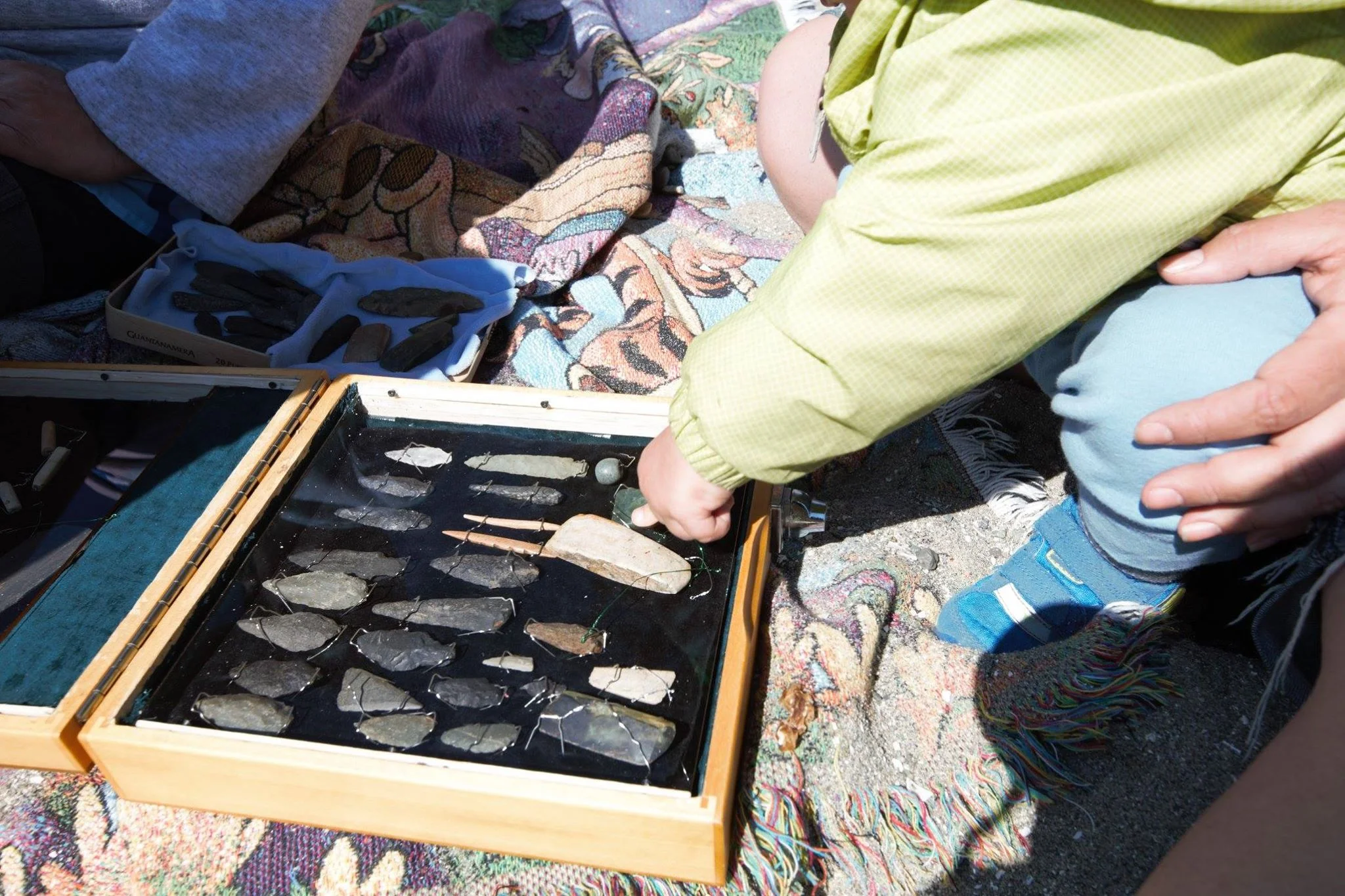
On today’s episode Jessica hosts Karen Rose Thomas, who is finishing up her Masters at the University of British Columbia. We talk about being a First Nations field representative, her experience as an Indigenous student, and the colonial nature of anthropology. We also talk about her experiences on Simon Fraser University’s Aboriginal Reconciliation Council and as the Tsleil-Waututh representative on the Board of Directors for the Museum of Vancouver. We close out with a fun members only section where we talk about her work for the Tsleil-Waututh Nation, experimental archaeology, public anthropology, museums, and where she would like to go in the future.
Links
https://www.cbc.ca/news/renew-stories-of-indigenous-innovation-1.5141155 [Radio Component of the Story]
https://www.citr.ca/radio/unceded-airwaves/episode/20181205/
SFU Aboriginal Reconciliation Council Updates
http://www.sfu.ca/sfunews/stories/2019/06/charles-comfort-mural-removal-statement-aboriginal-recociliation.html [Karen: "About the SFU ARC, this was just in my newsfeed today, the university is acting on one of our recommendations!"]
Photos
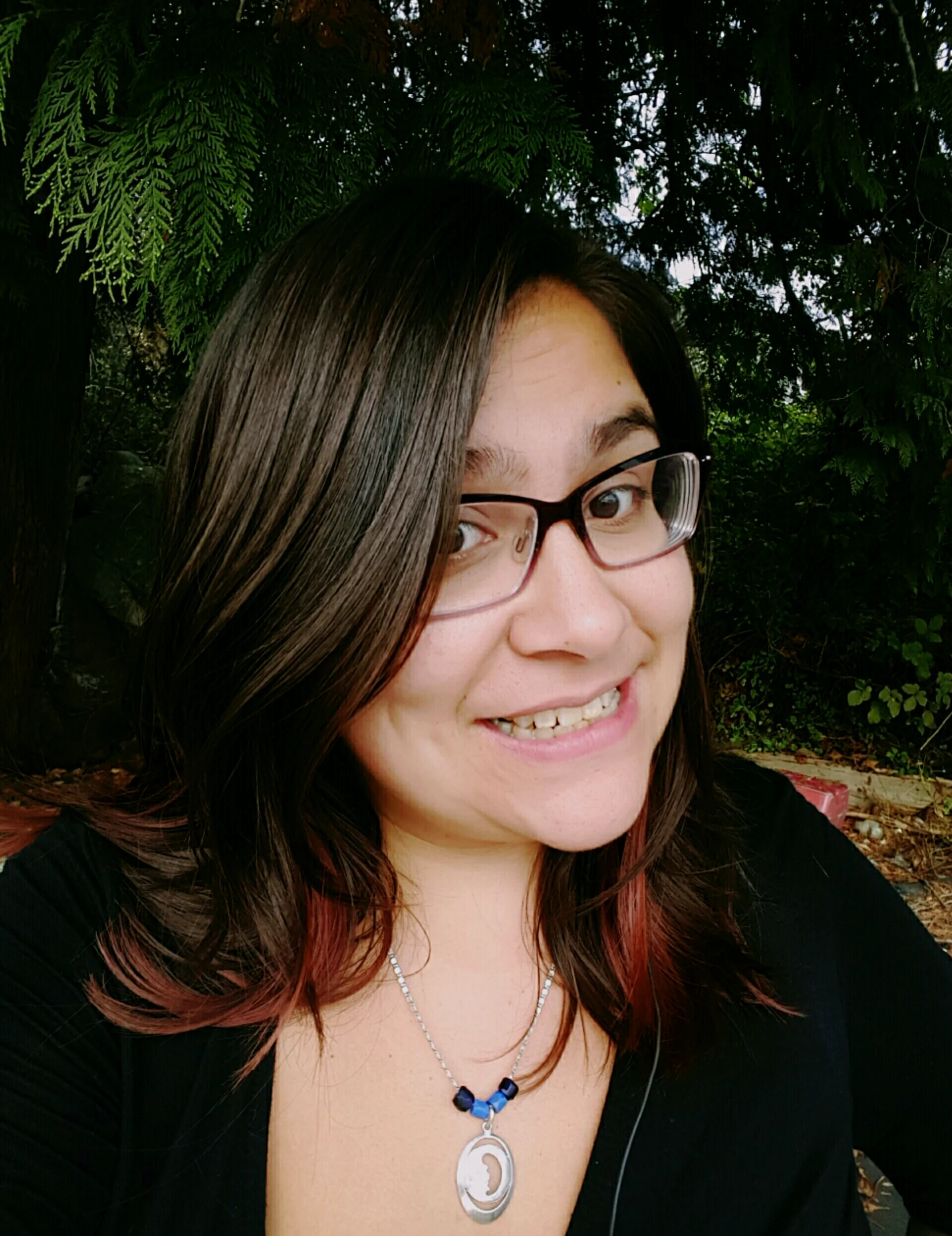
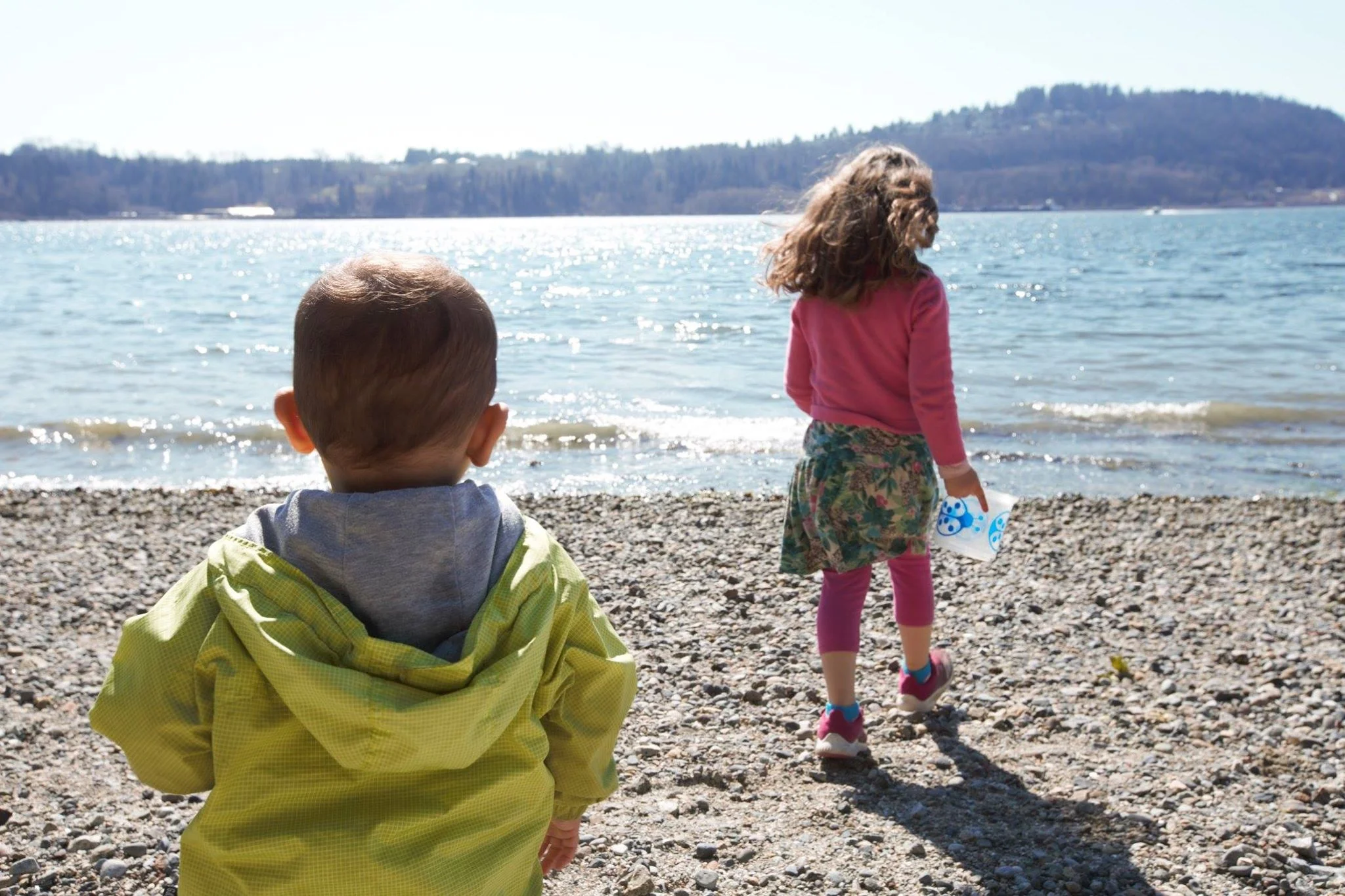
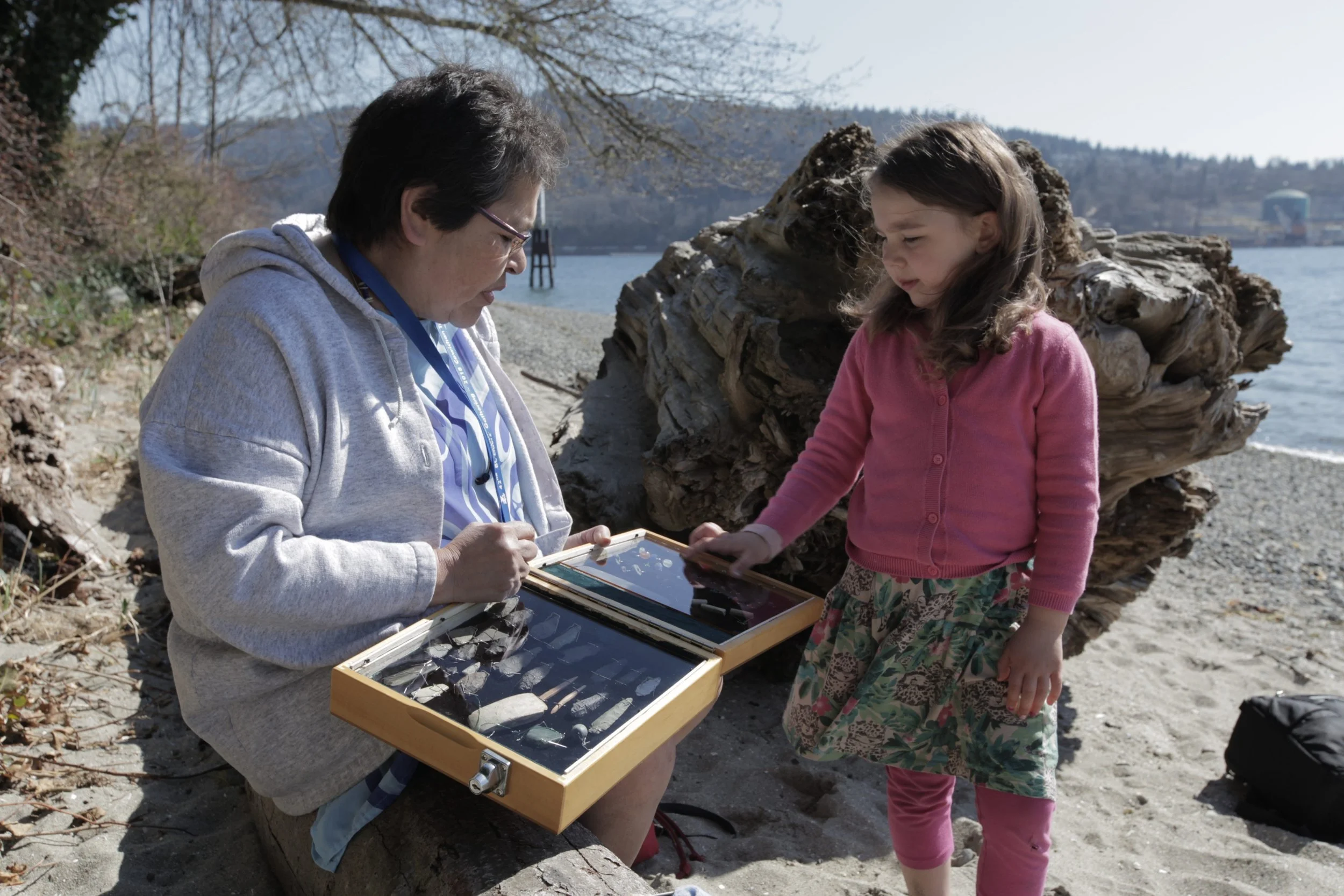
Photos of Karen and her family are all taken at Cates Park / Whey-ah-Wichen which is an ancient village site on the Burrard Inlet, but it is now a park. PDF includes pictures of the stone tools she refers to in the podcast episode.
Eat, Dig, Love: A Summer in the Ukraine - Ruins 6
In this episode of A Life in Ruins Podcast, our three co-hosts reconvene after a summer of shenanigans while Carlton is fighting the effects of jet lag. Connor and David mention what they have been up to and Carlton talks about his trip gallivanting across Eastern Europe. Carlton has some tips for those wishing to travel with Juul pods (spoiler alert, do not travel with them unless you want them taken away from you) and questions the legitimacy of duck effigies mentioned by Connor. This episode is full of hate, laughter and ridiculousness.
Contact
Instagram: @alifeinruinspodcast
Facebook: @alifeinruinspodcast
1800 Year Old Alaskan Footprints - TAS 72
Recently, 1800 year-old footprints were found in Alaska. Gerad Smith, one of the researchers on the project from the University of Alaska joins Chris Webster on his radio show on KNVC in Carson City, Nevada.
Links
Contact
Chris Webster
Native or Introduced? The Animals You’d NEVER Thought Came From Elsewhere - Animals 14
For this episode, Alex and Simona delve into the realm of native and introduced species. How long does a certain species have to consistently live in a geographical location to be considered native? What do introduced species tell us about past populations? What is it with the Romans introducing a horde of animals to Britain? Are squirrels real? These are but few of the questions they shall attempt to answer.
Sources:
Wolverton, S. and Lyman, R.L. (2012) Conservation Biology and Applied Zooarchaeology. Tuscon, AZ: The University of Arizona Press.
O’Connor, T. & Sykes, N. (Eds.) (2010) Extinctions and Invasions: A Social History of British Fauna
Windgather Press
Return of pine martens could save Britain's red squirrels, say scientists https://www.theguardian.com/environment/2018/mar/07/return-of-pine-martens-could-save-britains-red-squirrels-say-scientists
Easter Bunny Project: https://www.easter-origins.org/about
On the trail of the Fallow Deer project: https://ahrc.ukri.org/research/readwatchlisten/features/onthetrailofthefallowdeer/
Wild Boar: https://www.woodlandtrust.org.uk/visiting-woods/trees-woods-and-wildlife/animals/mammals/wild-boar/
Contact
Alex Fitzpatrick
Twitter: @archaeologyfitz
Simona Falanga
Twitter: @CrazyBoneLady
Music
"Coconut - (dyalla remix)"
The Dirt Potcast: Ceramics in Archaeology - Dirt 58
This week, we’re talking ceramics! Anna and Amber explain how bits of pottery aren’t called shards, but do hold lots of secrets (and sometimes blood!), the role of ceramics in archaeology, evidence for amateur and student potters, and how Amber clearly didn’t miss her calling as a ceramic artist.
Links
Basic Concepts: Pottery in the Archaeological Record (Archaeology Review)
[https://ahotcupofjoe.net/2007/01/basic-concepts-pottery-in-the-archaeological-record/]Ancient Chinese pottery confirmed as the oldest yet found (The Guardian)
[https://www.theguardian.com/science/2012/jun/28/ancient-chinese-pottery-oldest-yet]Instrumental Neutron Activation Analysis (INAA) in the Study of Archaeological Ceramics (Oxford Handbook of Archaeological Ceramic Analysis)
[https://www.oxfordhandbooks.com/view/10.1093/oxfordhb/9780199681532.001.0001/oxfordhb-9780199681532-e-24]Thule tradition (University of Waterloo)
[http://anthropology.uwaterloo.ca/ArcticArchStuff/thule.html]Ceramic Technology of Arctic Alaska: An Experimental and Adaptive Craft (Teal Sullivan)
[http://www.tealsullivan.com/ceramics/arcticpottery/]How to Make an Unfired Clay Cooking Pot: Understanding the Technological Choices Made by Arctic Potters (Journal of Archaeological Method and Theory)
[https://www.jstor.org/stable/25653111?seq=1#page_scan_tab_contents]Muweilah (Universes in Universe)
[https://universes.art/en/art-destinations/sharjah/archaeological-sites/muweilah]Prehistoric Children Working and Playing: A Southwestern Case Study in Learning Ceramics (Journal of Archaeological Research)
[https://www.journals.uchicago.edu/doi/abs/10.1086/jar.57.4.3631354]The Dirt Book Club!
When Clay Sings (via WorldCat) [https://www.worldcat.org/title/when-clay-sings/oclc/340283]
Contact
Trash, and the Archaeologists That LOVE It - CRMArch 171
On this episode we discuss how archaeologists deal with the ubiquity of the mid-20th century trash that we all see around us. What do we do with it? Does 50 years even make sense anymore? What about plastic?
Follow Our Panelists On Twitter
Bill @succinctbill; Doug @openaccessarch; Stephen @processarch; Bill A. @archaeothoughts; Chris W @Archeowebby, @DIGTECHLLC, and @ArchPodNet
Blogs:
Bill White: Succinct Research
Doug Rocks-MacQueen: Doug’s Archaeology
Stephen Wagner: Process - Opinions on Doing Archaeology
Chris Webster: Random Acts of Science
LIDAR in Cambodia with Dr. Sarah Klassen - ArchaeoTech 111
It’s all LIDAR today! Paul and Chris interview Dr. Sarah Klassen, an archaeologist that has done extensive work in southeast Asia, specifically Cambodia. She’s got some fascinating things to say about what the LIDAR data told them about the past at Ankor Wat and other temples, and, about new questions the data presented.
Links
App of the Day
Webby: Motion-X GPS Update
Contact
Chris Webster
Twitter: @archeowebby
Paul Zimmerman
Twitter: @lugal
Email: paul@lugal.com