What Does a Career in Archaeology Look Like? - CRMArch 179
We continue our deep dive into a lengthy listener email with a discussion about what a job in archaeology looks like. What's the difference between a job and a career? What should you look for if you're trying to get a job in archaeology when it comes to graduate programs? We start, though, with a few comments from a twitter follower about episode 178.
Follow Our Panelists On Twitter
Bill @succinctbill; Doug @openaccessarch; Stephen @processarch; Bill A. @archaeothoughts; Chris W @Archeowebby, @DIGTECHLLC, and @ArchPodNet
Blogs:
Bill White: Succinct Research
Doug Rocks-MacQueen: Doug’s Archaeology
Stephen Wagner: Process - Opinions on Doing Archaeology
Chris Webster: Random Acts of Science
Affiliates
Yakama Tribal Archaeology - HeVo 36

On today’s episode Jessica hosts Jon Shellenberger (Yakama), Yakama Nation Tribal Archaeologist. We talk first about his journey to become an archaeologist and ethnographer. In the second segment we talk about the work of the Yakama Nation to defend their inherent and treaty rights to fish, to protect tribal members from being prosecuted for having eagle and migratory bird feathers, and to re-establish their buffalo hunts in what is now Yellowstone National Park. Finally we talk about the projects he works on as the Yakama Tribal Archaeologist, what that looks like on a daily basis, and his larger vision for the program.
Links
Contact
Jessica
Lyle
Affiliates
Our Most Metal Episode of All Time - The Dirt 73

Time to throw the devil horns and apply superfluous umlauts to vöwëls, because this week The Dirt is totally metal! Metallurgy, that is. How and when did humans first use metals, and what can we learn about them? Some come straight from the ground, others from far, far away, some from a combination of raw materials, and some? Some come FROM OUTER SPACE.
Links
The meteoritic origin of Tutankhamun's iron dagger blade (Meteoritics and Planetary Science)
New Respect for Metal's Role in Ancient Arctic Cultures (Science)
Robert E. Peary and the Cape York Meteorites (Polar Geography)
Prehistoric Balkans Were 'Faking' Gold 6,500 Years Ago (Ha’aretz)
Theorizing Bronze-Age Intercultural trade : the evidence of the weights (Paléorient)
Exchange Systems and Trade Networks in Anthropology and Archaeology (ThoughtCo)
Antikythera Shipwreck Yields New Cache of Treasures, Hints More May Be Buried at Site (Smithsonian)
How Was Iron Smelted in Ancient Israel? Researchers Build Kilns to Find Out (Ha’aretz)
Contact
Affiliates
"Born a Slave, Died a Pioneer", the Nathan Harrison Story with Dr. Seth Mallios - TAS 77
Dr. Seth Mallios joins April and Chris to talk about his new book, “Born a Slave, Died a Pioneer: Nathan Harrison and the Historical Archaeology of Legend” (2020 Berghahn Books). Nate Harrison had a long life and an amazing story, from his birth into slavery in Kentucky, to the gold mines of northern California’s Gold Rush, and to the hills of San Diego. Join us while we learn about the amazing life of Nathan Harrison as told through historical documents and archaeological research.
Links
Contact
Chris Webster
Affiliates
Dynamic Communities on the Mesa Verde Cuesta with Kelsey Reese - ArchaeoTech 118
Paul interviews Kelsey Reese about her research at Mesa Verda and a recent paper in American Antiquity. Kelsey is a Ph.D. Candidate at the University of Notre Dame and is studying the long-term effects of sustained climate change on contemporary subsistence-based farming communities. This episode focuses that research on Mesa Verde in the American Southwest.
Links
Dynamic Communities on the Mesa Verde Cuesta by Kelsey Reese
American Antiquity, 84(4), 2019, pp. 728-747
doi: 10.1017/aaq.2019.74
Uncovering Sheffield Castle with Milica Rajic - Arch and Ale 28

Archaeology and Ale is a monthly series of talks presented by Archaeology in the City, part of the University of Sheffield Archaeology Department’s outreach programme. In this talk, Archaeology in the City proudly presents - Milica Rajic on “Uncovering Sheffield Castle” This talk took place on Thursday, November 29th, 2019 at the Red Deer in Sheffield.
Milica is a project manager with Wessex Archaeology where she has worked since 2015. During that time she has served on the recent excavations at Sheffield's Castlegate area. In this talk, Milica takes us through a brief history of the Castle which once stood there and tells us about what the recent findings mean for the future of Sheffield Castle.
For more information about Archaeology in the City’s events and opportunities to get involved, please email archaeologyinthecity@sheffield.ac.uk or visit our website at archinthecity.wordpress.com. You can also find us on Twitter (@archinthecity), Instagram (@archaeointhecity), or Facebook (@archinthecity)
*Content Warning: Listener discretion is advised as there may be adult language*
Gluten and Alien Free Archaeology: Combating Pseudoscience with Dr. David A. Anderson - Ruins 11
In this episode of A Life in Ruins Podcast, the hosts have the honor of speaking with Dr. David A. Anderson of Radford University. Dr. Anderson is not only an accomplished Mesoamerican archaeologist, but also famous as a Scicomm writer and has a large twitter following. As you'll find out, Carlton used to study under Dr. Anderson and was a major influence on his career. It seems that he has grown past his days of youtube anthropology raps. David Ian Howe asks interesting questions regarding Dr. Anderson's research, while Connor self-deprecates about the host's collective status as "failed mayanists." However, the conversation ends on a poignant note regarding the culture of academia as well as science communication to the public.
You can follow David Anderson on social media via @dsaarchaeology.
Contact
Instagram: @alifeinruinspodcast
Facebook: @alifeinruinspodcast
Affiliates
It's the (Moral) Circle of Life! - The Dirt 72
This week, Amber and Anna wade into the moral circle. When it comes to deserving help and care, who counts? What does that care look like, and how can we see evidence for it in the historical and archaeological record? We do our best to wrap our brains around all this and more.
Links
Should animals, plants, and robots have the same rights as you? (Vox)
Ancient Bones That Tell a Story of Compassion (New York Times)
Calculated or caring? Neanderthal healthcare in social context (World Archaeology)
Brutal Brawls And Cranial Surgery Discovered On Ancient Skeletons From Lake Titicaca (Forbes)
Contact
Affiliates
Prestigious CRM Programs and Registered Archaeologists - CRMArch 178
As we've always requested sometimes we actually get letters into the show! One such letter was sent to Doug and we answer just a couple of those questions on this show. Those questions revolve around the thought of a prestigious CRM University and what are some of the better CRM programs out there. Also, we talk about the new Registered Archaeologist certification from the RPA and the new standards requiring continuing education credits.
Links
Follow Our Panelists On Twitter
Bill @succinctbill; Doug @openaccessarch; Stephen @processarch; Bill A. @archaeothoughts; Chris W @Archeowebby, @DIGTECHLLC, and @ArchPodNet
Blogs:
Bill White: Succinct Research
Doug Rocks-MacQueen: Doug’s Archaeology
Stephen Wagner: Process - Opinions on Doing Archaeology
Chris Webster: Random Acts of Science
Affiliates
Holidays and Feasting in the Archaeological Record - Animals 17
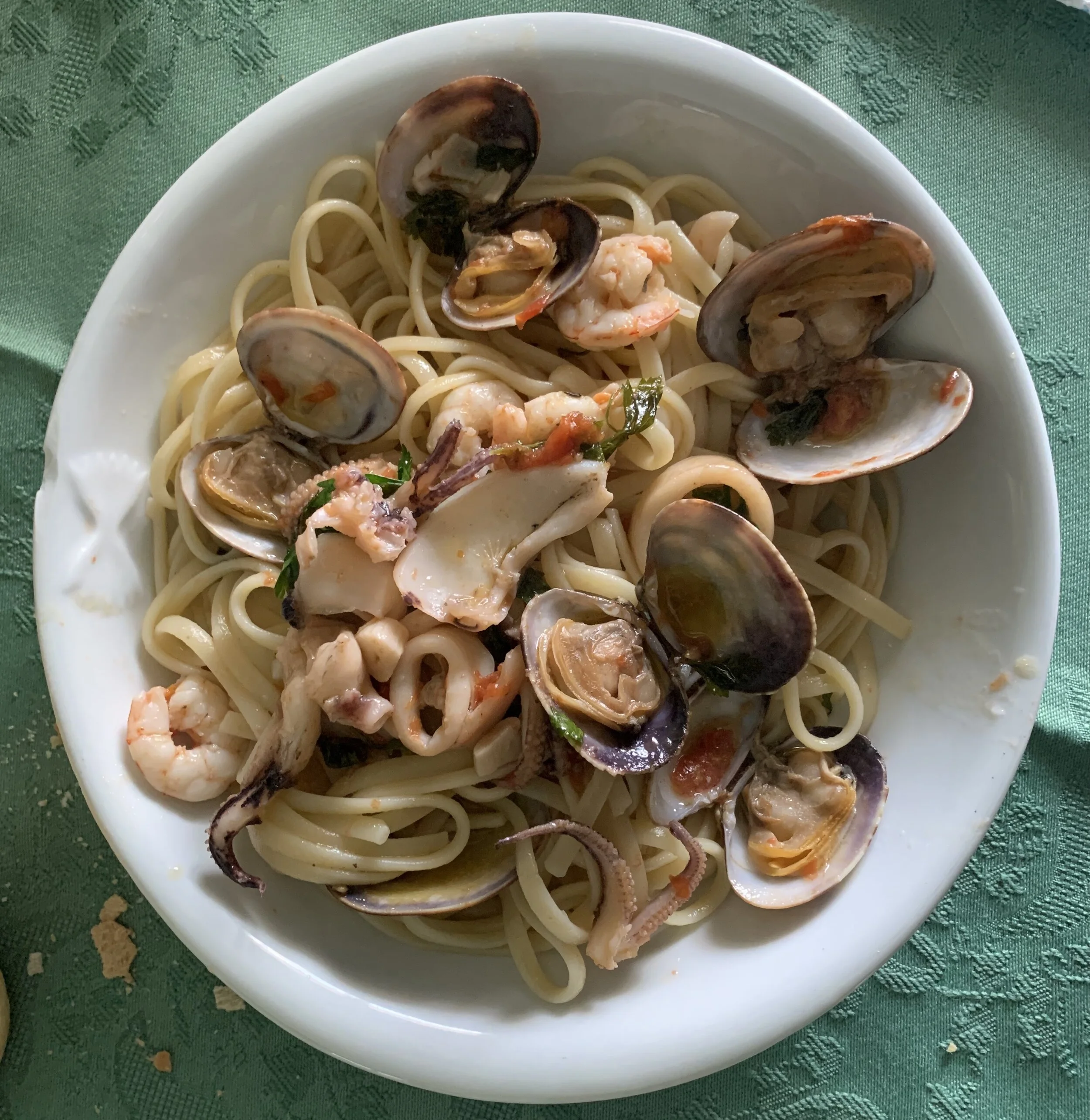
On this ‘holiday special’, Alex and Simona once again push their endurance to the limit by talking about food before dinner-time. Tune in to learn more about feasting in the archaeological record, and why it is not all that different from present day feasting. To demonstrate this, our hosts describe some of their favourite holiday feasts (in addition to some listeners’ suggestions) and the reasoning behind them.
Ps. Happy birthday APN 🙂
Links and Sources
Hastorf C.A. (2008) Food and feasting, social and political aspects. In: Pearsall D.M. (ed) Encyclopedia of Archaeology. London: Elsevier Inc.
Nelson S.M. (2003) Feasting the Ancestors in Early China. In: Bray T.L. (eds) The Archaeology and Politics of Food and Feasting in Early States and Empires. Springer, Boston, MA
The Creation of Monuments: Neolithic Causewayed Enclosures in the British Isles
Prehistoric Britons rack up food miles for feasts near Stonehenge, study shows
Early Pint Evidence of First British Bear Found in Cambridgeshire
Maisels, C. (2010) The Archaeology of Politics and Power: Where, When and Why the First States Formed. Oxford, Oxbow books
Russell, N. (2012) Social Zooarchaeology. Cambridge University Press.
Elliot, P. (2016) Food and Farming in Prehistoric Britain. Fonthill Media

Aiding and A-vetting: The Archaeology of Animal Care - The Dirt 71
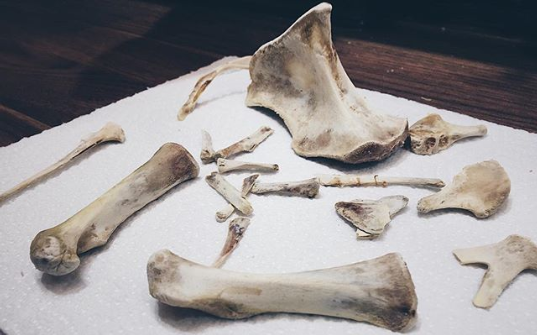
This week Anna and Amber told you we’re going to the park, but really it’s a trip to the v-e-t in an episode all about evidence for animal care and veterinary medicine in the archaeological record. Learn how archaeologists assess animal welfare from bone analysis, ancient Egyptian animal medicine, a snapshot of life on a medieval French farm, and more, including 2nd millennium BCE pro tips on how to get your horse absolutely jacked.
Links
Prehistoric Puppy May Be Earliest Evidence of Pet-Human Bonding (National Geographic)
Excavating the history of ancient veterinary practices (Veterinary Record)
Care or Neglect?: Evidence of Animal Disease in Archaeology
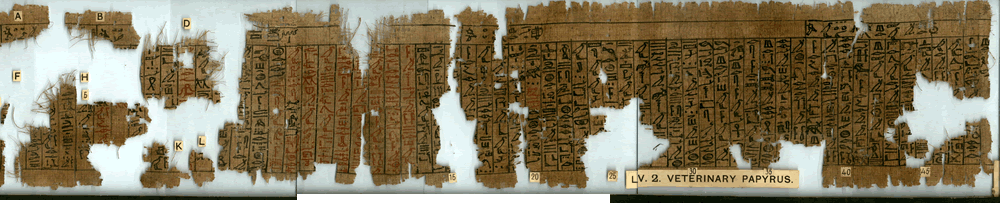
Lahun Veterinary Papyrus
Analyzing the Chacoan Road Network with Sean Field - ArchaeoTech 117
Researcher Sean Field joins us to talk about his work performing a least cost analysis on the Chacoan Road Network in New Mexico. The Chaco roads are somewhat of a mystery because of their size. Sean talks about his work and recent paper with Paul and Chris.
Links
App of the Day
Paul: Just 6 Weeks
Contact
Chris Webster
Twitter: @archeowebby
Paul Zimmerman
Twitter: @lugal
Email: paul@lugal.com
Affiliates
Japanese Food and Drink, Then, Now, and Way Back When - The Dirt 70
It’s the second half of our two-episode series on Japan! This week, Amber and Anna explore some of the traditions and material culture surrounding Japanese food. We research rice, sample sake, banter about bento, and MAYBE MAKE THE BEST SERIES OF PUNS EVER HEARD ON THE SHOW.
Links
Rice in Japan: History, Kinds of Rice and Cooking and Eating Rice (Facts and Details)
Brewing Behind Barbed Wire: An Archaeology of Saké at Amache (Digital Commons @ DU)
The Japanese Ghost Town Buried Deep in a Canadian Forest (Gastro Obscura)
Ancient Pottery Reveals Japanese Hunter-Gatherers’ Taste for Fish (SciNews)
Contact
Affiliates
Days of Our Ruined Lives - Ruins 10
In this episode of A Life in Ruins Podcast, our three co-hosts talk about some recent discussions happening on social media. That topic leads us into talking about science communication, specifically bringing up David's @Ethnocynology Instagram account. We then just catch up with each other and finish out with Connor being more ridiculous than usual.
Contact
Instagram: @alifeinruinspodcast
Facebook: @alifeinruinspodcast
Affiliates
The Type of Person It Takes To Unionize - CRMArch 177
As a response to some recent conversations in social media the CRM Arch podcast crew welcomes new co-host Heather McDaniel to discuss what it takes to create a union. What skills would those people need? Is it possible? We also talk about some site form recording issues and what the word “historic” means.
Follow Our Panelists On Twitter
Bill @succinctbill; Doug @openaccessarch; Stephen @processarch; Bill A. @archaeothoughts; Chris W @Archeowebby, @DIGTECHLLC, and @ArchPodNet
Blogs:
Bill White: Succinct Research
Doug Rocks-MacQueen: Doug’s Archaeology
Stephen Wagner: Process - Opinions on Doing Archaeology
Chris Webster: Random Acts of Science
Affiliates
Indigenous Archaeology as Practice - HeVo 35
On today’s episode Jessica hosts Dr. Kisha Supernant (Métis), Associate Professor of Anthropology at the University of Alberta. You may remember Dr. Supernant from Heritage Voices Episode 30 on Cultural Landscapes. Dr. Supernant talks about how the indigenous experience in Canada differs from that in the US, including the Truth and Reconciliation Commission. We also talk about Métis identity and how it has been largely misunderstood. Finally, we talk about archaeology and identity, the real and complicated consequences of archaeology, and how to do archaeology right no matter the location and associated communities by working through an Archaeologies of the Heart approach.
Links
Calls to Action: https://www.youtube.com/playlist?list=PLtM2eRHIW81qCCwT3tJ2nFPpRCsDAhcCQ
Executive Summary: https://www.youtube.com/watch?v=vW4lQfOfl3I&list=PLxPr_RIsvg9JJWoiRx2kl2v24r_pu7JbR
Tohono O’odham Nation Border Video- https://www.youtube.com/watch?time_continue=5&v=QChXZVXVLKo&fbclid=IwAR09y8voKsx923Ln6y6EZUoK2njf4VxBHUefe4BDLFJnrWziCnOvv5l4kjc
Contact
Jessica
Lyle
Affiliates
The Prehistoric Japanese - The Dirt 69
This week, it’s a sponsored episode (thanks Elizabeth!) and part one in a two-part series on ancient Japan. This week—the Jomon, prehistoric Japanese hunter-gatherers, and their descendants, the Ainu indigenous people. Also, some bears.
Links
Contact
Affiliates
The Tools That We Use: Word Processors- ArchaeoTech 116
We think of archaeologists' main activity as digging. But anybody who's ever done archaeology can tell you that, regardless of what kind of archaeology we do, writing is a far more important skill. Here on the ArchaeoTech Podcast we talk a lot about the tools that we use in the field, but we don't talk so much about the tools that we use to assemble our thoughts when the fieldwork is over. So today we'll dig into a class of often overlooked tools that we all rely on: word processors.
Links
App of the Day
Webby: State Lines
Paul: TP Link Deco
Contact
Chris Webster
Twitter: @archeowebby
Paul Zimmerman
Twitter: @lugal
Email: paul@lugal.com
Affiliates
Dealing with the Devil: The Ritual Protection of Buildings Against Evil with James Wright - Arch and Ale 27
Archaeology and Ale is a monthly series of talks presented by Archaeology in the City, part of the University of Sheffield Archaeology Department’s outreach programme. In this talk, Archaeology in the City proudly presents - James Wright on *“Dealing with the Devil: The Ritual Protection of Buildings Against Evil”* This talk took place on Thursday, October 25th, 2019 at the Red Deer in Sheffield.
James Wright is an expert in recording and analysing historic standing buildings. He specialises in medieval and early modern buildings, vernacular architecture and the study of architectural fragments. In this episode, James teaches us about his work documenting ritual marks at historic structures and explains how these marks were used to protect against demons, devils, and other evildoers.
For more information about Archaeology in the City’s events and opportunities to get involved, please email archaeologyinthecity@sheffield.ac.uk or visit our website at archinthecity.wordpress.com. You can also find us on Twitter (@archinthecity), Instagram (@archaeointhecity), or Facebook (@archinthecity)
**Content Warning: Listener discretion is advised as there is adult language**
Affiliates
The Modern Myth of Turkey with Arie Akkermans - Modern Myth - Episode 6
Archaeology is not just about buried treasure, post-excavation analysis or even what issues exist in modern academia. Sometimes in order for us to understand where we are, we must walk in someone else’s shoes or hear from their perspective. This month’s Modern Myth Episode, I speak with Arie Akkermans, art critic, lecturer and expert in classical Greek history. Arie lives in Turkey, on the Princes Islands and gives us an ear to the ground with respect to the modern and present conflicts in the middle east as well as the way in which history plays a role in justifying aggression as well as its effect on the culture of Istanbul.
Nationalism is not confined to any one country and Arie speaks frankly on the ways in which Turkey has developed a layer of history that separates out what is focused on and what is discarded in the minds of the general public. Its not all serious though, we do have a wonderful interjection by Arie’ two cats, and he explains what it is like to be a cat in Istanbull.
Arie writes for Hyperallergic and The Mantle, please see links for more of his work
He is on Twitter @byzantinologue
Host Tristan is @Anarchaeologist
Follow the Network on @ArchPodNet
5 YEAR ANNIVERSARY OF THE PODCAST NETWORK – DEC 2019 – Stay Tuned for extra content!
Music – Danny Boyle (Modern Rome, Adam Grant & Open Doors)
Links
Links
Contact
Tristan
tristan@archaeologypodcastnetwork.com