We Bet You'll Enjoy This Episode - Ep 114

This week, Anna and Amber have dealt you an excellent hand of examples of gambling, and the archaeology and anthropology thereof! Listeners, we hope you'll bear with us on this episode. We recorded on day three of the 2020 electoral vote counts, and we've both lost our minds. Come along on this ride with us as we explore what evidence we have for gambling in the archaeological record, and what we can learn from the types of games people play.
Links
There’s no such thing as a natural-born gambler (The Conversation)
Deep Play: Notes on the Balinese Cockfight (The Interpretation of Cultures)
Macassan History and Heritage (Australian National University)
Where to gamble on the medieval Adriatic? (Medievalists.net)
Queen Elizabeth I Held England’s First Official Lottery 450 Years Ago (Smithsonian)
Contact
Affiliates
Find this show on the educational podcast app, Lyceum.fm!
The Basketry Boom of the early 20th Century with Gene Meieran - Rock Art 21

Here's one that is a bit different. Did you know that Native California Indians were part of a basketry boom? From about 1890 to 1940 Native people produced some of the most spectacular basketry ever crafted in the world. These masterpiece baskets include imagery and embedded metaphor that is also recognized in our rock art record throughout California and the Great Basin. Gene Meieran one of the authors of an upcoming book by Sunbelt Press will be our guest to discuss how such a volume was created and the treasures produced by California Indians and where these artistic treasures can be seen. The interview will spotlight what it means to Native people to see their ancestors stories, photographs, and art showcased in such a magnificent visual feast! Tune in.
Links
Contact
Chris Webster
Dr. Alan Garfinkel
Affiliates
Find this show on the educational podcast app, Lyceum.fm!
Does A Donut Have Agency? - Dig It 16

In this episode, we discuss agency and the theory of agency by exploring the conceptual definitions as to what is agency, agency in archaeology, and the contingencies of agency. Tune in as we go back and forth about this sticky subject!
Side note: stick to the post-outro song for a little surprise
Sources
Dobres, Maria-Anne and Robb, John, 2000. Agency in archaeology.Gardner, Andrew. 2007. Agency.
Rizvi, Uzma. 2011. Archaeological Encounters: The Role of the Speculative in Decolonial Archaeology.
Silliman, Stephen. 2001. Agency, practical policies and the archaeology of culture contact.
Contact
Show
Twitter: @idigitpodcast
Email: idigitpodcast@gmail.com
Alyssa
Instagram: aal.archaeology
Twitter: Lyssakemi
Michaela
Instagram: mm_digitalized
Twitter: m_mauriello
Affiliates
Find this show on the educational podcast app, Lyceum.fm!
Why We Do it - CRMArch 201
Today's episode is in response to a listener question in which the listener asked why we continue to do CRM even though we always talk about the hardships. What drives you? Is it a passion for history? A love of the outdoors? What drives you to settle for low per diem, bad pay, no benefits, and double-occupancy hotel room? Let us know in the comments.
Listener question: From James at NASA...As to what I would like to hear in CRM, as a member of the public, I would like to understand more of the reason people continue to work in the field despite the hardships. I mean, is there knowledge before they get a degree that this is hard when they do the field work? What is the dropout rate? Is it just in people’s blood to do this, like sailors who need to be on the ocean despite the risk? Also, fundamentally, is CRM just trying to meet regulations (do a job and get paid) or is it actually resulting in stopping/relocating the ventures that initiated them (highway, shopping mall, homes)?
Follow Our Panelists On Twitter
Bill @succinctbill; Doug @openaccessarch; Stephen @processarch; Bill A. @archaeothoughts; Chris W @Archeowebby, @DIGTECHLLC, and @ArchPodNet
Blogs:
Bill White: Succinct Research
Doug Rocks-MacQueen: Doug’s Archaeology
Stephen Wagner: Process - Opinions on Doing Archaeology
Chris Webster: Random Acts of Science
Jobs with Cox McClain
Our CRM group is one of the fastest growing in the US. We need temporary and salaried archeologists at every level, from technicians to PIs, in Tulsa and Oklahoma City. Previous Oklahoma experience would be nice but is not required. Send your cover letter, resume, and references to: JOBS@COXMCLAIN.COM. Thanks!
Affiliates
Find this show on the educational podcast app, Lyceum.fm!
So You Want to be a Zooarchaeologist? - Animals 28
Interested in becoming a zooarchaeologist? Alex and Simona discuss how to get into zooarchaeology and their personal experiences within the discipline.
Links
Albarella, U., Rizzetto, M., and Russ. H. (2017) The Oxford Handbook of Zooarchaeology. Oxford University Press.
Gifford-Gonzalez, D. (2018) An Introduction to Zooarchaeology. Springer.
O'Conner, T. (2000) The Archaeology of Animal Bones. Texas A&M University Press.
Reitz, E.J. and Wing, E.S. (1999) Zooarchaeology. Cambridge University Press.
Sykes, N. (2014) Beastly Questions: Animal Answers to Archaeological Issues. Bloomsbury Academic.
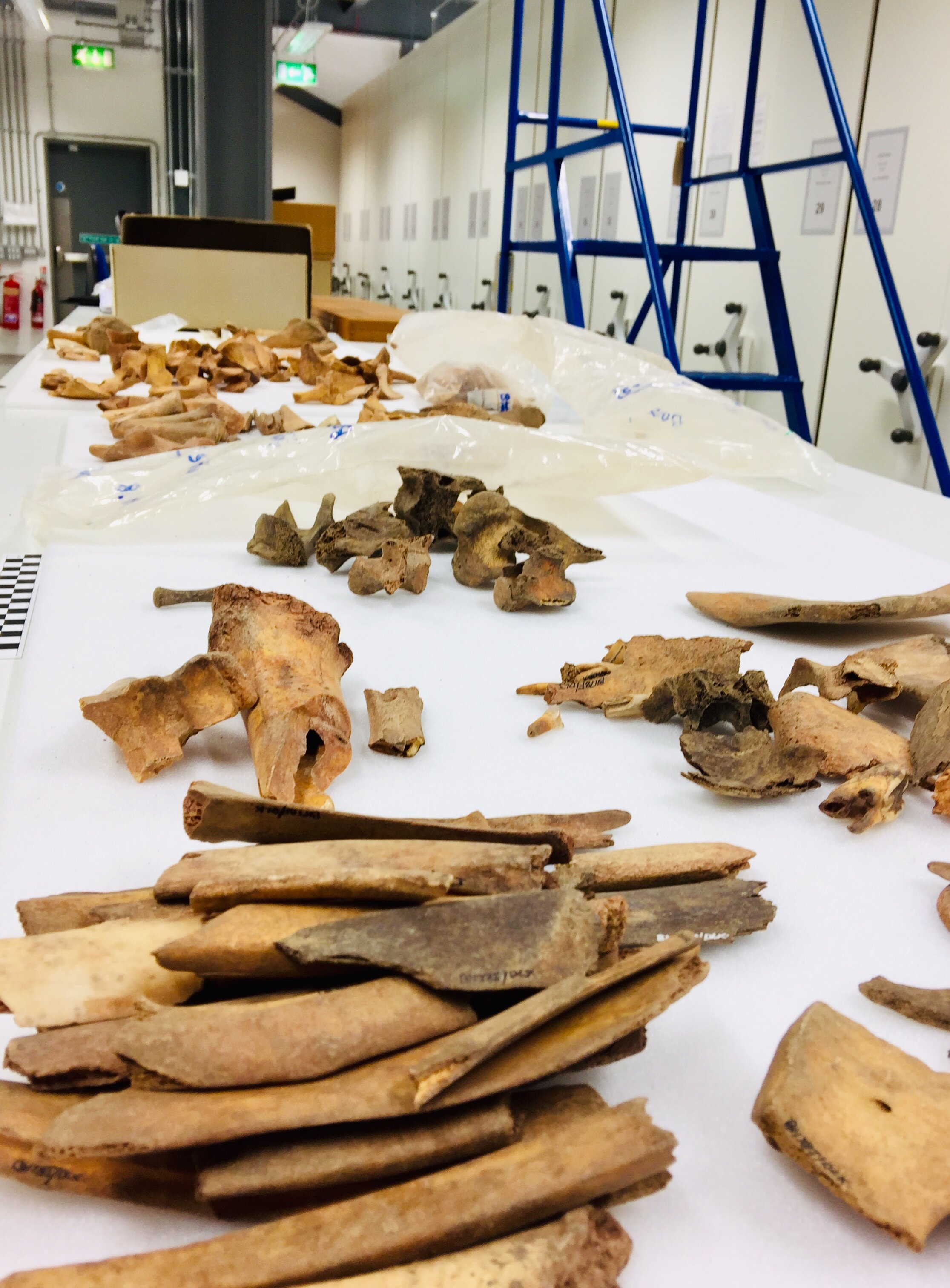
Looking at animal bones at the National Museum of Scotland.
Contact
Alex FitzpatrickTwitter: @archaeologyfitz
Simona FalangaTwitter: @CrazyBoneLady
Alex’s Blog: Animal Archaeology
Music "Coconut - (dyalla remix)" https://www.youtube.com/watch?v=_2UiKoouqaY
Affiliates
Find this show on the educational podcast app, Lyceum.fm!
Neanderthalk with "Kindred" Author Dr. Rebecca Wragg Sykes - Dirt 113
Anna and Amber sit down with Dr. Rebecca Wragg Sykes, Paleolithic archaeologist and author of the book "Kindred: Neanderthal Life, Love, Death, and Art." We talk about Rebecca's education and her love for all things ancient, and she resolves some common misconceptions about our Neanderthal cousins. "Kindred" just came out in the States, so pick up a copy of your very own for an amazing synthesis of current Neanderthal knowledge.
Links
Neanderthals Among Mammoths: Excavations at Lynford Quarry, Norfolk (via Archaeology Data Service)
Marie Skłodowska-Curie Individual Fellowships (European Commission)
Contact
Affiliates
Find this show on the educational podcast app, Lyceum.fm!
PCNs and Rock Art Study with Donna Gillette and Linda Hylkema - Rock Art 20
Learn all about the careers to two amazing women, Drs. Donna Gillette and Linda Hylkema as they take you on a journey of rock art discovery. One of Dr. Gillette’s areas of interest is in a local phenomenon called PCNs. Find out what those are and what they might mean, and more, on today’s episode.
Links
Contact
Chris Webster
Dr. Alan Garfinkel
Affiliates
Find this show on the educational podcast app, Lyceum.fm!
Folklore and prehistoric sites - PreHist 28

Ghosts, magic, witches and sacrifice, just in time for Halloween! Kim talks to Sue Greaney and Joana Valdez-Tullet about folklore and prehistoric sites in Europe. Sue is working on. PhD about Neolithic sites in Britain and Ireland and is responsible for interpretation at Stonehenge for English Heritage but got into folklore due to a chance find in a junk shop. Joana works for Scotland’s Rock Art where she uses her doctoral research into rock art, and has uncovered lots of folk tales related to panels of rock art.
Links
Contact
Twitter: @prehistpod
Kim Biddulph: @kimbiddulph
Sue Greaney: @SueGreaney
Joana Valdez-Tullet: @JoanaValdez
Find this show on the educational podcast app, Lyceum.fm!
Tech Discussion from Facebook Live - ArchaeoTech 140
Today's a bit of a different episode. Sometimes, Chris Webster and his co-host do a live show on Facebook and YouTube. On this week's show they talked a lot of tech and some of it might actually apply to archaeology. Take a listen and join us live on Facebook!
Links
Contact
Chris Webster
Twitter: @archeowebby
Paul Zimmerman
Twitter: @lugal
Email: paul@lugal.com
Affiliates
Find this show on the educational podcast app, Lyceum.fm!
Gaining Purpose Through the Supernatural with L. Frank Manriquez - Rock Art 19
On Episode 19 of the rock art podcast we interview L. Frank Manriquez. She is a Native Californian Indian of e Tongva and Ajachamem ancestry. L. Frank is a gifted artist and world class advocate for indigenous people around the world. She is known for her work with Native textiles and material culture, archival work and language revitalization, and she is heavily involved with the recreation of Native American watercraft for her own tribe and others. The episode weaves the tale of her life and passions for communicating what it is to be an Indian and how she gained her life’s purpose through the supernatural realm.
Links
Contact
Chris Webster
Dr. Alan Garfinkel
Affiliates
Find this show on the educational podcast app, Lyceum.fm!
Celebrating 200 Episodes - CRMArch 200
The CRMArch Crew gets together to talk about the last 200 episodes. It’s been a long, fun ride and we hope you’ve enjoyed it.
Links
Follow Our Panelists On Twitter
Bill @succinctbill; Doug @openaccessarch; Stephen @processarch; Bill A. @archaeothoughts; Chris W @Archeowebby, @DIGTECHLLC, and @ArchPodNet
Blogs:
Bill White: Succinct Research
Doug Rocks-MacQueen: Doug’s Archaeology
Stephen Wagner: Process - Opinions on Doing Archaeology
Chris Webster: Random Acts of Science
Jobs with Cox McClain
Our CRM group is one of the fastest growing in the US. We need temporary and salaried archeologists at every level, from technicians to PIs, in Tulsa and Oklahoma City. Previous Oklahoma experience would be nice but is not required. Send your cover letter, resume, and references to: JOBS@COXMCLAIN.COM. Thanks!
Affiliates
Find this show on the educational podcast app, Lyceum.fm!
Spooktober: It's A Whole Ordeal - Dirt 111
Sure, maybe you've heard of the River Ordeal, or trial by fire, but have you heard of Trial by Bean? How about the Ordeal of the Turf? In this Spooktober installment, Amber walks Anna through the ways that those accused of crimes have proven their innocence (or not!) throughout history and all over the world.
Links
Why the trial by ordeal was actually an effective test of guilt (Aeon.com)
The Laws of King Athelstan 924-939 A.D. (Internet History Sourcebooks)
Trial by ordeal: When fire and water determined guilt (BBC News)
The Law of Hammurabi and Its Audience (Yale Journal of Law & The Humanities)
Poisonous plants: Calabar beans were used to determine guilt in prehistoric trials. (Slate.com)
Common superstition, swearing of oath and ordeal of Koren (The Sangai Express)
Historical Techniques of Lie Detection (European Journal of Psychology)
Contact
Affiliates
Find this show on the educational podcast app, Lyceum.fm!
South Indian Archaeology feat. Shobhna Iyer - Ep 15
In this week's episode, we sit down with Stanford Ph.D. candidate, Shobhna Iyer where she discusses how she became impassioned with archaeology in South India, her area of interest, and current experiences in her Ph.D. program.
Links
Contact
Show
Twitter: @idigitpodcast
Email: idigitpodcast@gmail.com
Alyssa
Instagram: aal.archaeology
Twitter: Lyssakemi
Michaela
Instagram: mm_digitalized
Twitter: m_mauriello
Affiliates
Find this show on the educational podcast app, Lyceum.fm!
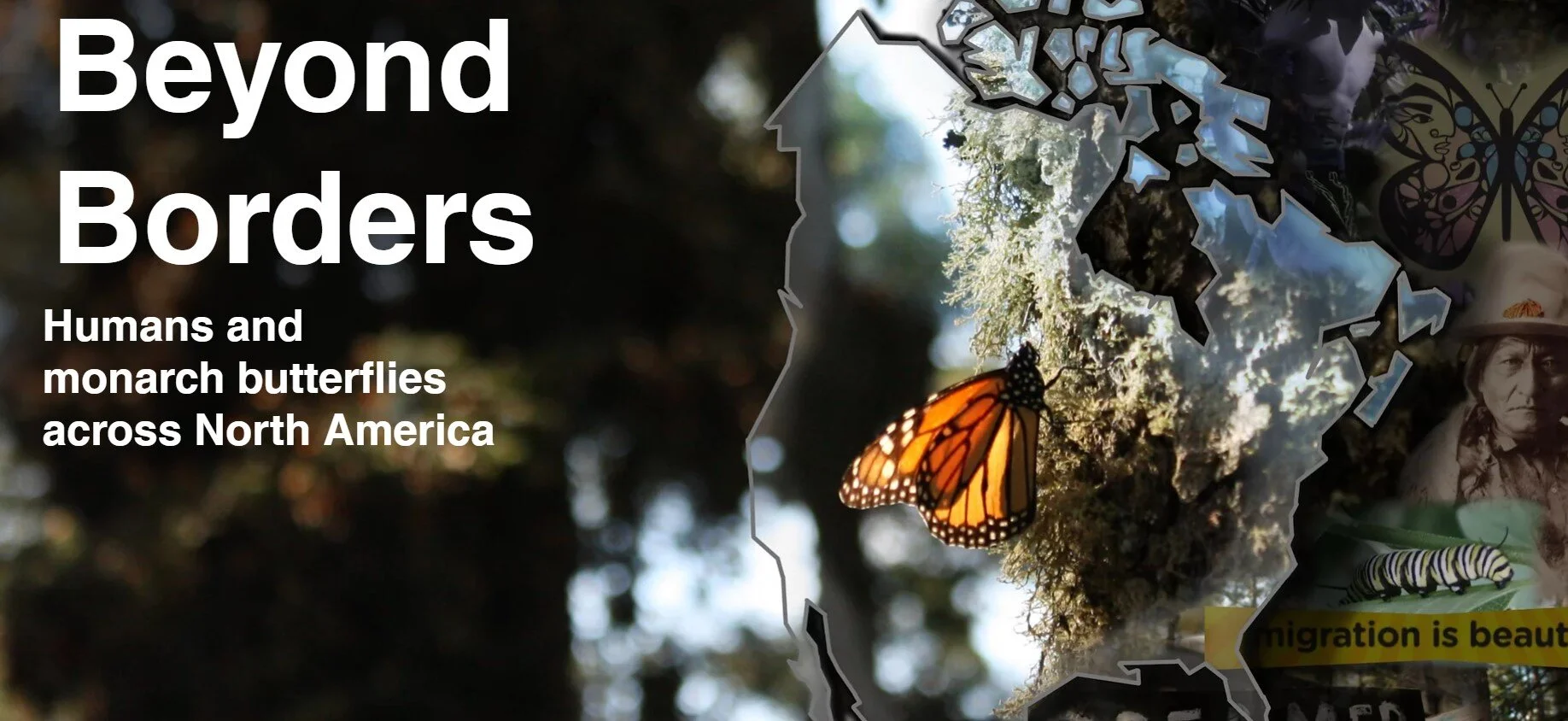
Convergent Migrations of Humans and Monarch Butterflies - HeVo 44

On this month’s podcast we have Dr. Columba Gonzalez-Duarte. Dr. Gonzalez-Duarte is an Assistant Professor in the Department of Sociology and Anthropology at Mount Saint Vincent University. We discuss Dr. Gonzalez-Duarte’s career studying the relationships between humans and monarch butterflies across North America. What can monarch butterflies tell us about the distribution of power, Indigenous Knowledge, internet communities, the North America Free Trade Agreement agricultural model, and DACA and the Dreamers?
Links
The Land of Open Graves: Living and Dying on the Migrant Trail (Jason’s Book)
Native Science: Natural Laws of Interdependence by Gregory Cajete
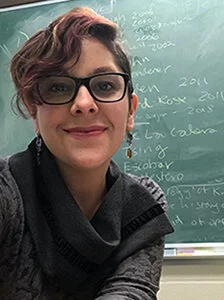
Columba Gonzalez-Duarte
Contact
Jessica
Lyle
Columba
columba.gonzalez@msvu.ca
Affiliates
Find this show on the educational podcast app, Lyceum.fm!
Shamanism and Cognitive Anthropology with Kevin Stein - Ep 18
This episode is with Kevin Stein an entertainment, marketing, and public relations consultant and rock art aficionado. Kevin has traveled widely and studied the intimate details of rock art both in the Americas and in the old world. He has also conducted his own seminars and presentations on the nature of shamanism and the connections with the study of cognitive anthropology. This is a fascinating discussion on shamanism, rock art, and its relationship to the comparative study of religion.
Links
Contact
Chris Webster
Dr. Alan Garfinkel
Affiliates
Find this show on the educational podcast app, Lyceum.fm!
Digital Data Preservation and the Apple iPhone 12 Event featuring LiDAR! - ArchaeoTech 139
We cover three different topics in three segments on today’s episode. In segment one we talk about digital data storage as preservation. The article linked below discusses the development and use of the WISAARD site file system in Washington State and how it helps archaeologists preserve sites through data. In segment two we talk about the Apple fall iPhone event and the new features that archaeologists can use. Finally, segment three features a single app of the day - the new compass and elevation features on the new Apple Watch series 6.
Links
App of the Day
Webby: Apple Watch Series 6 Compass
Contact
Chris Webster
Twitter: @archeowebby
Email: chris@archaeologypodcastnetwork.com
Paul Zimmerman
Twitter: @lugal
Email: paul@lugal.com
Affiliates
The Archaeology of Childhood with Mackenzie Cory - Ruins 31

On this episode of A Life in Ruins podcast, we chat with Mackenzie Cory, a fellow University of Wyoming Graduate! Mac delves into his formative years, working in Wyoming and his inspiration to take the next step into graduate school. We also discuss his current PhD research and how we can identify and look at childhood in the archaeological record. We then end the episode with a discussion about problems found in field schools and the ramifications of those problems to Mac’s academic career.
Contact
Instagram: @alifeinruinspodcast
Facebook: @alifeinruinspodcast
Twitter: @alifeinruinspod
Website: www.alifeinruins.com
Affiliates
Find this show on the educational podcast app, Lyceum.fm!
Spooktober: They Built It On a Haunted Burial Ground - Dirt 110
For decades, American horror has been haunted by the specter of the "Indian Burial Ground." This week, we look at the roots of the phenomenon, the history behind some of the most famous instances, and Indigenous responses to the trope. Plus, Amber serves the worst Maine accent while trying to explain the plot of Pet Sematary, and bullies you all into checking out her Book Club recs.
Links
Why Every Horror Film of the 1980s Was Built On ‘Indian Burial Grounds’ (Atlas Obscura)
The Suburban Horror of the Indian Burial Ground (The National Review)
Ghostland: An American History in Haunted Places (via WorldCat)
This Essay Was Not Built On an Ancient Indian Burial Ground (Off Screen)
Twisting Conventions: A Feminist Indigenous Perspective on the Horror Genre (Off Screen)
Jeff Barnaby on Blood Quantum and colonialist zombies (Seventh Row)
Podcast Ep. 39: Jeff Barnaby’s Rhymes for Young Ghouls & Blood Quantum (Seventh Row)
Blood Quantum (2020) Official Red Band Trailer HD (via YouTube)
Contact
Email the Dirt Podcast: thedirtpodcast@gmail.com
Affiliates
Find this show on the educational podcast app, Lyceum.fm!
VRchaeology: Intro - Dig It 14
In this weeks episode, start part one of our discussion about archaeology and VR! A very abbreviated explanation of VR, it’s integration into archaeology, and what we think of its impact in archaeology. We will continue our discussion of VR being used in archaeology as well as Archaeogaming in the following parts!
Sources
Schroeder, R., 1996. Possible worlds: The Social Dynamic of Virtual Reality Technology. Boulder: Westview Press.
Sivan, Y., 2008. 3D3C Real Virtual Worlds Defined: The Immense Potential of Merging 3D, Community, Creation, and Commerce. Journal For Virtual Worlds Research, 1(1). Available at: https://journals.tdl.org/jvwr/index.php/jvwr/article/view/278
Sutherland, I.E., 1968. A Head-mounted Three Dimensional Display. In Proceedings of the December 9-11, 1968, Fall Joint Computer Conference, Part I. AFIPS ’68 (Fall, part I). New York, NY, USA: ACM, pp. 757–764.
Yee, N., 2014. The Proteus Paradox: How Online Games and Virtual Worlds Change Us-And How They Don’t, Yale University Press.
Contact
Show
Twitter: @idigitpodcast
Email: idigitpodcast@gmail.com
Alyssa
Instagram: aal.archaeology
Twitter: Lyssakemi
Michaela
Instagram: mm_digitalized
Twitter: m_mauriello
Affiliates
Find this show on the educational podcast app, Lyceum.fm!
Indigenous People and Relating to the Cosmos with Dr. Ed Krupp of the Griffith Observatory - Rock Art 17
Dr. Ed Krupp is Director of the Griffith Astronomical Observatory in Los Angeles, California. He is a world class scholar and is a pioneer in the study of how indigenous people, the world over, relate to the cosmos, saw the celestial realm and provided prehistoric astronomical observatories as sun, moon, and star watchers. These activities are of course memorialized in rock art and in rock features constructed on the land to view the heavens and predict important seasonal changes in the sky world.
Links
Contact
Chris Webster
Dr. Alan Garfinkel