That Good Old Copper Complex - Dirt 135

We’ve been remiss in discussing the Chalcolithic (Copper Age) anywhere in the world, so we’re fixing that by spotlighting one particular technology in what is today the US states of Michigan and Wisconsin, and some of the world’s earliest coppersmiths. Plus, a very salty discussion of the pseudoscience and *bad* historical takes behind some alternative theories for the Old Copper Complex's creators.
Links
Ancient Native Americans were among the world’s first coppersmiths (Science)
Miners Left a Pollution Trail in the Great Lakes 6000 Years Ago (Eos)
Mining on Minong: Copper Mining on Isle Royale (Michigan History)
An Exercise in Poo-Tility: Scientist Tries to Make a Knife Out of Poop (Mental Floss)
Bronze Age Part II: The Case of the Missing Copper (Chapelboro.com)
MacIntosh Stone - Nahma, Michigan (Michigan Back Roads - Oddities)
Reviewing Gavin Menzies' "Atlantis" (Pt. 4) (Jason Colavito)
The State of Our Knowledge About Ancient Copper Mining in Michigan (The Michigan Archaeologist)
Contact
Email the Dirt Podcast: thedirtpodcast@gmail.com
Affiliates
Archaeology of a Country with some News - TAS 121

On today’s episode Chris and Rachel discuss a recent visit to the historical monuments in Philadelphia, PA and Gettysburg. In the last segment they talk about the recent discovery of a grind stone in Orkney, Scotland and what it means for our understanding of the Neolithic in that area.
Links
Contact
Chris Webster
Affiliates
Ghost Dance Rock Art and Theology - Rock Art 36
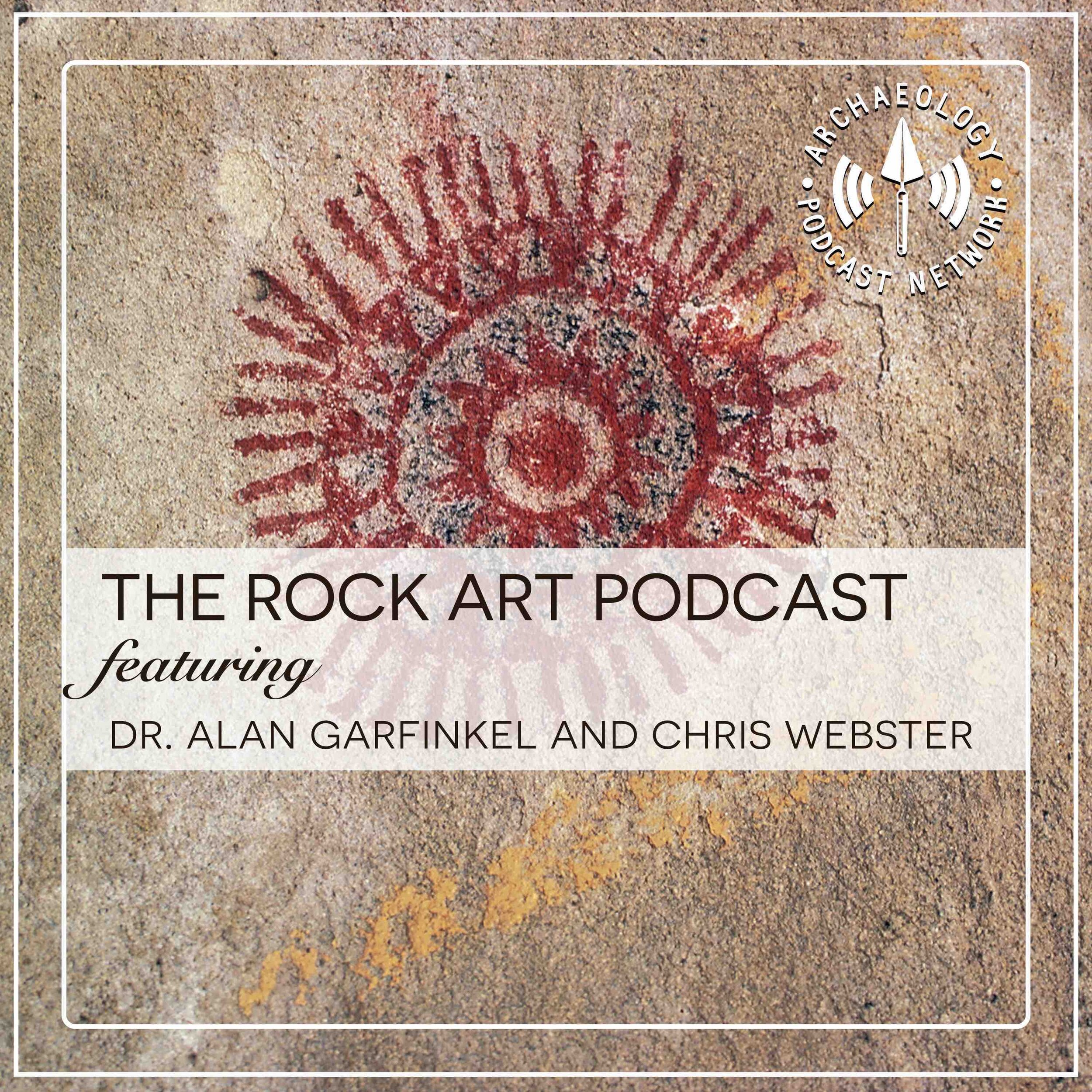
The ghost dance was a revitalistic movement that was most popular in the 1870s and 1890s. The religious leaders of the ghost dance movement were religious specialists who dreamed a prophetic vision. That vision included that the world was to be remade over and that the dead would come back to life and the world would returnTo the way it was before your Americans entered their lands. To usher in that New World native people were to dance around dance for several days day and night and that by praying and dancing and singing this would bring in a new world of peace and prosperity.
Anthropologist and archaeologist have identified about two dozen rock art sites that appear to commemorate or document this time of the religious movement of the ghost dance. He’s historic paintings are in many colors and depict dancers and the return of animals and plants and the return of the dead. The paintings also document and portray the principal religious beliefs of now the participants in the movement which include a layered cosmos a depiction of the Thunderbird BighornSheep and other animals and a central white horse image.
Links
Contact
Chris Webster
Dr. Alan Garfinkel
Affiliates
Wildnote, Photographs, and UTMs - Ep 153
On today's episode Paul and Chris meet up in Chris' hotel room in New York City. It's only the second time they've recorded in the same room. Paul and Chris talk about the resurgence of digital archaeology in CRM after 2020, photographs, including metadata, and some new iPhone 12 features that are useful in the field. They end with a discussion of map datums and coordinate conversions.
Links
Contact
Chris Webster
Twitter: @archeowebby
Paul Zimmerman
Twitter: @lugal
Email: paul@lugal.com
Affiliates
Horror Part 2 - Prehist 32

The long arm of the prehistoric past reaches through the millennia to grab our attention, and, in this episode, to grab us by the throat. Yes, we’re talking folk horror in this episode, and trying not to shiver as we discuss how the past intrudes in uncanny ways on the present in films, plays and books. We have a full cast of characters in this spine-tingler, including Dr Lauren McIntyre, Rebecca Lambert (or Lady Liminal), David Southwell of the Hookland Guide, Dr Simon Underwood and Drone Lord.
Guest Socials
Contact
Twitter: @prehistpod
Lost city in Luxor, LiDAR in Tikal and Harriet Tubman's father's home - TAS 120
This week, on the archaeology show, we take a look at a couple new(ish) discoveries that have been in the news this week. First, an extremely well preserved city in Luxor Egypt has been discovered and dated to the reign of Amenhotep III. Next, LiDAR helps researchers discover a new monument in Tikal that appears to be influenced by the people of Teotihuacan, the future conquerers of Tikal. And finally, archaeologists in Maryland believe they have found the home of Ben Ross, Harriet Tubman's father.
Links
'Lost golden city of Luxor' discovered by archaeologists in Egypt
Archaeologists discover mysterious monument hidden in plain sight
Harriet Tubman’s father’s home discovered by archaeologists in Maryland
Contact
Chris Webster
Please Visit Our Sponsors!
Archaeology Southwest Cafe: https://www.archaeologysouthwest.org/things-to-do/cafe/
Affiliates
All the Pretty Horses - Dirt 134
This week, we've got one more past Patreon episode for you! Thank you all for your patience as we get back into the swing of things. We'll be back with your regularly scheduled new episodes in May. But for now, we're all horses, all the time. Amber gives you an unbridled (har!) look at the Hittite Horse Training Texts, which are much more than just Kikkuli (remember him?). After that, we veer from horsemanship to horse-man-’ship. First there’s a glimpse into the legal mind of the Hittites, and then some interesting commonalities across Indo-European societies and an overview of equine lives in antiquity. Ohhh neigh.
Links
These Asian hunter-gatherers may have been the first people to domesticate horses (Science)
Catalogue of Hittite Language (Konkordanz der heithitischen Keilschrifttafeln)
Hittite Laws (Law Collections from Mesopotamia and Asia Minor)
Hittites, Horses, and Corpses (The Early Nature of the Bible)
The Rise of Bronze Age Society: Travels, Transmissions and Transformations
Contact
Email the Dirt Podcast: thedirtpodcast@gmail.com
Affiliates
Just the Boyz: Clovis Organized Crime Syndicate (allegedly) - Ruins 53

The hosts discuss four hypotheses for the arrival of humans into the New World: Beringian Land Bridge, Coastal Highway, Solutrean, and Oceanic. They discuss the early Paleoindian site complexes such as Folsom and Clovis in which David (allegedly) reveals the existence of the Clovis Organized Crime Syndicate.
A large part of the episode centers around "pre-Clovis" sites and whether they would belong to the Coastal Highway or Solutrean hypotheses. According to Carlton, the Solutreans crossed the Atlantic to get that sweet, sweet Old Bay seasoning. #OldBayAllDay
We wrap up the show with a discussion about which hypotheses each host believes explains the archaeological record best.
Recommended Literature:
David J. Meltzer
2010 First Peoples in a New World: Colonizing Ice Age America
Dennis. J. Stanford, Bruce A. Bradley & Michael Collins
2013 Across Atlantic Ice: The Origin of America's Clovis Culture
Tom. D Dillehay
1997 Monte Verde: a Late Pleistocene settlement in Chile, Vol.2, The
Archaeological Context and Interpretation
Jon M. Erlandson et al.
2007 The Kelp Highway Hypothesis: Marine Ecology, the Coastal
Migration Theory, and the Peopling of the Americas
Contact
Instagram: @alifeinruinspodcast
Facebook: @alifeinruinspodcast
Twitter: @alifeinruinspod
Website: www.alifeinruins.com
Affiliates
Projectile-Pointed People in Rock Art - Rock Art 35

What? That's right. Arrowheads, or as archaeologists know them, projectile points, are sometimes carved or painted on rock as parts of people. In this episode we talk about projectile-pointed people and other depictions of projectile points in rock drawings.
Links
Contact
Chris Webster
Dr. Alan Garfinkel
Affiliates
Quitting in Academia | When is it ok? Side note, it's always ok - Dig It 28

In this episode, we celebrate our 1 year anniversary! Yay! What a wild year it has been for everyone. We are so grateful for every one of you. We also have a heart-to-heart and discuss the process of quitting in academia, the pros and cons, and the thought process behind the academic pressures amidst a pandemic.
Links
Contact
Show
Twitter: @idigitpodcast
Email: idigitpodcast@gmail.com
Alyssa
Instagram: aal.archaeology
Twitter: Lyssakemi
Michaela
Instagram: mm_digitalized
Twitter: m_mauriello
Affiliates
Critical Thinking, Old-timers, and COUNTING IS HARD - CRMArch 213
We discuss three different short topics on today's episode. Starting with the comments on a Facebook post regarding episode 212 we talk about the importance of reading an article or listening to a podcast before responding to a clip or the title of the social post. Next we discuss a listener suggestion about how to deal with people that came up in this industry in more difficult times and thinks you should too. Finally, we talk about the difficulty in accurately counting very large quantities of things.
Follow Our Panelists On Twitter
Bill @succinctbill; Doug @openaccessarch; Stephen @processarch; Bill A. @archaeothoughts; Chris W @Archeowebby, @DIGTECHLLC, and @ArchPodNet
Blogs:
Bill White: Succinct Research
Doug Rocks-MacQueen: Doug’s Archaeology
Stephen Wagner: Process - Opinions on Doing Archaeology
Chris Webster: Random Acts of Science
Affiliates
Native Youth and Land Based Education - HeVo 50

On today’s podcast Jessica interviews Dr. Lindsey Schneider, Assistant Professor of Native American Studies in the Department of Ethnic Studies at Colorado State University. We dive deep into the Indigenous Science, Technology, Arts, & Resilience (ISTAR) Camp that she collaboratively developed with Indigenous community members in Fort Collins, the Poudre School District, Bohemian Foundation, CSU Access Center and Fort Collins Museum of Discovery. We talk about in depth about developing youth camps and other programs in general with Indigenous communities, especially in suburban or semi-urban areas. Finally we talk about continually adapting place based learning during the ongoing COVID-19 pandemic.
Links
Guest Contact Info
Dr. Schneider: Lindsey.Schneider@colostate.edu
Contact
Please Visit Our Sponsors
Archaeology Southwest Cafe: https://www.archaeologysouthwest.org/things-to-do/cafe
Affiliates
Sorry to Barge In - Dirt 133
This week, Anna and Amber are playing catch-up after attending the SAA conference, recovering from vaccine shots, and life in general. We'll be taking the rest of April off for a short break. In the meantime, please enjoy a cleaned-up version of a Dirt After Dark episode where Anna treats Amber to the story of the Roman emperor Caligula's absurd pleasure boats on a tiny, tiny lake.
Links
Nemi Ships: How Caligula's Floating Pleasure Palaces Were Found and Lost Again (Discover)
Divers to scour lake for Emperor Caligula’s 2,000-year-old pleasure ship (Washington Post)
Contact
Email the Dirt Podcast: thedirtpodcast@gmail.com
Affiliates
Our Ruined Lives with Hip Hop M.D. - Ruins 52
In this episode, we are excited to chat with Maynard Okereke, who goes by the Science Communicator persona: Hip Hop M.D. Maynard is a Science Communicator, Entrepreneur, Engineer, and Digital Media Producer who tells us about his undergraduate journey at the University of Washington, his post-college career, and what inspired him to create Hip Hop Science.
Maynard is passionate about Science Communication and uses his knowledge of science to help inspire minorities and youth by bridging the gap between music, entertainment, and science - encouraging more diverse involvement in the S.T.E.M. fields.
Hip Hop Science website: https://www.hiphopscienceshow.com/
Instagram: @hiphopscienceshow
YouTube: Hip Hop Science
Contact
Instagram: @alifeinruinspodcast
Facebook: @alifeinruinspodcast
Twitter: @alifeinruinspod
Website: www.alifeinruins.com
Affiliates
Repatriation of the Benin Bronze with Neil Curtis - TAS 119
This is a special episode of The Archaeology Show hosted by Tristan Boyle.
Recently it was announced that a Benin Bronze, a statue head of an "Oba" or king, would be returned from the University of Aberdeen in Scotland to Nigeria.
Head of Special Collections, Neil Curtis describes the process of repatriating the item as well as what that means for other items in the collection.
Recently a number of books have been published that talk about the punitive expedition of 1897, where the British razed the city of Benin (modern day Nigeria) and looted various items from the people of Benin. Over the years, these cultural items were bought or taken into many museums, including the British Museum, National Museum of Scotland and Berlin Museum. Dan Hicks' recent book The Brutish Museums (Interviewed on Modern Myth) and Barnaby Philip's Loot both describe the violent removal of the Benin Bronzes by the British and where they are held today.
Neil, however, makes the point that repatriating items back to communities is not a reactive process, and that this item in question had been in discussion for a while.
Links
Contact
Chris Webster
Please Visit Our Sponsors!
Archaeology Southwest Cafe: https://www.archaeologysouthwest.org/things-to-do/cafe/
Affiliates
New methods for dating rock art with Kirk Astroth - Rock Art 34
In this week's episode, Dr. Alan Garfinkel interviews Kirk Astroth about new and innovative methods he used to date rock art for his masters thesis. Kirk used a combination of established methods and new technology to date panels containing prehistoric, historic, as well as modern rock art. He came to several interesting conclusions, as well as identified ways to continue developing this new direction in rock art dating.
Links
Contact
Chris Webster
Dr. Alan Garfinkel
Affiliates
Visiting Chichen Itza and the Best Field Cameras - Archaeotech 152
Chris and Paul discuss visiting one of the most well-known archaeological sites in the world: Chichen Itza in the Yucatan Peninsula of Mexico. What can you expect to see? What should you do when you get there? What should you do before you go? We also talk about what sort of field cameras are the best that aren't smartphones or tablets.
Contact
Chris Webster
Twitter: @archeowebby
Paul Zimmerman
Twitter: @lugal
Email: paul@lugal.com
Affiliates
1860-1914: Making the Armaments Centre of the World with Chris Corker - Arch and Ale 37

Archaeology and Ale is a monthly series of talks presented by Archaeology in the City, part of the University of Sheffield Archaeology Department’s outreach programme. This month we are proud to host Chris Corker speaking on "Making the Armaments Centre of the World (1860-1914)". This talk took place on Thursday, March 25th, 2021, online via Google Meets.
Chris is a business historian and lecturer in Management at the York Management School. He has researched the steel and armaments industry in Sheffield for over a decade and is now branching into research on the metalworking industries in the Hallamshire area from the late 13th Century to the present. He completed his PhD in business history at Sheffield Hallam University in December 2016, titled ‘The Business and Technology of the Sheffield Armaments Industry 1900-1930’. The following year he was awarded the annual Coleman Prize for excellence in new business history research by the Association of Business Historians for his doctoral work. In 2019 he was awarded an Emerald Literati award for his work in the Journal of Management History, and in 2020 was awarded a Vice Chancellors Teaching Award from the University of York for an outstanding contribution to teaching and learning. On Remembrance Sunday in 2018 Chris curated the ‘Sheffield’s Great War’ event at the Sheffield City Hall Memorial Hall in aid of the Royal British Legion, and also worked as an advisor to the ‘Made in Great Britain’ series which aired the same year on BBC2. In the last two years Chris has presented research on Sheffield steel and armaments companies at international business and economic history conferences in Montreal, Canada; Oklahoma City, USA; Detroit, USA; Jyvaskyla, Finland; and across the UK.
For more information about Archaeology in the City’s events and opportunities to get involved, please email archaeologyinthecity@sheffield.ac.uk or visit our website at archinthecity.wordpress.com. You can also find us on Twitter (@archinthecity), Instagram (@archaeointhecity), or Facebook (@archinthecity)
Affiliates
Rowe, Rowe, Rowe Your Boat - Ruins 51
In this episode, we chat with Chris Rowe, a returning guest who originally appeared in Episode 12. We begin by catching up with him on his life and his work situation through Covid. After that, we talk about the potential of an archaeology trade school while also discussing the CRM and academic divide. Chris and the cohosts delve deeply into the curation crisis, what it is, what are some contributors to this crisis and ultimately suggestions on how future archaeologists can change the status quo in regards to curation.
Contact For Guest: (Twitter, email, etc.):
Chris’s Instagram: @crowemagnon.man
Chris Rowe’s literature recommendations:
The Left Hand of Darkness by Ursula K. Le Guin
The Fifth Beginning: What Six Million Years of Human History Can Tell Us about Our Future by Robert L. Kelly
Contact
Instagram: @alifeinruinspodcast
Facebook: @alifeinruinspodcast
Twitter: @alifeinruinspod
Website: www.alifeinruins.com
Affiliates
Other People of Size - Dirt 132
A follow-up and expansion to episode 99, People of Size, Anna and Amber explore other categories of largeness and how they’re represented in the archaeological record. We discuss fat bodies that are coded male, the strength and bulk of sumo wrestlers, and cultural and historical shifts in the aesthetic of the male body.
Links
Late Pleistocene swimmers compared to modern athletes (Journal of Human Evolution)
Using X Men to teach about hominin speciation (Great Lakes Ethnohistorian)
Contact
Email the Dirt Podcast: thedirtpodcast@gmail.com