Migration Patterns and Habits of Big Horn Sheep with Carlos Gallinger - Rock Art 40

Carlos Gallinger joins the podcast again as a Big Horn Sheep expert. He talks about modern migration patterns of the animal and how that can help archaeologists find petroglyphs and understand better the prehistoric people that hunted and revered them.
Links
Contact
Chris Webster
Dr. Alan Garfinkel
Affiliates
Teaching a Computer to Classify Ceramics with Dr. Leszek Pawlowicz - ArchaeoTech 155
We speak with Dr. Pawlowicz of Northern Arizona University about a recent paper he was involved in that used convolutional neural networks to classify ceramics in the American Southwest. There are a lot of applications to this technology and some people love it and some think it’s going to take the jobs of archaeologists.
Links
Contact
Chris Webster
Twitter: @archeowebby
Paul Zimmerman
Twitter: @lugal
Email: paul@lugal.com
Affiliates
Horror Part 3 - Prehistories 33

The long arm of the prehistoric past reaches through the millennia to grab our attention, and, in this episode, to grab us by the throat. Yes, we’re talking folk horror in this episode, and trying not to shiver as we discuss how the past intrudes in uncanny ways on the present in films, plays and books. We have a full cast of characters in this spine-tingler, including Dr Lauren McIntyre, Rebecca Lambert (or Lady Liminal), David Southwell of the Hookland Guide, Dr Simon Underwood and Drone Lord.
Guest Socials
Contact
Twitter: @prehistpod
Affiliates
Language, Community, and Context - Ep 51

Today’s podcast features Dr. Jenny Davis, a citizen of the Chickasaw Nation and an Associate Professor of Anthropology and American Indian Studies at the University of Illinois, Urbaana-Champaign. She is the director of the American Indian Studies Program and the 2019-2023 Chancellor's Fellow of Indigenous Research & Ethics. We get in depth on language revitalization, including the importance of context, resources for people interested in language revitalization, the challenge of evaluating results, and how the way we frame discussions of language revitalizations matters. Finally, we talk about how language intersects first with gender and sexuality and also with NAGPRA and repatriation.
Links
Talking Indian: Identity and Language Revitalization in the Chickasaw Renaissance
Queer Excursions: Retheorizing Binaries in Language, Gender, and Sexuality
Museums, Representation, and Intersectionality – Heritage Voices Episode 24
Meek, Barbra A. 2011. "Failing American Indian languages". American Indian Culture and Research Journal. 35 (2): 43-60.
Guest Contact
loksi@illinois.edu
@ChickashaJenny
Contact
Affiliates
Just The Boyz but it's Revolutionary - Ruins 57

For this episode of Just the Boyz, the hosts attempt to discuss the events leading up to the American Revolution and the first year of the fight for America's Independence from the English Crown.
Early on in this episode, you can tell that hosts have a lot to say without a really coherent plan as to how to say it. The guys are all over the place with this episode, but you can definitely get a sense of their passion for this topic.
And yes, Carlton did mix up King George III with King George V. He's been binging The Crown recently.
Literature recommendations:
1776 by David McCullough
The Ideological Origins of the American Revolution by Bernard Bailyn
Liberty's Daughters: The Revolutionary Experience of American Women, 1750-1800 by Mary Beth Norton
The Colored Patriots of the American Revolution: Forgotten Black Heroes by William Cooper Nell
Contact
Instagram: @alifeinruinspodcast
Facebook: @alifeinruinspodcast
Twitter: @alifeinruinspod
Website: www.alifeinruins.com
APN Links
Affiliates
Holding Out for a Hero(dotus) - Dirt 138

It's Amber's birthday episode! Since she loves historiography, we're taking it back to one of the earliest historians, Herodotus. How did he think about the past, and how did that influence historians who came after him? What did he get right, and what did he get wrong? What's up with that weird boat, those mummy enemas, the flying snakes, and the giant ants? Listen and find out!
Links
Guide to the classics: The Histories, by Herodotus (The Conversation)
2,500 Years Ago, Herodotus Described a Weird Ship. Now, Archaeologists Have Found it. (LiveScience)
10 Historical Facts That Herodotus Got Hilariously Wrong (Listverse)
Herodotus on the phoenix, on the horned serpent, and on winged snakes (Hyde and Rugg)
DNA Boosts Herodotus’ Account of Etruscans as Migrants to Italy (The New York Times)
Contact
Email the Dirt Podcast: thedirtpodcast@gmail.com
Affiliates
Obsidian Flakes in Lake Huron, A Wielbark Cemetery, and a Computer Program Sorts Pottery - TAS 124

This week on The Archaeology Show, we discuss three exciting Archaeology Articles and News stories. First, two obsidian flakes from central Oregon have been found in an early Holocene settlement in Lake Huron. Second, an extensive cemetery in Poland gives the Wielbark civilization its name. And finally, researchers in Arizona have programmed a computer to sort pottery sherds faster and more consistently than humans can.
Links
Central Oregon obsidian from a submerged early Holocene archaeological site beneath Lake Huron
The Goths, the Wielbark Culture and over 100 years of research on the eponymous site
Contact
Chris Webster
Affiliates
Animal-Human Headdresses with Dr. Alan Garfinkel - Ep 39
Dr. Alan Garfinkel has studied animal-human headdresses in the eastern Mojave desert for much of his career. These items help shamans commune with the spirit world and show the people they support that prosperity is coming. What do these date to? What were they made of? All this and more on today's episode.
Links
Contact
Chris Webster
Dr. Alan Garfinkel
Affiliates
Debate and Presentation Anxiety - Dig It 30

In this episode, we discuss the completely normal (somewhat irrational fear) of having anxiety during public speaking. Sometimes it's difficult to maintain focus during a debate or when a teacher calls on you in class. Whether it be in an academic setting, work, or presenting at conferences, we want to reassure you that it is completely fine. Tune in!
Links
Gould, R. J. and P. J. Watson. 1982. A dialogue on the meaning and use of analogy in ethnoarchaeological reasoning. Journal of Anthropological Archaeology 1:355-381
Wylie, A. 1982 An analogy by any other name is just as analogical: A commentary on the Gould-Watson dialogue. Journal of Anthropological Anthropology 1:382-401
Contact
Show
Twitter: @idigitpodcast
Email: idigitpodcast@gmail.com
Alyssa
Instagram: aal.archaeology
Twitter: Lyssakemi
Michaela
Instagram: mm_digitalized
Twitter: m_mauriello
Affiliates
Making wine for the Emperor on the Roman imperial estate at Vagnari (Italy) with Maureen Carroll - Arch and Ale 38

Archaeology and Ale is a monthly series of talks presented by Archaeology in the City, part of the University of Sheffield Archaeology Department’s outreach programme. This month we are proud to host Maureen Carroll speaking on "Making Wine for the Emperor on the Roman Imperial Estate at Vagnari (Italy) with Maureen Carroll". This talk took place on Thursday, April 29th, 2021, online via Google Meets.
Maureen is a Roman archaeologist whose key research interests are Roman burial practices, funerary commemoration, and Roman childhood and family studies. She headed up the British team participating in a large EU-funded multi-national project (DressID) on Roman textiles and clothing, her focus being on dress and identity in funerary portraits on the Rhine and Danube frontiers. A further area of interest is the topic of Roman garden archaeology, on which she has published extensively. More recently, Maureen has studied the role of women in votive religion in early Roman Italy.
She has directed excavations in Germany, Italy, Tunisia, and Britain. Her current fieldwork project, funded by the British Academy/Leverhulme Trust, the Roman Society, the Social Sciences and Humanities Research Council of Canada (SSHRC), and the Rust Family Foundation, is the exploration of a Roman rural estate in imperial possession from the first to the third century A.D. at Vagnari in Puglia (Italy).
For more information about Archaeology in the City’s events and opportunities to get involved, please email archaeologyinthecity@sheffield.ac.uk or visit our website at archinthecity.wordpress.com. You can also find us on Twitter (@archinthecity), Instagram (@archaeointhecity), or Facebook (@archinthecity)
Links
Affiliates
Our Ruined Lives with Morgan Kinney - Ruins 56
In this edition of Our Ruined Lives, Morgan Kinney, a graduate student at Adams State University, joins the hosts to talk about his career in cultural resources management. Morgan is pursuing an M.A. in CRM, which provided an opportunity for the hosts to discuss the differences between a CRM-based M.A. and a general Anthropology M.A.
We close the episode with a discussion on Morgan's experiences in Archaeology Sci-Comm through TikTok. Morgan's TikTok, archaeowolf, is one of the most engaged archaeology-centered accounts on the platform, and the hosts are curious about how Morgan combats against pseudo-science and how he addresses questions from the public. Also, Carlton goes on a tangent about Morgan's aircraft content.
Guest’s literature recommendations:
1) In Small Things Forgotten by James Deetz
2) JSTOR - Yup, just JSTOR
Guest Contact
Instagram: @archaeowolf
TikTok: @archaeowolf
Contact
Instagram: @alifeinruinspodcast
Facebook: @alifeinruinspodcast
Twitter: @alifeinruinspod
Website: www.alifeinruins.com
Archaeology Podcast Network:
Affiliates
Prepare to Be Amaz(on)ed - Dirt 137
We haven’t covered much archaeology from the Amazon Basin on the show, but this week, that changes! Instead of being the primitive groups early European explorers reported on, people lived in the Amazon Basin region for thousands of years by adapting to their landscape as well as modifying their environment to suit their needs! Somehow, we suspect that you, listeners, are not shocked.
Links
The Archaeology of Anthropogenic Impacts on the Amazon (Harvard University)
The legacy of 4,500 years of polyculture agroforestry in the eastern Amazon (Nature Plants)
Archaeologists find vast network of Amazon villages laid out like clock faces (LiveScience)
Ancient farmers transformed Amazon and left an enduring legacy on the rainforest (ScienceDaily)
Archaeologists Discover Some of the Amazon’s Oldest Human Burials (Smithsonian)
Persistent Early to Middle Holocene tropical foraging in southwestern Amazonia (Science Advances)
Contact
Email the Dirt Podcast: thedirtpodcast@gmail.com
Affiliates
Tools for Organizing and Managing Your Day - CRM Arch 215
Whether you are just living your life or you're the person in charge, we all have "projects" to manage and we need tools to get them done. What do our hosts use to keep multiple projects at a time on track and on budget? How do you deal with email, messaging, and calendars? Let us know the tools you use for project management.
Links
Follow Our Panelists On Twitter
Bill @succinctbill; Doug @openaccessarch; Stephen @processarch; Bill A. @archaeothoughts; Chris W @Archeowebby, @DIGTECHLLC, and @ArchPodNet
Blogs:
Bill White: Succinct Research
Doug Rocks-MacQueen: Doug’s Archaeology
Stephen Wagner: Process - Opinions on Doing Archaeology
Chris Webster: Random Acts of Science
Affiliates
Bighorn Sheep and Shamanism in Rock Art with Dr. Alan Garfinkel - Rock Art 38
Bighorn sheep were and are a major source of food, religion, and spirituality in many parts of the Americas. Dr. Garfinkel has study rock art and shamanism in the Coso range of southeastern California and the surrounding area and has a lot to say on this topic.
Links
Contact
Chris Webster
Dr. Alan Garfinkel
Affiliates
Drones in the Classroom with Dr. Jesse Tune - Archaeotech 154
Dr. Jesse Tune joins Chris and Paul to talk about their favorite subject: Drones! Don't play the drinking game on this one. We can't be held responsible! Anyway, Dr. Tune has a fantastic program that actually prepares his students to pass the FAA Part 107 exam and teaches them about using the right tool for the right job.
Dr. Tune is a prehistoric archaeologist who studies Ice Age human migrations and the colonization of new landscapes. His research focuses on investigating the relationships between humans and the environment – specifically how humans adapt to new or changing environments. His current research involves documenting the early human occupation of the Colorado Plateau, investigating lithic technology in the Southeast United States, and studying how humans adapt to resource accessibility.
Links
Contact
Chris Webster
Twitter: @archeowebby
Paul Zimmerman
Twitter: @lugal
Email: paul@lugal.com
Affiliates
Mummies' Day - Dirt 136
This week, Anna and Amber celebrate some of the lesser-known mummies of the world. Amber shares her hometown mummies, while Anna spins the stories of a smoke-dried philosopher, a legendary Lama, and...a winery? Plus, one Egyptian mummy thrown in for good measure.
Links
English Philosopher’s Dressed-Up Skeleton Goes on View in New Glass Display (Smithsonian)
Jeremy Bentham’s Head Is Coming Out of Its Box and Under the Microscope (Atlas Obscura)
Nightmarish mummies attracting curious to rural Philippi (West Virginia Explorer)
The Mystery Behind Russia's Buddhist "Miracle" (The Culture Trip)
Contact
Email the Dirt Podcast: thedirtpodcast@gmail.com
Affiliates
Contact
Email the Dirt Podcast: thedirtpodcast@gmail.com
Affiliates
Laotian Jars, Oldest African Human Burial, and Saudi Arabian Stone Rectangles - TAS 122
This week we discuss three interesting archaeology stories in the news. First, new dating techniques are used to date Laos' field of jars. Then, we discuss the oldest known homo sapien burial found in Africa. Finally, excavations of mustatils in Saudi Arabia shed some light on what these structures were used for.
Links
Archaeologists finally uncovered some of the mystery behind Laos’s Plain of Jars
These mysterious stone structures in Saudi Arabia are older than the pyramids
The mustatils: cult and monumentality in Neolithic north-western Arabia
Contact
Chris Webster
Please Visit Our Sponsors!
Archaeology Southwest Cafe: https://www.archaeologysouthwest.org/things-to-do/cafe/
Affiliates
Revolutionary Interpretations of Coso Rock Art with Dr. Alan Garfinkel - Rock Art 37
This episode is a bit different. Dr. Garfinkel discusses and sketches his latest unpublished research into some new and rather revolutionary interpretations of Coso rock art. Coso rock art is located in eastern California and represents some of the greatest concentrations of rock art in the entire Western Hemisphere. It is surprisingly realistic and representational. We will dive into ancient archaic Utoaztecan religious thought and look at the relationships between Coso the American Southwest and into Mesoamerica!
Links
Contact
Chris Webster
Dr. Alan Garfinkel
Affiliates
CRM Project Reports - CRM Arch 214
On today's show Chris and Bill talk about CRM Reports. In response to a previous episode an APN member had some things to say about our comments regarding reports. Is boiler plate OK? What's the future of reporting look like - or should it look like?
Follow Our Panelists On Twitter
Bill @succinctbill; Doug @openaccessarch; Stephen @processarch; Bill A. @archaeothoughts; Chris W @Archeowebby, @DIGTECHLLC, and @ArchPodNet
Blogs:
Bill White: Succinct Research
Doug Rocks-MacQueen: Doug’s Archaeology
Stephen Wagner: Process - Opinions on Doing Archaeology
Chris Webster: Random Acts of Science
Affiliates
Gotta Dig 'Em All! The Zooarchaeology of Pokemon - Animals 34
Following a listener’s request, this month’s episode is all about the skeletal morphology of Pokemon. Learn more about oviparous ghosts, witness Simona’s confusion at the concept, and entertain the idea that Gyrados is actually Jörmungandr.
Links
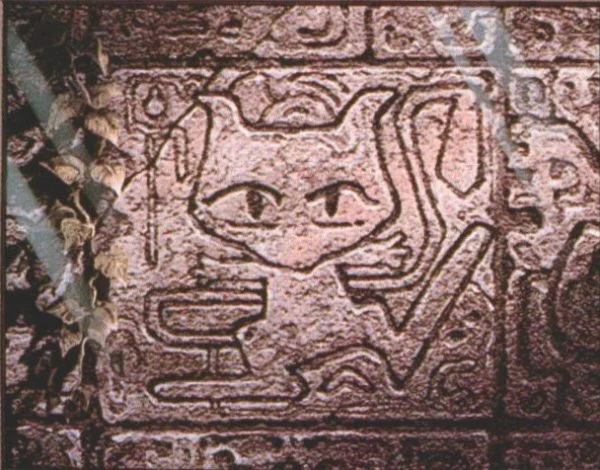
The Ancient Mew Hieroglyph
Contact
Alex FitzpatrickTwitter: @archaeologyfitz
Simona FalangaTwitter: @CrazyBoneLady
Alex’s Blog: Animal Archaeology
Music "Coconut - (dyalla remix)" https://www.youtube.com/watch?v=_2UiKoouqaY