A People's History of Sheffield from the French Revolution to Chartism with Matthew Roberts - Ep 43

Archaeology & Ale is a monthly series of talks presented by Archaeology in the City, part of the University of Sheffield Archaeology Department’s outreach programme. This month we are proud to host Matthew Roberts from Sheffield Hallam University speaking on "A People's History of Sheffield from the French Revolution to Chartism". This talk took place on Tuesday, November 23rd, 2021, online via Google Meets.
Sheffield has a rich tradition of ‘history from below’, in the sense of a long established assertive and proud group of working people who created a rich occupational, social and political culture. From the time of the French Revolution in the 1790s through to the 1850s and beyond, working people increasingly fought for recognition, dignity, protection in the workplace and their rights of citizens. At the centre of these struggles were Sheffield’s metal workers, the cutlers and ‘little mesters’, as well as women and not just as wives but in their own right. What was life like for the working classes of Sheffield during this period? What changes and continuities marked their lives? Why did Sheffield become a centre of radical politics? These are some of the questions we’ll explore in this talk.
Matthew Roberts from Sheffield Hallam University
Matthew Roberts is Associate Professor in Modern British History at Sheffield Hallam University in the UK. He is an historian of nineteenth-century Britain and the Anglophone Atlantic World, and works mainly on the history of popular politics and protest, the visual and material culture of politics, and more recently the history of emotions. His book Chartism, Commemoration and the Cult of the Radical Hero was published by Routledge in 2020, and is now available in paperback.
For more information about Archaeology in the City’s events and opportunities to get involved, please email archaeologyinthecity@sheffield.ac.uk or visit our website at archinthecity.wordpress.com. You can also find us on Twitter (@archinthecity), Instagram (@archaeointhecity), or Facebook (@archinthecity)
ArchPodNet
APN Website: https://www.archpodnet.com
APN on Facebook: https://www.facebook.com/archpodnet
APN on Twitter: https://www.twitter.com/archpodnet
APN on Instagram: https://www.instagram.com/archpodnet
ArchPodNet
APN Website: https://www.archpodnet.com
APN on Facebook: https://www.facebook.com/archpodnet
APN on Twitter: https://www.twitter.com/archpodnet
APN on Instagram: https://www.instagram.com/archpodnet
Affiliates
2021 Holiday Gift Guide - CRMarch 228
Wondering what to give give an archaeologist for Christmas? This week the guys chat about their favorite gift items for all the archaeologists in your life!
Links
10in 1000W-110V Water Heater Portable Electric Immersion Element Boiler
Power Inverter 300W Car Inverter DC 12V to 110V AC Converter
Follow Our Panelists On Twitter
Bill @succinctbill; Doug @openaccessarch; Stephen @processarch; Bill A. @archaeothoughts; Chris W @Archeowebby, @DIGTECHLLC, and @ArchPodNet
Blogs:
Bill White: Succinct Research
Doug Rocks-MacQueen: Doug’s Archaeology
Stephen Wagner: Process - Opinions on Doing Archaeology
Chris Webster: Random Acts of Science
ArchPodNet
APN Website: https://www.archpodnet.com
APN on Facebook: https://www.facebook.com/archpodnet
APN on Twitter: https://www.twitter.com/archpodnet
APN on Instagram: https://www.instagram.com/archpodnet
Affiliates
Nor'eastern PaleoIndian Archaeology with Dr. Heather Rockwell - Ruins 86

In this episode, we are joined by Dr. Heather Rockwell, who is an Assistant Professor at Salve Regina University. Big surprise, she is another fellow University of Wyoming alum. We begin by asking about her developing years in archaeology and then delve into her choice of undergraduate and graduate programs. She explains how having a diverse committee for her Ph.D. at UW was ultimately helpful for her. We then ask Dr. Rockwell to do a deep dive into Northeastern Paleoindian Archaeology. We finish off talking about the academic job market and her upcoming paper with Dr. Madeline Mackie.
Literature Recommendations
2021 A Deep Presence: 13,000 years of Native American History, by Robert G. Goodby
Guest Contact
Instagram for Regina Salve Department of Cultural and Historical Preservation
@SalveUnivCHP
Facebook for Regina Salve Department of Cultural and Historical Preservation
Contact
Instagram: @alifeinruinspodcast
Facebook: @alifeinruinspodcast
Twitter: @alifeinruinspod
Website: www.alifeinruins.com
Ruins on APN: https://www.archaeologypodcastnetwork.com/ruins
ArchPodNet
APN Website: https://www.archpodnet.com
APN on Facebook: https://www.facebook.com/archpodnet
APN on Twitter: https://www.twitter.com/archpodnet
APN on Instagram: https://www.instagram.com/archpodnet
Affiliates
From The Vault: Portrait of a Podcaster on Fire - Dirt 167

This week, we bring you another episode from behind the Patreon paywall. Sure, the title is a stretch, but it's hard coming up with a topical joke about portraiture! This month we dive into some early examples of representing individuals in ancient art from several times and places. Amber inexplicably takes umbrage with the entirety of Byzantine art, and both hosts question what is a face and what is a couple of lines that sorta look like a face.
Links
26,000 years of capturing the human face (Inspiring Ancestry - Genealogy & DNA)
Archaeologists Discover an Ancient Portrait of Young Jesus in an Abandoned Israeli Church (Artnet)
The diagnosis of art: facial nerve palsy in ancient Rome (Journal of the Royal Society of Medicine)
Contact
Email the Dirt Podcast: thedirtpodcast@gmail.com
ArchPodNet
APN Website: https://www.archpodnet.com
APN on Facebook: https://www.facebook.com/archpodnet
APN on Twitter: https://www.twitter.com/archpodnet
APN on Instagram: https://www.instagram.com/archpodnet
Affiliates
Textiles in the News - TAS 149

In segment 1 we discuss a recent article about 25 burials found at the Chan Chan archaeological site in Peru, and the textile objects they were buried with. Segment 2 is all about new evidence for the type of material used to weave cloth at Çatalhöyük, 8000-9000 years ago. And finally, archaeological evidence in Britain shows how Neolithic weavers joined bast fibers using a splicing technique that has been developed at many times and in many places around the world.
Links
Segment 1
Segment 2
Segment 3
Contact
Chris Webster
ArchPodNet
APN Website: https://www.archpodnet.com
APN on Facebook: https://www.facebook.com/archpodnet
APN on Twitter: https://www.twitter.com/archpodnet
APN on Instagram: https://www.instagram.com/archpodnet
Affiliates
Religious Significance with Virginia Gonzales - Rock Art 61

Virginia Gonzales is the President of the Legion of Mary in Bakersfield, CA. She joins Dr. Garfinkel to talk about the Virgin of Guadalupe and the creation or replacement of religious elements in native society. They discuss the significance of those elements to the people that practice religion world wide.
Links
Contact
Dr. Alan Garfinkel
ArchPodNet
APN Website: https://www.archpodnet.com
APN on Facebook: https://www.facebook.com/archpodnet
APN on Twitter: https://www.twitter.com/archpodnet
APN on Instagram: https://www.instagram.com/archpodnet
Affiliates
The Zooarchaeology of Myth & Legends (Part One) - Animals 41
Welcome to part 1 of our mini series covering the zooarchaeology of mythology and folklore. In this instalment, Alex and Simona discuss the weird and wonderful creatures of Norse mythology and what their skeletons may have looked like. Also Loki’s pranks, Jörmungandr rightfully getting irate at Thor picking him up and Grettir’s unpleasant encounter with a draugr.
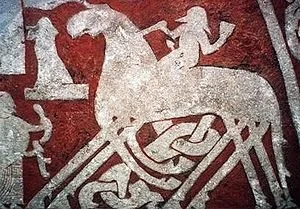
Sleipnir
Sources
Lindow, J. (2001). Norse Mythology: A Guide to the Gods, Heroes, Rituals, and Beliefs. Oxford: Oxford University Press.
Sturluson, S. and Brodeur, A.G. (trans) (1916). The Prose Edda. New York: The American-Scandinavian Foundation
Byock, J. L. (1990). Saga of the Volsungs: The Norse Epic of Sigurd the Dragon Slayer. Berkeley, CA: University of California Press.
Larrington, C. (eds) (1996), The Poetic Edda, Oxford World's Classics. Oxford: Oxford University Press
Maldanis, L. et al (2016). Heart fossilization is possible and informs the evolution of cardiac outflow tract in vertebrates. Elife, 5, e14698.
Contact
Alex FitzpatrickTwitter: @archaeologyfitz
Simona FalangaTwitter: @CrazyBoneLady
Alex’s Blog: Animal Archaeology
Music "Coconut - (dyalla remix)" https://www.youtube.com/watch?v=_2UiKoouqaY
Affiliates
How Do We Know What We Know? - Dirt 166
There are a lot of misconceptions in archaeology that are often perpetuated simply because people don’t think about how the information they take for granted came to be. How do archaeologists know what people were doing in the past? Actually, how do we know anything at all? How do we know what didn’t happen? Tune in and find out!
Links
Is there a Solutrean-Clovis Connection in the American Colonization? (ThoughtCo)
Five Breakthrough Signs of Early Peoples in the Americas (Sapiens)
People Were Chipping Stone Tools in Texas More Than 15,000 Years Ago (Scientific American)
Did prehistoric women hunt? New research suggests so (The Conversation)
This Prehistoric Peruvian Woman Was a Big-Game Hunter (Smithsonian)
A history of true civilisation is not one of monuments (Aeon)
What Makes Civilization? The Ancient Near East and the Future of the West (WorldCat)
The Amazon Rainforest Was Profoundly Changed by Ancient Humans (The Atlantic)
Contact
Email the Dirt Podcast: thedirtpodcast@gmail.com
ArchPodNet
APN Website: https://www.archpodnet.com
APN on Facebook: https://www.facebook.com/archpodnet
APN on Twitter: https://www.twitter.com/archpodnet
APN on Instagram: https://www.instagram.com/archpodnet
Affiliates
A Conversation with Matt Reed: THPO for the Pawnee Nation of Oklahoma - Ruins 85
On this episode of A Life in Ruins Podcast, we interview Matt Reed. Matt is the Tribal Historic Preservation Officer for the Pawnee Nation of Oklahoma, We talk about how his families military service factored into his fascination with history and ultimately pushing him to study history as an undergraduate. We then talk about his academic career and how he got started at the Oklahoma Historical Society and what the goal of the society is. We talk about his change of careers and what he does as the Tribal Historic Preservation Officer. Matt and Carlton then detail their experience at the 2021 Plains Conference in Boulder, Colorado.
Links
Literature Recommendations
The Lost Universe by Gene Weltfish
Indian Sketches by John Treat Irving
An Unspeakable Sadness-The Dispossession of the Nebraska Indians by David Wishart
Some Things Are Not Forgotten by Martha Royce Blaine
Pawnee Passage by Martha Royce Blaine
1491 by Charles C. Mann
1493 by Charles C. Mann
Interpreting Our Heritage by Freeman Tilden
Pox Americana by Elizabeth Fenn
Encounters at the Heart of the World by Elizabeth Fenn
Guest Contact
Matt Reed's Twitter: @chauiboy
Contact
Instagram: @alifeinruinspodcast
Facebook: @alifeinruinspodcast
Twitter: @alifeinruinspod
Website: www.alifeinruins.com
Ruins on APN: https://www.archaeologypodcastnetwork.com/ruins
ArchPodNet
APN Website: https://www.archpodnet.com
APN on Facebook: https://www.facebook.com/archpodnet
APN on Twitter: https://www.twitter.com/archpodnet
APN on Instagram: https://www.instagram.com/archpodnet
Affiliates
Under Jerusalem with Andrew Lawler - TAS 148
Andrew Lawler is a journalist and an author with an interest in history and archaeology. In his latest book he looks at the history of excavations in Jerusalem. Andrew starts at the beginning in the 1800s and looks at many of the characters and excavations that have helped define the city.
Andrew Lawler is author of the newly released Under Jerusalem: The Buried History of the World's Most Contested City. A long-time journalist, he has written about archaeology for more than two decades for a host of magazines. His most recent piece was the cover story for the November National Geographic on the 100 greatest archaeological discoveries.
Links
Contact
Chris Webster
ArchPodNet
APN Website: https://www.archpodnet.com
APN on Facebook: https://www.facebook.com/archpodnet
APN on Twitter: https://www.twitter.com/archpodnet
APN on Instagram: https://www.instagram.com/archpodnet
Affiliates
Preserving and Protecting Rock Art with Joe Williams - Rock Art 60
Joe Williams joins the podcast today. He directs a non-profit organization that is interested in preservation, protection, and public outreach regarding rock art.
Links
Contact
Dr. Alan Garfinkel
ArchPodNet
APN Website: https://www.archpodnet.com
APN on Facebook: https://www.facebook.com/archpodnet
APN on Twitter: https://www.twitter.com/archpodnet
APN on Instagram: https://www.instagram.com/archpodnet
Affiliates
Requiring Vaccinations and the Legality of Sick Leave - CRMArch 227
We start the show by talking about whether people should be vaccinated to work with archaeology crews. You might be able to get around the vaccine with an exemption, but, should you be allowed to work with others? We also talk about various sick leave laws and practices and what you should know.
Links
Follow Our Panelists On Twitter
Bill @succinctbill; Doug @openaccessarch; Stephen @processarch; Bill A. @archaeothoughts; Chris W @Archeowebby, @DIGTECHLLC, and @ArchPodNet
Blogs:
Bill White: Succinct Research
Doug Rocks-MacQueen: Doug’s Archaeology
Stephen Wagner: Process - Opinions on Doing Archaeology
Chris Webster: Random Acts of Science
ArchPodNet
APN Website: https://www.archpodnet.com
APN on Facebook: https://www.facebook.com/archpodnet
APN on Twitter: https://www.twitter.com/archpodnet
APN on Instagram: https://www.instagram.com/archpodnet
Affiliates
From the Vault: "Ancient" "Astronomy" - Dirt 165
This week, Amber is finishing grad school applications and Anna had some vaccine booster side effects, so we bring you an excerpt from an episode of Dirt After Dark! Amber brings Anna (kicking and screaming) along on an exploration of some space weirdos who interpreted various bits and pieces of archaeology and ethnography to show that there's another mystery planet out there, and it's out to get us. And also bring us civilization? Anyway, it gets really weird, and we hope you enjoy the ride.
Contact
Email the Dirt Podcast: thedirtpodcast@gmail.com
ArchPodNet
APN Website: https://www.archpodnet.com
APN on Facebook: https://www.facebook.com/archpodnet
APN on Twitter: https://www.twitter.com/archpodnet
APN on Instagram: https://www.instagram.com/archpodnet
Affiliates
The Anthropology of Castration with Dr. Kathryn Reusch - Ruins 84
In this episode, we are joined by Dr. Kathryn Reusch, who is a Conservation Technician in the Museum Conservation Department at the Denver Museum of Nature and Science. We talk about her experiences in school in the UK, her graduate research, and then we take a deep dive into the painful topic of castration (and yes we mean human castration). Connor and Carlton pepper Dr. Reusch with questions about castration and learn more than they ever needed to know.
Literature Recommendations
1999 Eunuchs and Castrati: A Cultural History by Piotr O. Scholz
2005 The Human Bone Manual by Tim D. White and Pieter Arend Folkens
2007 The Archaeology of Disease by Charlotte Roberts and Keith Manchester
2008 The Eunuch in Byzantine History and Society by Shaun Together
2013 "That which was missing": The Archaeology of Castration by Dr. Kathryn Reusch
Guest Contact
Dr. Reusch's Twitter: @klreusch
Contact
Instagram: @alifeinruinspodcast
Facebook: @alifeinruinspodcast
Twitter: @alifeinruinspod
Website: www.alifeinruins.com
Ruins on APN: https://www.archaeologypodcastnetwork.com/ruins
ArchPodNet
APN Website: https://www.archpodnet.com
APN on Facebook: https://www.facebook.com/archpodnet
APN on Twitter: https://www.twitter.com/archpodnet
APN on Instagram: https://www.instagram.com/archpodnet
Affiliates
Archaeological Hoaxes Round-Up! - TAS 147
Sometimes modern humans just can’t resist the urge to falsify archaeological evidence - we don’t always know why, but sometimes it may be to support their own theory of history, or sometimes just for a joke. In this episode we explore 3 archaeological hoaxes, who the perpetrators were (if known) and why they did it.
Links
Segment 1
Segment 2
Contact
Chris Webster
ArchPodNet
APN Website: https://www.archpodnet.com
APN on Facebook: https://www.facebook.com/archpodnet
APN on Twitter: https://www.twitter.com/archpodnet
APN on Instagram: https://www.instagram.com/archpodnet
Affiliates
Southeast Asian Archaeology with Dr. Noel Hidalgo Tan - RockArt 59
Dr. Noel Hidalgo Tan is a southeast Asian archaeologist, and apparently, there aren't that many. He's almost single-handedly telling the world about SE archaeology through his publications, Instagram, and his website. Tune in and learn about rock art and southeast Asia.
Links
Contact
Dr. Alan Garfinkel
ArchPodNet
APN Website: https://www.archpodnet.com
APN on Facebook: https://www.facebook.com/archpodnet
APN on Twitter: https://www.twitter.com/archpodnet
APN on Instagram: https://www.instagram.com/archpodnet
Affiliates
Droning on with Paul in Iraq - Archaeotech 168
Paul was invited on a project in Iraq and has returned to tell us all about it. What was getting to Iraq like? How'd the preparation for photogrammetry go? We find out about the Lagash Archaeological Project and how the project went.
Links
Contact
Chris Webster
Twitter: @archeowebby
Paul Zimmerman
Twitter: @lugal
Email: paul@lugal.com
ArchPodNet
APN Website: https://www.archpodnet.com
APN on Facebook: https://www.facebook.com/archpodnet
APN on Twitter: https://www.twitter.com/archpodnet
APN on Instagram: https://www.instagram.com/archpodnet
Affiliates
Thanksglyphing - Ep 164
We’re shaking things up this year, and instead of doing a ThanksViking episode, we’re peeking into the world of Maya and Aztec art and writing. The Maya wrote using a system of around 800 glyphs--the Aztecs used as many as 2,000. We won’t get to ALL of these, but we’ll talk about how these writing systems developed, how they were used, and the role they played in the lives of the Aztec and Maya people.
Contact
Email the Dirt Podcast: thedirtpodcast@gmail.com
ArchPodNet
APN Website: https://www.archpodnet.com
APN on Facebook: https://www.facebook.com/archpodnet
APN on Twitter: https://www.twitter.com/archpodnet
APN on Instagram: https://www.instagram.com/archpodnet
Affiliates
Microfauna, Langmahdhalde, and being a Military Spouse with Dr. Gillian Wong - Ruins 83
In this episode, we are joined by Dr. Gillian Wong, who is an Adjunct Professor of Anthropology at Metropolitan Community College in Kansas City, Missouri, and a postdoctoral researcher at the University of Tuebingen. Dr. Wong chats with us about her early outdoor days, experiences at UC Davis, and how learning French has been useful for her in archaeology. We then delve into her thesis/dissertation work at the University of Utah and then in Germany. She pronounces the name of the site she worked on and Connor/Carlton fails to replicate her pronunciation. Dr. Wong then talks about her experiences being a military spouse and also some advice for those who are military spouses.
Literature Recommendations
2008 The Archaeology of Animal Bones by Terry O'Connor
2018 An Introduction to Zooarchaeology by Diane Gifford-Gonzalez
2019 Mothering from the Field: The Impact of Motherhood on Site-Based Research edited by Bahiyyah M. Muhammad and Melanie-Angela Neuilly
Guest Contact
Twitter @GillianLWong
Email: gillian.wong368@gmail.com
Contact
Instagram: @alifeinruinspodcast
Facebook: @alifeinruinspodcast
Twitter: @alifeinruinspod
Website: www.alifeinruins.com
Ruins on APN: https://www.archaeologypodcastnetwork.com/ruins
ArchPodNet
APN Website: https://www.archpodnet.com
APN on Facebook: https://www.facebook.com/archpodnet
APN on Twitter: https://www.twitter.com/archpodnet
APN on Instagram: https://www.instagram.com/archpodnet
Affiliates
Pompeii Slave's Rooms, Homo Naledi, and ancient theater toilets - TAS 146
We've got three news stories for you again this week. The first is about a find at Pompeii, where they are always finding cool things, that's different from most. Archaeologists have found what they think are slave's quarters, an underrepresented group in the archaeological assemblage. Next we have some new thoughts after a recent reconstruction of the 300kyo Homo naledi. Finally, archaeologists get really excited about 2000 year old toilets in Turkey.
Links
Segment 1
Segment 2
Segment 3
Contact
Chris Webster
ArchPodNet
APN Website: https://www.archpodnet.com
APN on Facebook: https://www.facebook.com/archpodnet
APN on Twitter: https://www.twitter.com/archpodnet
APN on Instagram: https://www.instagram.com/archpodnet