Oh, Nice - Dirt 169

We're closing out the year with a cozy episode about heartwarming things in the archaeological record. That’s right, we’re just going to find examples of nice things that people did and made in the past and tell you all about them. It’s a little year’s-end treat for us all. There's some discussion of Dads Being Dads, some loud opinions from Anna's neighbor's dog, and an all around good time.
Links
Stone-age toddlers had art lessons, study says (The Guardian)
Cat Left a Pawprint in a 2,000-Year-Old Roman Roof Tile (Smithsonian)
2000-Year-Old Paw Print Proves Cats Never Cared About Your Stuff (Bored Panda)
Curious Cat Walks Over Medieval Manuscript (National Geographic)
On Lebanon border, salvage op rappels 2,000-year-old vessels down sheer cliff (Times of Israel)
Rembrandt masterpiece thought lost is found after falling off wall (CNN)
For a Surprisingly Long Time, Humans Have Kept Mementos of Dead Loved Ones (ScienceAlert))
Digging In The Dirt Really Does Make People Happier (Forbes)
These archaeologists helped quell a COVID surge in Madagascar (Nature)
Faience aryballos (oil flask) in the form of a hedgehog (Met Museum)
The Tell Asmar Sculpture Hoard of Prayerful People (ThoughtCo)
Contact
Email the Dirt Podcast: thedirtpodcast@gmail.com
ArchPodNet
APN Website: https://www.archpodnet.com
APN on Facebook: https://www.facebook.com/archpodnet
APN on Twitter: https://www.twitter.com/archpodnet
APN on Instagram: https://www.instagram.com/archpodnet
Affiliates
Annual Performance Review with Chris Webster - Ruins 88

It's that time of the year again, Archaeology Podcast Network Director Chris Webster joins the lads for their annual "Performance Review". This episode doesn't cover much archaeology content but how the ongoing pandemic has affected the APN, what 2022 holds for the network, and how this podcast has been performing over the past year. Now, the annual review wouldn't be complete without Chris roasting Carlton, Connor, and David over their podcasting "ticks".
Links
Guest Contact
email
Contact
Instagram: @alifeinruinspodcast
Facebook: @alifeinruinspodcast
Twitter: @alifeinruinspod
Website: www.alifeinruins.com
Ruins on APN: https://www.archaeologypodcastnetwork.com/ruins
ArchPodNet
APN Website: https://www.archpodnet.com
APN on Facebook: https://www.facebook.com/archpodnet
APN on Twitter: https://www.twitter.com/archpodnet
APN on Instagram: https://www.instagram.com/archpodnet
Affiliates
Shipwrecks, a rediscovered cemetery and Neanderthals - TAS 151

This week we have 3 interesting archaeology news stories. First, researchers have discovered 2 well preserved shipwrecks off the coast of Ceasarea that are from two different time periods, but very close together on the sea floor. Second, a forgotten African American cemetery has been re-discovered under a parking lot and building in Clearwater Florida. And finally, new research shows that Neanderthals may have had a bigger impact on the Pleistocene landscape than we previously thought.
Links
Segment 1
Segment 2
Segment 3
Landscape modification by Last Interglacial Neanderthals
Contact
Chris Webster
ArchPodNet
APN Website: https://www.archpodnet.com
APN on Facebook: https://www.facebook.com/archpodnet
APN on Twitter: https://www.twitter.com/archpodnet
APN on Instagram: https://www.instagram.com/archpodnet
Affiliates
ENCORE Rock Art, Science, and Religion with Dr. Tirtha Mukhopadhyay - Rock Art 62

ENCORE: On this episode we talk to Dr. Tirtha Mukhopadhyay about his career in rock art. From his homeland of Calcutta, India, to continued graduate studies in Texas, and his current research working out of Guanajuato University in Mexico. They take a deep dive into the mysteries surrounding the relationships of science and religion. Our guest scholar provides up to date thinking on how our minds process images and create emotions relating to our understanding of deities. We delve into just what rock art images mean and how they affect the emotional states of its viewers. Finally, we provide some working hypotheses on what those animal-human figures depicted in prehistoric rock art communicate in terms of their compound metaphors as shamans, ancestors, and deities.
Links
Contact
Dr. Alan Garfinkel
ArchPodNet
APN Website: https://www.archpodnet.com
APN on Facebook: https://www.facebook.com/archpodnet
APN on Twitter: https://www.twitter.com/archpodnet
APN on Instagram: https://www.instagram.com/archpodnet
Affiliates
95th Anniversary, Agatha Christie Disappears For 11 Days - Flipside 7

Episode 7 - 95th Anniversary, Agatha Christie Disappears For 11 Days. (3rd December 1926)
It is quite common for mystery to be associated with the festive season, in particular, adaptions of Agatha Christie's famous work have had a place as Christmas reading or nowadays watching since they were first published. This is a tradition which holds today with my own family and in honor of the season we want to share it with you! This episode is luckily then inspired by the 95th Anniversary of the most mysterious event in Christie's own life, her disappearance for 11 days whereupon she reappeared with apparent amnesia, on 3rd December 1926. But how is archaeology involved... well, in quite a few ways actually, Christie was a pretty brilliant archaeologist-in-training, was married to a professional archaeologist, was a fixture at many Middle and Near Eastern sites, and wrote quite a bit of insightful narrative surrounding archaeology in her fiction novels. Joining me this episode is Dr. Rebecca Mills a lecturer in Communications and English at the University of Bournemouth, also Agatha Christie aficionado. From my family to yours, Merry Christmas, Yule, or simply Happy Holiday Season, may next year be utterly brilliant for all of you!
Dr. Mills has rather brilliantly also provided a further reading list below:
Graphic biography: The Real Life of Agatha Christie, by Anne Martinetti and Guillaume Lebeau, illustrated by Alexandre Franc, translated by Edward Gauvin (SelfMadeHero, 2016)
J.C. Bernthal, Queering Agatha Christie: Revisiting the Golden Age of Detective Fiction (Palgrave 2016)
Christopher Prior, 'An Empire Gone Bad: Agatha Christie, Anglocentrism and Decolonization' in Cultural and Social History: The Journal of the Social History Society Volume 15:2 (2018)
More about Christie's young women: Merja Makinen, Agatha Christie: Investigating Femininity (Palgrave 2006)
Rebecca Mills and J.C. Bernthal, editors, Agatha Christie Goes to War (Routledge 2021)
More about Death on the Nile and Appointment with Death: Brittain Bright and Rebecca Mills, 'The Revelations of the Corpse: Interpreting the Body in the Golden Age Detective Novel' in New Perspectives on Detective Fiction
Mystery Magnified, edited by Casey Cothran and Mercy Cannon (Routledge 2015)
Brittain Bright, Beyond the scene of the crime : investigating place in Golden Age detective fiction (Doctoral Dissertation, Goldsmiths University 2015) https://ethos.bl.uk/OrderDetails.do?uin=uk.bl.ethos.650408
Nadia Atia has a forthcoming chapter on Orientalism in Christie's work in the forthcoming Bloomsbury Handbook to Agatha Christie (November 2022)
Music
Intro/Outro Music - Creative Commons - "Fantasia Fantasia" Kevin MacLeod (incompetech.com). Licensed under Creative Commons: By Attribution 4.0 License. http://creativecommons.org/licenses/by/4.0/
ArchPodNet
APN Website: https://www.archpodnet.com
APN on Facebook: https://www.facebook.com/archpodnet
APN on Twitter: https://www.twitter.com/archpodnet
APN on Instagram: https://www.instagram.com/archpodnet
Affiliates
Muons and More - Ep 169
Chris and Paul discuss a couple recent articles. One describes the use of muons as a non-invasive technique for looking inside solid objects, and the other discusses the authors’ R project for visualizing chronology. They might not seem related, but both articles predict exciting advancements in archaeology.
Links
Seeing deeper with atmospheric muons: From archaeology to geology
datplot: A New R Package for the Visualization of Date Ranges in Archaeology
Contact
Chris Webster
Twitter: @archeowebby
Paul Zimmerman
Twitter: @lugal
Email: paul@lugal.com
ArchPodNet
APN Website: https://www.archpodnet.com
APN on Facebook: https://www.facebook.com/archpodnet
APN on Twitter: https://www.twitter.com/archpodnet
APN on Instagram: https://www.instagram.com/archpodnet
Affiliates
Land Acknowledgements and Catching Up with Anna Cordova - HeVo 58

On today’s podcast Jessica catches up with Heritage Voices Episode 8 guest Anna Cordova, Lead Archaeologist for the city of Colorado Springs (although, to be clear, she is not representing the city with this interview). Anna is also Chairman on the Board of Trustees of the non-profit Jessica co-founded, Living Heritage Research Council. First, we talk about what Anna has been up to since her episode, including her role on the award winning Palmer trash discovery archaeology project at Garden of the Gods. Then we move into Land Acknowledgements. What are they, how can they be improved, and how important are they? We close out by talking about various ways you can make a positive impact with Indigenous communities regardless of whether you do a land acknowledgement, including donating, board or volunteer service, buying from tribal enterprises, visiting and financially supporting tribal parks, museums, and community centers, etc.
Links
Palmer Trash Discovery, Colorado State Archaeologist’s Award
2020 ACRA Public Industry Award Video (Garden of the Gods mitigation starts at 5:35)
Scroll down to sign up for Living Heritage Research Council’s newsletter
Kroger Community Rewards (Colorado residents sign up here with your City Market or King Soopers card and let LHRC know to possibly be selected for 1 LHRC Osprey backpack)
Individual and recurring donations to Living Heritage Research Council (with possibilities of receiving 1 of 3 LHRC Osprey backpacks)
National Association of Tribal Historic Preservation Officers (NATHPO) Donation Page
Contact
ArchPodNet
APN Website: https://www.archpodnet.com
APN on Facebook: https://www.facebook.com/archpodnet
APN on Twitter: https://www.twitter.com/archpodnet
APN on Instagram: https://www.instagram.com/archpodnet
Affiliates
How Long Ago Was the Past? - Dirt 168
When does “The Past” start, and how far back does it go? How long did it take people to get places in the past? How do we attempt to hold the vastness of time and geography in our minds? Not well, especially in an audio medium, but we’re excited to blow your minds.
Links
The last slave ship survivor and her descendants identified (National Geographic)
How Far Can A Horse Travel In A Day? (8 Facts) (Deep Hollow Ranch)
Speed Under Sail of Ancient Ships (Transactions of the American Philological Association)
ORBIS: The Stanford Geospatial Network Model of the Roman World (Stanford University)
Modeling Ancient Population Structures and Movement in Linguistics (Annual Review of Anthropology)
Optimising human community sizes (Evolution and Human Behavior)
Contact
Email the Dirt Podcast: thedirtpodcast@gmail.com
ArchPodNet
APN Website: https://www.archpodnet.com
APN on Facebook: https://www.facebook.com/archpodnet
APN on Twitter: https://www.twitter.com/archpodnet
APN on Instagram: https://www.instagram.com/archpodnet
Affiliates
Battlefield Archaeology with Ray Sumner - Ep 87
In this episode we are joined by Ray Sumner, a Ph.D. candidate in Anthropology at Colorado State University. Ray was a career U.S. Army officer prior to pursuing his Ph.D. in Anthropology, he reflects on his military experience and how it has shaped his research on Plains Indian Warfare during the late 19th century. Ray and Carlton find out they share a collegiate organization, we discuss the significance of Ray, and we conclude the episode with a conversation about Ray's continuing work for the Department of Defense's POW/MIA Accounting Agency.
Links
@The Julesburg Project on Facebook
@CampRankin1865 on Facebook
CSU Department of Anthropology and Geography and the Center for Mountain and Plains Archaeology (CMPA) Facebook sites
Literature Recommendations
Battlespace 1865: Archaeology of the Landscapes, Strategies, and Tactics of the North Platte Campaign, Nebraska (American Landscapes) by Doug Scott, Peter Bleed, and Amanda Renner.
Archaeological Insights into the Custer Battle: An Assessment of the 1984 Field Season by Doug Scott and Richard Fox, Jr.
A Sacred People: Indigenous Governance, Traditional Leadership and the Warriors of the Cheyenne Nation” and “A Sovereign People: Indigenous Nationhood, Traditional Law and the Covenants of the Cheyenne Nation by Leo Killsback.
Guest Contact
email
Contact
Instagram: @alifeinruinspodcast
Facebook: @alifeinruinspodcast
Twitter: @alifeinruinspod
Website: www.alifeinruins.com
Ruins on APN: https://www.archaeologypodcastnetwork.com/ruins
ArchPodNet
APN Website: https://www.archpodnet.com
APN on Facebook: https://www.facebook.com/archpodnet
APN on Twitter: https://www.twitter.com/archpodnet
APN on Instagram: https://www.instagram.com/archpodnet
Affiliates
Muons and the Terracotta Army, Mesolithic Baby burial and Pseudoscience in Jordan - TAS 150
This week we discuss three very different archaeological news stories! First, archaeologists in China plan to use Muons to “see” inside the unopened and presumably un-looted tomb of China’s first Emperor Qin Shi Huang. His tomb is protected by the famed Terracotta Army, but has remained unopened due to preservation concerns. The second article is about a European Mesolithic baby burial, and the great care with which she was buried. Finally, we head over to Jordan to learn about recent research that was twisted to “prove” the story of the city of Sodom in the Bible, and how this is dangerous pseudoscience that damages the archaeology of the area.
Links
Segment 1
Segment 2
Segment 3
Contact
Chris Webster
ArchPodNet
APN Website: https://www.archpodnet.com
APN on Facebook: https://www.facebook.com/archpodnet
APN on Twitter: https://www.twitter.com/archpodnet
APN on Instagram: https://www.instagram.com/archpodnet
Affiliates
A People's History of Sheffield from the French Revolution to Chartism with Matthew Roberts - Ep 43

Archaeology & Ale is a monthly series of talks presented by Archaeology in the City, part of the University of Sheffield Archaeology Department’s outreach programme. This month we are proud to host Matthew Roberts from Sheffield Hallam University speaking on "A People's History of Sheffield from the French Revolution to Chartism". This talk took place on Tuesday, November 23rd, 2021, online via Google Meets.
Sheffield has a rich tradition of ‘history from below’, in the sense of a long established assertive and proud group of working people who created a rich occupational, social and political culture. From the time of the French Revolution in the 1790s through to the 1850s and beyond, working people increasingly fought for recognition, dignity, protection in the workplace and their rights of citizens. At the centre of these struggles were Sheffield’s metal workers, the cutlers and ‘little mesters’, as well as women and not just as wives but in their own right. What was life like for the working classes of Sheffield during this period? What changes and continuities marked their lives? Why did Sheffield become a centre of radical politics? These are some of the questions we’ll explore in this talk.
Matthew Roberts from Sheffield Hallam University
Matthew Roberts is Associate Professor in Modern British History at Sheffield Hallam University in the UK. He is an historian of nineteenth-century Britain and the Anglophone Atlantic World, and works mainly on the history of popular politics and protest, the visual and material culture of politics, and more recently the history of emotions. His book Chartism, Commemoration and the Cult of the Radical Hero was published by Routledge in 2020, and is now available in paperback.
For more information about Archaeology in the City’s events and opportunities to get involved, please email archaeologyinthecity@sheffield.ac.uk or visit our website at archinthecity.wordpress.com. You can also find us on Twitter (@archinthecity), Instagram (@archaeointhecity), or Facebook (@archinthecity)
ArchPodNet
APN Website: https://www.archpodnet.com
APN on Facebook: https://www.facebook.com/archpodnet
APN on Twitter: https://www.twitter.com/archpodnet
APN on Instagram: https://www.instagram.com/archpodnet
ArchPodNet
APN Website: https://www.archpodnet.com
APN on Facebook: https://www.facebook.com/archpodnet
APN on Twitter: https://www.twitter.com/archpodnet
APN on Instagram: https://www.instagram.com/archpodnet
Affiliates
2021 Holiday Gift Guide - CRMarch 228
Wondering what to give give an archaeologist for Christmas? This week the guys chat about their favorite gift items for all the archaeologists in your life!
Links
10in 1000W-110V Water Heater Portable Electric Immersion Element Boiler
Power Inverter 300W Car Inverter DC 12V to 110V AC Converter
Follow Our Panelists On Twitter
Bill @succinctbill; Doug @openaccessarch; Stephen @processarch; Bill A. @archaeothoughts; Chris W @Archeowebby, @DIGTECHLLC, and @ArchPodNet
Blogs:
Bill White: Succinct Research
Doug Rocks-MacQueen: Doug’s Archaeology
Stephen Wagner: Process - Opinions on Doing Archaeology
Chris Webster: Random Acts of Science
ArchPodNet
APN Website: https://www.archpodnet.com
APN on Facebook: https://www.facebook.com/archpodnet
APN on Twitter: https://www.twitter.com/archpodnet
APN on Instagram: https://www.instagram.com/archpodnet
Affiliates
Nor'eastern PaleoIndian Archaeology with Dr. Heather Rockwell - Ruins 86
In this episode, we are joined by Dr. Heather Rockwell, who is an Assistant Professor at Salve Regina University. Big surprise, she is another fellow University of Wyoming alum. We begin by asking about her developing years in archaeology and then delve into her choice of undergraduate and graduate programs. She explains how having a diverse committee for her Ph.D. at UW was ultimately helpful for her. We then ask Dr. Rockwell to do a deep dive into Northeastern Paleoindian Archaeology. We finish off talking about the academic job market and her upcoming paper with Dr. Madeline Mackie.
Literature Recommendations
2021 A Deep Presence: 13,000 years of Native American History, by Robert G. Goodby
Guest Contact
Instagram for Regina Salve Department of Cultural and Historical Preservation
@SalveUnivCHP
Facebook for Regina Salve Department of Cultural and Historical Preservation
Contact
Instagram: @alifeinruinspodcast
Facebook: @alifeinruinspodcast
Twitter: @alifeinruinspod
Website: www.alifeinruins.com
Ruins on APN: https://www.archaeologypodcastnetwork.com/ruins
ArchPodNet
APN Website: https://www.archpodnet.com
APN on Facebook: https://www.facebook.com/archpodnet
APN on Twitter: https://www.twitter.com/archpodnet
APN on Instagram: https://www.instagram.com/archpodnet
Affiliates
From The Vault: Portrait of a Podcaster on Fire - Dirt 167
This week, we bring you another episode from behind the Patreon paywall. Sure, the title is a stretch, but it's hard coming up with a topical joke about portraiture! This month we dive into some early examples of representing individuals in ancient art from several times and places. Amber inexplicably takes umbrage with the entirety of Byzantine art, and both hosts question what is a face and what is a couple of lines that sorta look like a face.
Links
26,000 years of capturing the human face (Inspiring Ancestry - Genealogy & DNA)
Archaeologists Discover an Ancient Portrait of Young Jesus in an Abandoned Israeli Church (Artnet)
The diagnosis of art: facial nerve palsy in ancient Rome (Journal of the Royal Society of Medicine)
Contact
Email the Dirt Podcast: thedirtpodcast@gmail.com
ArchPodNet
APN Website: https://www.archpodnet.com
APN on Facebook: https://www.facebook.com/archpodnet
APN on Twitter: https://www.twitter.com/archpodnet
APN on Instagram: https://www.instagram.com/archpodnet
Affiliates
Textiles in the News - TAS 149
In segment 1 we discuss a recent article about 25 burials found at the Chan Chan archaeological site in Peru, and the textile objects they were buried with. Segment 2 is all about new evidence for the type of material used to weave cloth at Çatalhöyük, 8000-9000 years ago. And finally, archaeological evidence in Britain shows how Neolithic weavers joined bast fibers using a splicing technique that has been developed at many times and in many places around the world.
Links
Segment 1
Segment 2
Segment 3
Contact
Chris Webster
ArchPodNet
APN Website: https://www.archpodnet.com
APN on Facebook: https://www.facebook.com/archpodnet
APN on Twitter: https://www.twitter.com/archpodnet
APN on Instagram: https://www.instagram.com/archpodnet
Affiliates
Religious Significance with Virginia Gonzales - Rock Art 61
Virginia Gonzales is the President of the Legion of Mary in Bakersfield, CA. She joins Dr. Garfinkel to talk about the Virgin of Guadalupe and the creation or replacement of religious elements in native society. They discuss the significance of those elements to the people that practice religion world wide.
Links
Contact
Dr. Alan Garfinkel
ArchPodNet
APN Website: https://www.archpodnet.com
APN on Facebook: https://www.facebook.com/archpodnet
APN on Twitter: https://www.twitter.com/archpodnet
APN on Instagram: https://www.instagram.com/archpodnet
Affiliates
The Zooarchaeology of Myth & Legends (Part One) - Animals 41
Welcome to part 1 of our mini series covering the zooarchaeology of mythology and folklore. In this instalment, Alex and Simona discuss the weird and wonderful creatures of Norse mythology and what their skeletons may have looked like. Also Loki’s pranks, Jörmungandr rightfully getting irate at Thor picking him up and Grettir’s unpleasant encounter with a draugr.
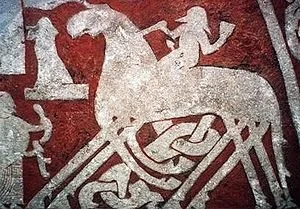
Sleipnir
Sources
Lindow, J. (2001). Norse Mythology: A Guide to the Gods, Heroes, Rituals, and Beliefs. Oxford: Oxford University Press.
Sturluson, S. and Brodeur, A.G. (trans) (1916). The Prose Edda. New York: The American-Scandinavian Foundation
Byock, J. L. (1990). Saga of the Volsungs: The Norse Epic of Sigurd the Dragon Slayer. Berkeley, CA: University of California Press.
Larrington, C. (eds) (1996), The Poetic Edda, Oxford World's Classics. Oxford: Oxford University Press
Maldanis, L. et al (2016). Heart fossilization is possible and informs the evolution of cardiac outflow tract in vertebrates. Elife, 5, e14698.
Contact
Alex FitzpatrickTwitter: @archaeologyfitz
Simona FalangaTwitter: @CrazyBoneLady
Alex’s Blog: Animal Archaeology
Music "Coconut - (dyalla remix)" https://www.youtube.com/watch?v=_2UiKoouqaY
Affiliates
How Do We Know What We Know? - Dirt 166
There are a lot of misconceptions in archaeology that are often perpetuated simply because people don’t think about how the information they take for granted came to be. How do archaeologists know what people were doing in the past? Actually, how do we know anything at all? How do we know what didn’t happen? Tune in and find out!
Links
Is there a Solutrean-Clovis Connection in the American Colonization? (ThoughtCo)
Five Breakthrough Signs of Early Peoples in the Americas (Sapiens)
People Were Chipping Stone Tools in Texas More Than 15,000 Years Ago (Scientific American)
Did prehistoric women hunt? New research suggests so (The Conversation)
This Prehistoric Peruvian Woman Was a Big-Game Hunter (Smithsonian)
A history of true civilisation is not one of monuments (Aeon)
What Makes Civilization? The Ancient Near East and the Future of the West (WorldCat)
The Amazon Rainforest Was Profoundly Changed by Ancient Humans (The Atlantic)
Contact
Email the Dirt Podcast: thedirtpodcast@gmail.com
ArchPodNet
APN Website: https://www.archpodnet.com
APN on Facebook: https://www.facebook.com/archpodnet
APN on Twitter: https://www.twitter.com/archpodnet
APN on Instagram: https://www.instagram.com/archpodnet
Affiliates
A Conversation with Matt Reed: THPO for the Pawnee Nation of Oklahoma - Ruins 85
On this episode of A Life in Ruins Podcast, we interview Matt Reed. Matt is the Tribal Historic Preservation Officer for the Pawnee Nation of Oklahoma, We talk about how his families military service factored into his fascination with history and ultimately pushing him to study history as an undergraduate. We then talk about his academic career and how he got started at the Oklahoma Historical Society and what the goal of the society is. We talk about his change of careers and what he does as the Tribal Historic Preservation Officer. Matt and Carlton then detail their experience at the 2021 Plains Conference in Boulder, Colorado.
Links
Literature Recommendations
The Lost Universe by Gene Weltfish
Indian Sketches by John Treat Irving
An Unspeakable Sadness-The Dispossession of the Nebraska Indians by David Wishart
Some Things Are Not Forgotten by Martha Royce Blaine
Pawnee Passage by Martha Royce Blaine
1491 by Charles C. Mann
1493 by Charles C. Mann
Interpreting Our Heritage by Freeman Tilden
Pox Americana by Elizabeth Fenn
Encounters at the Heart of the World by Elizabeth Fenn
Guest Contact
Matt Reed's Twitter: @chauiboy
Contact
Instagram: @alifeinruinspodcast
Facebook: @alifeinruinspodcast
Twitter: @alifeinruinspod
Website: www.alifeinruins.com
Ruins on APN: https://www.archaeologypodcastnetwork.com/ruins
ArchPodNet
APN Website: https://www.archpodnet.com
APN on Facebook: https://www.facebook.com/archpodnet
APN on Twitter: https://www.twitter.com/archpodnet
APN on Instagram: https://www.instagram.com/archpodnet
Affiliates
Under Jerusalem with Andrew Lawler - TAS 148
Andrew Lawler is a journalist and an author with an interest in history and archaeology. In his latest book he looks at the history of excavations in Jerusalem. Andrew starts at the beginning in the 1800s and looks at many of the characters and excavations that have helped define the city.
Andrew Lawler is author of the newly released Under Jerusalem: The Buried History of the World's Most Contested City. A long-time journalist, he has written about archaeology for more than two decades for a host of magazines. His most recent piece was the cover story for the November National Geographic on the 100 greatest archaeological discoveries.
Links
Contact
Chris Webster
ArchPodNet
APN Website: https://www.archpodnet.com
APN on Facebook: https://www.facebook.com/archpodnet
APN on Twitter: https://www.twitter.com/archpodnet
APN on Instagram: https://www.instagram.com/archpodnet