
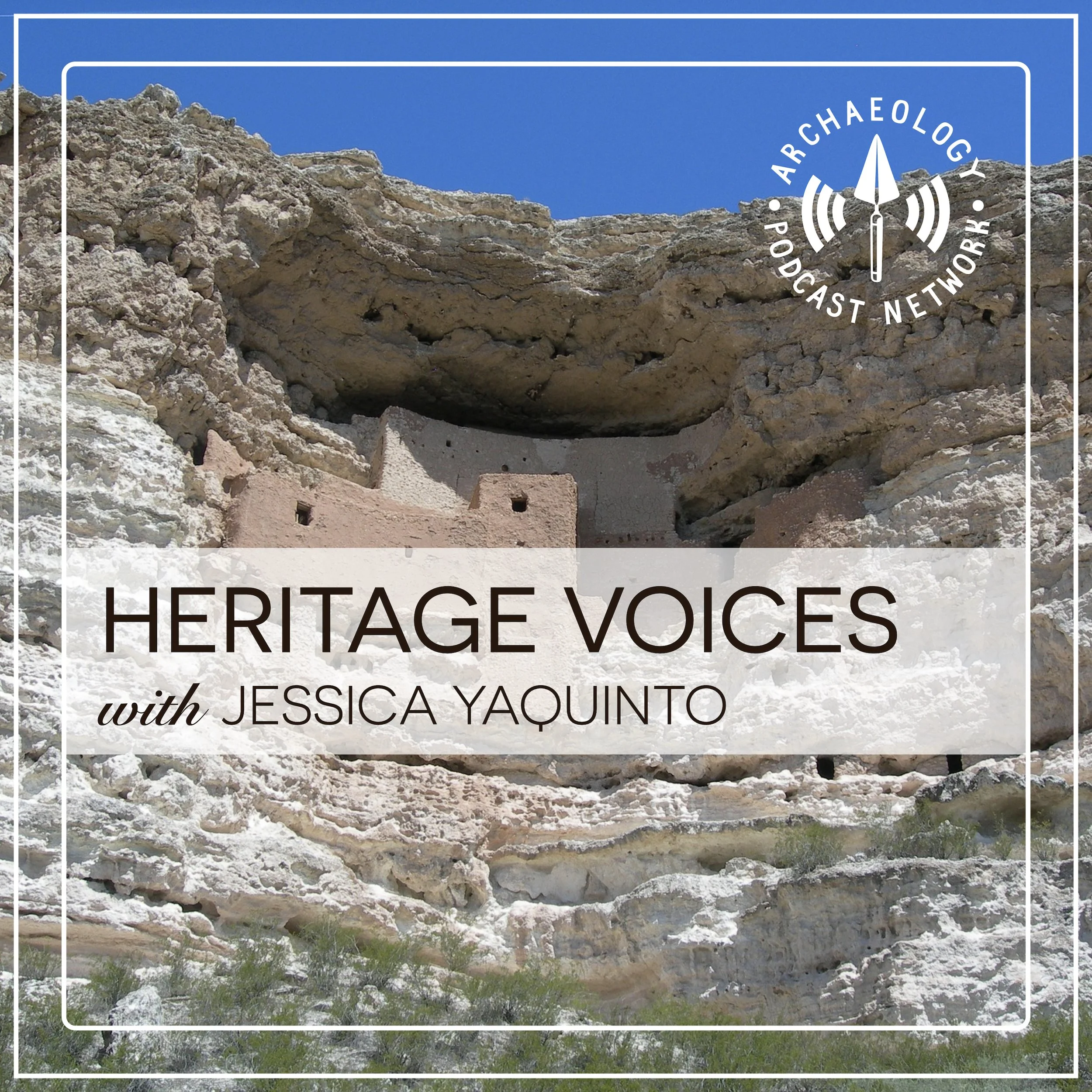
Heritage Voices
Heritage Voices, hosted by Jessica Yaquinto, explores the intersections of Indigenous heritage, archaeology, and cultural preservation. Each episode features conversations with Indigenous professionals, culture bearers, and allies working in heritage, language revitalization, tribal historic preservation, and collaborative archaeology. The show highlights Indigenous voices and perspectives in a field historically dominated by Western narratives. Whether you're a heritage professional, archaeologist, or simply passionate about inclusive storytelling, Heritage Voices offers meaningful insights into how Native communities are leading the way in preserving and interpreting their own histories.
PROMO - Unpacking the Medicine Wheel: Blackfoot History and Archaeological Interpretation with Dr. Trevor Peck - Plains 48
Heritage Voices is taking a break this month, so please enjoy this episode of The Great Plains Podcast with host Carlton Shield Chief Gover. In this episode of The Great Plains Archaeology Podcast, Carlton speaks with Dr. Trevor R. Peck about one of the most recognizable, and often misunderstood, archaeological features of the Northern Plains: the “medicine wheel.” Drawing on his article “Unpacking the ‘Medicine Wheel’ Rubric,” Trevor discusses why archaeologists have historically grouped a diverse range of stone features under this broad label and why more careful identification of their function and cultural affiliation matters.
Kalash Heritage and the Legacy of Archaeology in Pakistan - Ep 109
On this month’s episode, Jessica speaks with Dr. Uzma Rizvi (Professor of Anthropology and Urban Studies at Pratt Institute) and Sayed Gul Kalash (Archaeologist, Museum Professional, and Cultural Preservationist from the Kalash Valley, Chitral, Pakistan). The two discuss their discovery of archaeology as a field and their subsequent journeys to become archaeologists. As a result, Gul Kalash became the first and only Kalash community woman archaeologist/anthropologist. The two then discuss how they came to work together and describe some of the important work each of them has focused on, including the importance of using legacy collections, sharing data, learning cultural protocols and respecting community, and finding your own research questions/methods.
Building Partnerships at the State and Federal Level in Colorado - Ep 108
On this month’s episode, Jessica speaks with Stacy Coleman (Assistant Director for Tribal Affairs with Colorado's Department of Natural Resources). First, the two cover how Stacy ended up focusing on law and then her fifteen years working for the Department of Justice’s Environmental Enforcement Section. Next Stacy describes what drew her to her current position and the many different aspects of such a large dynamic role. Some highlights she discusses for this role include the Colorado Outdoor Strategy and its Guidance Framework for Tribal Consultation, as well as the recent Colorado Parks and Wildlife Community Listening Sessions and the 1st Tribal Summit at the annual Partners in the Outdoors Conference. Stacy also discusses the importance of setting up a policy foundation for the next generation, as well as some of the many exciting efforts happening both in Colorado and across North America.
A Brighter Future from a Dark Past - Ep 107
On this month’s episode, Jessica speaks with Dr. Peggy Brunache (Senior Lecturer in Public History and Archaeology at the University of Glasgow and founding Director of the Beniba Centre for Slavery Studies). Dr. Brunache breaks down how archaeology serves as an Imperial project, but also how it can serve communities. She also delves into the culinary history of Black foodways and culinary resistance, as well as the heavy influence of those traditions on the cuisine in the United States and Carribbean today. Finally, we talk about her current project in St. Vincent and the Grenadines and working with local communities.
The Archaeology of Indigenous South America - Ep 106
On this month’s episode, Jessica talks with Dr. José Capriles Flores (Associate Professor of Anthropology at Penn State). We talk about Dr. Capriles’ journey from visiting Tiwanaku as a child with his late biologist and ornithologist mother to studying zooarchaeology and environmental archaeology across extremely varied ecosystems in South America today. Dr. Capriles discusses how archaic pre-pastoral communities adapted through time with outside influences from Tiwanaku, Spanish, and modern society, but whose descendants have maintained their connections to the land, livestock, and their past. Dr. Capriles describes several recent creative community collaborations, the balance of development with maintaining identity and belonging, and wide reaching networks of exchange from the archaeological record to the international archaeological collaborations today.
Search the Heritage Voices Podcast here.
-
2026
- Sep 14, 2026 PROMO - Unpacking the Medicine Wheel: Blackfoot History and Archaeological Interpretation with Dr. Trevor Peck - Plains 48 Sep 14, 2026
- Aug 17, 2026 Kalash Heritage and the Legacy of Archaeology in Pakistan - Ep 109 Aug 17, 2026
- Jul 20, 2026 Building Partnerships at the State and Federal Level in Colorado - Ep 108 Jul 20, 2026
- Jun 15, 2026 A Brighter Future from a Dark Past - Ep 107 Jun 15, 2026
- May 19, 2026 The Archaeology of Indigenous South America - Ep 106 May 19, 2026
- Apr 20, 2026 Rejuvenating Native Languages - Ep 105 Apr 20, 2026
- Mar 24, 2026 PROMO - BREAKING NEWS - Monte Verde is no longer a pre-Clovis site, with Dr. Todd Surovell - Ethno 33 Mar 24, 2026
- Feb 17, 2026 Digging Deep with Norma Gregory, African Diaspora Industrial Heritage Historian - Ep 104 Feb 17, 2026
- Jan 19, 2026 Chatting with Aaron Brien - Ep 103 Jan 19, 2026
-
2025
- Nov 17, 2025 Revisiting With Ayana Omilade Flewellen - Ep 102 Nov 17, 2025
- Oct 21, 2025 Chance Ward FINALLY - HeVo 101 Oct 21, 2025
- Sep 16, 2025 Bolivar Archaeological Project, Part Two - Ep 100 Sep 16, 2025
- Aug 19, 2025 Bolivar Archaeological Project, Part One - Ep 99 Aug 19, 2025
- Jul 15, 2025 Nunalleq Digital Museum - Ep 98 Jul 15, 2025
- Jun 17, 2025 Decolonial Approaches to Writing and Teaching Indigenous History and Geography - HeVo 97 Jun 17, 2025
- May 20, 2025 Encore - Anthropology of the US-Mexico Border - Ep 32 May 20, 2025
- Apr 29, 2025 Pawnee Nation NAGPRA - Ep 96 Apr 29, 2025
- Mar 25, 2025 Perspectives from a Post-Menopausal Brown Girl in CRM - Ep 95 Mar 25, 2025
- Feb 18, 2025 Seeing the Hozhó in Anthropology - Ep 94 Feb 18, 2025
- Jan 21, 2025 Working with Tribes as a Non-Anthropologist - Ep 93 Jan 21, 2025
-
2024
- Dec 17, 2024 Encore: The Ramblings of a Lakota Anthropologist on American Indians and Anthropology and Tribal Relations - Ep 75 Dec 17, 2024
- Nov 19, 2024 The 2024 Updated NAGPRA Regulations - HeVo 92 Nov 19, 2024
- Oct 15, 2024 Rapa Nui - HeVo 91 Oct 15, 2024
- Sep 17, 2024 The Tohono O’odham Nation and Kitt Peak National Observatory: Building Relationships and Creating Resources - Ep 90 Sep 17, 2024
- Aug 20, 2024 Tamamta (all of us): Transforming Western and Indigenous Sciences together - HeVo 89 Aug 20, 2024
- Jul 16, 2024 Sámi Land Protection - Ep 88 Jul 16, 2024
- Jun 18, 2024 Nuxawiš: unwilling to give up - HeVo 87 Jun 18, 2024
- May 21, 2024 Relational Engagement with Indigenous Communities through the Heritage Lands Collective - Ep 86 May 21, 2024
- Apr 16, 2024 Kathryn M. Buder Center for American Indian studies at Washington University in St. Louis - Ep 85 Apr 16, 2024
- Mar 19, 2024 Boulder Ethnographic-Education Project: Indigenous Perspectives on Ethnography - Ep 84 Mar 19, 2024
- Feb 20, 2024 Nubia: It’s a real place! - Ep 83 Feb 20, 2024
- Jan 16, 2024 Maroon Heritage in Dominica - Ep 82 Jan 16, 2024
-
2023
- Dec 19, 2023 Working with Indigenous Communities and Orangutan Conservation in Borneo - Ep 81 Dec 19, 2023
- Nov 21, 2023 Lumbee Perspectives on Environment, Culture, and Community - Ep 80 Nov 21, 2023
- Oct 24, 2023 The Intensive NAGPRA Summer Training and Education Program (INSTEP) - Ep 79 Oct 24, 2023
- Sep 19, 2023 Browns Canyon National Monument - Ep 78 Sep 19, 2023
- Aug 14, 2023 Esto’k Gna Somi Se’k [The Human Beings of Texas] - Ep 77 Aug 14, 2023
- Jul 27, 2023 Changing Landscapes in Higher Education - Ep 76 Jul 27, 2023
- Jun 22, 2023 The Ramblings of a Lakota Anthropologist on American Indians and Anthropology and Tribal Relations - Ep 75 Jun 22, 2023
- May 18, 2023 Walking the Ancestors Home - Ep 74 May 18, 2023
- Apr 25, 2023 Exploring the Ethics in Experimental Archaeology - Ep 73 Apr 25, 2023
- Mar 21, 2023 Working with Indigenous Communities in the Philippines - Ep 72 Mar 21, 2023
- Feb 21, 2023 Tribal Collaboration at Archaeology Southwest - Ep 71 Feb 21, 2023
- Jan 17, 2023 Black Cemeteries - Ep 70 Jan 17, 2023
-
2022
- Dec 20, 2022 The Utes as a Forgotten People - Ep 69 Dec 20, 2022
- Nov 15, 2022 Indigenous Fire and Climate Justice - Ep 68 Nov 15, 2022
- Oct 18, 2022 PROMO - Finding Our Religion with Dr. Candace Lukasik - The Dirt 208 Oct 18, 2022
- Sep 20, 2022 Makoons to Makwa: Early Career Archaeological Contracting - Ep 67 Sep 20, 2022
- Aug 16, 2022 Poarch Identity - Ep 66 Aug 16, 2022
- Jul 19, 2022 Indigenous Led Cultural Resource Management and Heritage Companies - Ep 65 Jul 19, 2022
- Jun 21, 2022 Indigenous Education, Climate Change, and Technologies of Care - Ep 64 Jun 21, 2022
- May 17, 2022 Digging to the Other Side Podcast - Ep 63 May 17, 2022
- Apr 19, 2022 From Researched to Researcher - One Indigenous Archaeologist's Journey through Academia - Ep 62 Apr 19, 2022
- Mar 15, 2022 Decolonizing the Museum of Us - Ep 61 Mar 15, 2022
- Mar 1, 2022 Bonus: Redrawing Boundaries episode from the Sapiens Podcast - Ep 60.1 Mar 1, 2022
- Feb 15, 2022 Historical Archaeology for the Future - Ep 60 Feb 15, 2022
- Jan 18, 2022 Identity and Repatriation - Ep 59 Jan 18, 2022
-
2021
- Dec 22, 2021 Land Acknowledgements and Catching Up with Anna Cordova - Ep 58 Dec 22, 2021
- Nov 16, 2021 Perishable Artifacts and Tribally Driven Archaeology - Ep 57 Nov 16, 2021
- Oct 19, 2021 Indigenous Mapping: The One Holding the Pen Tells the Story - Ep 56 Oct 19, 2021
- Sep 21, 2021 Redefining Tribal Archaeology - Ep 55 Sep 21, 2021
- Aug 24, 2021 Kwatsáan Voices, Kwatsáan Views - Ep 54 Aug 24, 2021
- Jul 20, 2021 Methods in Indigenous Archaeology - Ep 53 Jul 20, 2021
- Jun 15, 2021 Anti-Colonial Digital Archaeology in Canada and India - Ep 52 Jun 15, 2021
- May 24, 2021 Language, Community, and Context - Ep 51 May 24, 2021
- Apr 20, 2021 Native Youth and Land Based Education - Ep 50 Apr 20, 2021
- Mar 16, 2021 Reclaiming Culture Through Archaeology - Ep 49 Mar 16, 2021
- Feb 16, 2021 Heritage, Tourism, and Race - Ep 48 Feb 16, 2021
- Jan 26, 2021 National Park Service Native American Affairs Program - Ep 47 Jan 26, 2021
-
2020
- Dec 15, 2020 Protecting the Honuukvetam [Ancestors] - Ep 46 Dec 15, 2020
- Nov 17, 2020 Maori Homes and Communities - Ep 45 Nov 17, 2020
- Oct 20, 2020 Convergent Migrations of Humans and Monarch Butterflies - Ep 44 Oct 20, 2020
- Sep 22, 2020 Tribal Capacity Building to Support Sovereignty - Ep 43 Sep 22, 2020
- Aug 18, 2020 Sovereign Stories - Ep 42 Aug 18, 2020
- Jul 21, 2020 Collecting Oral Histories in Indian Country - Ep 41 Jul 21, 2020
- Jun 17, 2020 Indigenous Land Management - Ep 40 Jun 17, 2020
- May 19, 2020 Cultural Landscapes and Indigenous Connections in Aotearoa New Zealand - Ep 39 May 19, 2020
- Apr 21, 2020 Indigenous Australian Archaeology - Ep 38 Apr 21, 2020
- Jan 21, 2020 Heritage Media Conference Presentation - Ep 37 Jan 21, 2020
-
2019
- Dec 20, 2019 BONUS - APN 5 Year Anniversary - A Message from Jessica Yaquinto Dec 20, 2019
- Dec 17, 2019 Yakama Tribal Archaeology - Ep 36 Dec 17, 2019
- Nov 19, 2019 Indigenous Archaeology as Practice - Ep 35 Nov 19, 2019
- Oct 15, 2019 Planting Seeds for Transformation in Cultural Heritage Management - Ep 34 Oct 15, 2019
- Sep 17, 2019 Coast Salish Archaeology - Episode 33 Sep 17, 2019
- Aug 20, 2019 Anthropology of the US-Mexico Border - Ep 32 Aug 20, 2019
- Jul 16, 2019 Reclaiming Indigenous Histories and the Indigenous Paleolithic - Ep31 Jul 16, 2019
- Jun 18, 2019 Cultural Landscapes Panel SAA2019 - Ep 30 Jun 18, 2019
- May 21, 2019 A Journey to Ancient Pawneeland - Ep 29 May 21, 2019
- Apr 23, 2019 The Archaeological Spectrum - Ep 28 Apr 23, 2019
- Mar 19, 2019 Central Plains Archaeology: Plain and Simple - Ep 27 Mar 19, 2019
- Feb 19, 2019 Archaeology Outreach in local Maya communities in the Yucatan - Ep 26 Feb 19, 2019
- Jan 15, 2019 Technology - Episode 25 Jan 15, 2019
-
2018
- Dec 18, 2018 Museums, Representation, and Intersectionality - Episode 24 Dec 18, 2018
- Nov 20, 2018 Salish-Kootenai College’s Tribal Historic Preservation Program - Ep 23 Nov 20, 2018
- Oct 16, 2018 Greater Chaco Landscape - Ep22 Oct 16, 2018
- Sep 18, 2018 Food Sovereignty and Natives Outdoors - Episode 21 Sep 18, 2018
- Aug 21, 2018 Seneca-Iroquois National Museum - Episode 20 Aug 21, 2018
- Aug 7, 2018 Updates - Episode 19.1 Aug 7, 2018
- Jul 17, 2018 Publishing - Episode 19 Jul 17, 2018
- Jun 19, 2018 Tribal Collaboration on the Lower Colorado River - Episode 18 Jun 19, 2018
- May 15, 2018 SAA2018 Wrap-Up - Episode 17 May 15, 2018
- Apr 17, 2018 Ethnography with African Descendent Communities - Episode 16 Apr 17, 2018
- Mar 20, 2018 Live Panel on Bears Ears National Monument - Episode 15 Mar 20, 2018
- Feb 20, 2018 Nation-Building After Federal Recognition - Episode 14 Feb 20, 2018
- Jan 16, 2018 Ethnography, Videography, and Public Anthropology - Episode 13 Jan 16, 2018
-
2017
- Dec 19, 2017 Mashantucket Pequot - Episode 12 Dec 19, 2017
- Nov 21, 2017 Hawaiian Heritage - Episode 11 Nov 21, 2017
- Oct 17, 2017 Hopivewat- Hopi Museum and Learning Center Development - Episode 10 Oct 17, 2017
- Sep 12, 2017 Working with Museums Panel - Episode 9 Sep 12, 2017
- Aug 15, 2017 Decolonizing Anthropology - Episode 8 Aug 15, 2017
- Jul 18, 2017 California State and Local Tribal Consultation Law - Episode 7 Jul 18, 2017
- Jun 20, 2017 International Indigenous Archaeology, NAGPRA, and the Northern Plains - Episode 6 Jun 20, 2017
- May 16, 2017 SHPOs, Tribal Consultation, and Collaboration - Episode 5 May 16, 2017
- Apr 18, 2017 Protecting Marshall Island's Heritage in the Face of Climate Change - Episode 4.1 Apr 18, 2017
- Apr 18, 2017 Climate Change and the Nuclear Legacy in the Marshall Islands - Episode 4 Apr 18, 2017
- Mar 21, 2017 Diné Public, Fire, and Indigenous Archaeology - Episode 3 Mar 21, 2017
- Feb 21, 2017 A Hopi perspective on Diversity in Anthropology and Grand Canyon- Episode 2 Feb 21, 2017
- Jan 17, 2017 Grand Canyon Tribal Program - Janet Cohen - Episode 1 Jan 17, 2017
- Jan 15, 2017 Introducing Heritage Voices - Episode 0 Jan 15, 2017