A Discussion with Dr. Todd Surovell - Ruins 107

On this episode of A Life In Ruins podcast, David interviews his former advisor Dr. Todd Surovell. Todd served as an advisor to David and was a committee member for David and Connor‘s MA theses.
David begins interviewing Todd about what archaeology means to him, and a discussion of his early life. The conversation later turns into how Todd found his way into anthropology, and his work in graduate school.
And in the third segment, Todd and David discuss Clovis archaeology, Clovis and Folsom culture, and megafaunal extinctions. Todd also discusses what it means to be human.
Connect with James on Twitter: @paleoimaging
Transcripts
Literature Recommendations
Guest Contact
Email: surovell@uwyo.edu
Contact
Instagram: @alifeinruinspodcast
Facebook: @alifeinruinspodcast
Twitter: @alifeinruinspod
Website: www.alifeinruins.com
Ruins on APN: https://www.archaeologypodcastnetwork.com/ruins
ArchPodNet
APN Website: https://www.archpodnet.com
APN on Facebook: https://www.facebook.com/archpodnet
APN on Twitter: https://www.twitter.com/archpodnet
APN on Instagram: https://www.instagram.com/archpodnet
Affiliates
Timelines: 2200 BCE - TAS 170

This week we have a timelines episode focused on 2200 BCE. At that time, Stonehenge as we know it today was just completed in the UK. Conversely, the Akkadian empire began to fall in Mesopotamia, and the impressive Old Kingdom in Egypt also came to an end. Join us for a discussion about what was happening in 3 world powers in year 2200 BCE!
Connect with James on Twitter: @paleoimaging
Links
Contact
Chris Webster
ArchPodNet
APN Website: https://www.archpodnet.com
APN on Facebook: https://www.facebook.com/archpodnet
APN on Twitter: https://www.twitter.com/archpodnet
APN on Instagram: https://www.instagram.com/archpodnet
Affiliates
Where in the World? Part Two: The Zooarchaeology of Africa - Animals 46
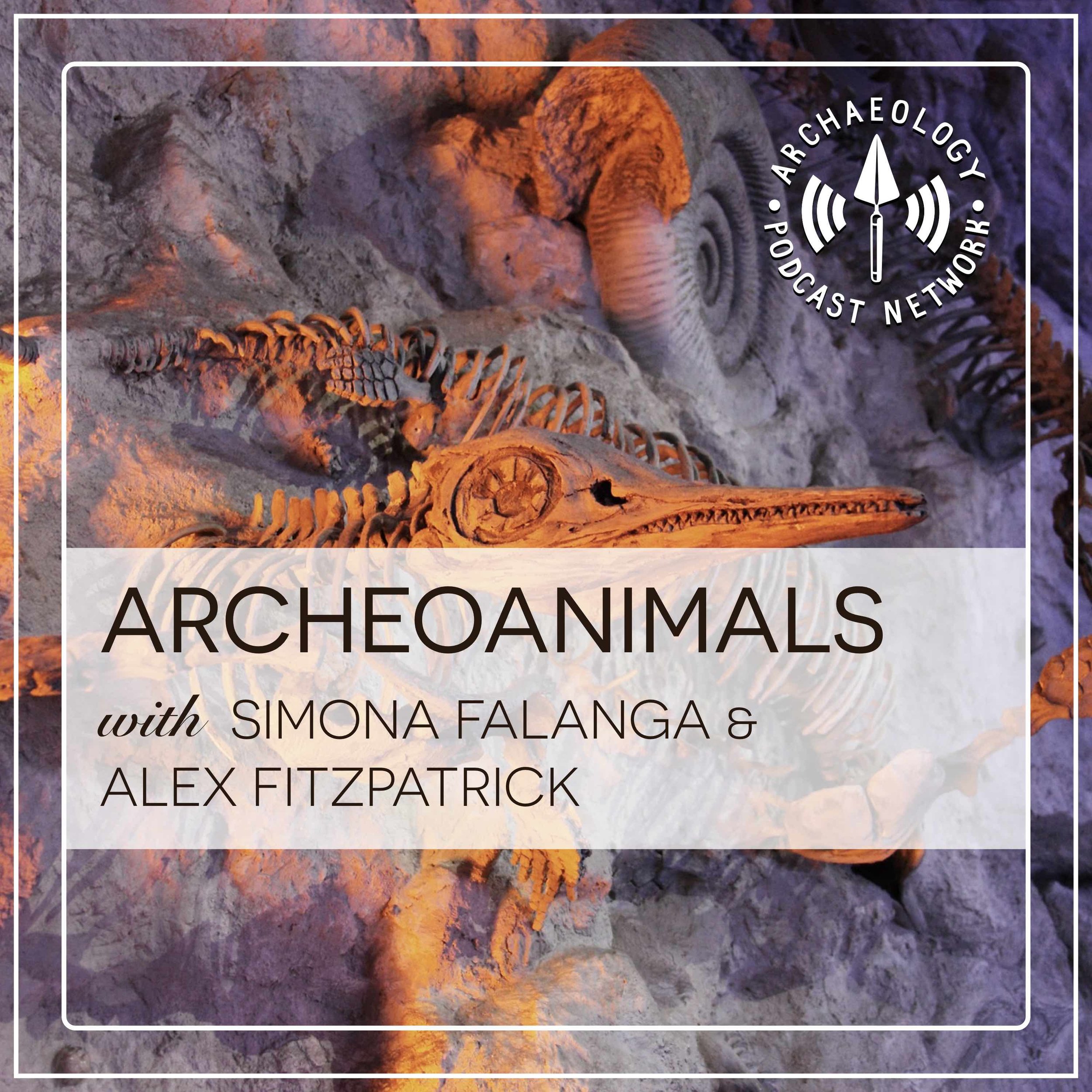
Welcome to episode two of a miniseries focusing on the zooarchaeology of various world regions. This episode is centred around African zooarchaeology, focusing on the natural history and anatomy of the most prominent wild and domesticated species. Find out more about African Giant Rats, how loud Guinea fowls can be and what a zebrinny is.
Connect with James on Twitter: @paleoimaging
// Message for Megaphone (delete this, link the episode and insert the number in the text below):
For rough transcripts of this episode go to www.archpodnet.com/animals/#
Transcripts
Links
Beja-Pereira, A., et al. (2004). African origins of the domestic donkey. Science, 304, 1781.
Boeyens, J. C., & Van der Ryst, M. M. (2014). The cultural and symbolic significance of the African rhinoceros: a review of the traditional beliefs, perceptions and practices of agropastoralist societies in southern Africa. Southern African Humanities, 26(1), 21-55.
Marshall, F. (1989). Rethinking the role of Bos indicus in sub-Saharan Africa. Current Anthropology, 30(2), 235-240.
Parkinson, J. A. (2018). Revisiting the hunting-versus-scavenging debate at FLK Zinj: a GIS spatial analysis of bone surface modifications produced by hominins and carnivores in the FLK 22 assemblage, Olduvai Gorge, Tanzania. Palaeogeography, Palaeoclimatology, Palaeoecology, 511, 29-51.
Pikirayi, I. (2018). The demise of Great Zimbabwe, AD 1420–1550: an environmental re-appraisal. In A Green and R Leech (eds) Cities in the World, 1500-2000.Routledge, 31-47..
Potts, R. (1984). Home Bases and Early Hominids: Reevaluation of the fossil record at Olduvai Gorge suggests that the concentrations of bones and stone tools do not represent fully formed campsites but an antecedent to them. American Scientist, 72(4), 338-347.
Rossel, S. et al. (2008). Domestication of the donkey: Timing, processes, and indicators. Proceedings of the National Academy of Sciences, 105(10), 3715-3720.
Shen, Q. et al. (2021). Genomic analyses unveil helmeted guinea fowl (Numida meleagris) domestication in West Africa. Genome biology and evolution, 13(6).
Stiner, M. C. (2004). Comparative ecology and taphonomy of spotted hyenas, humans, and wolves in Pleistocene Italy. Revue de Paléobiologie, 23(2), 771-785.
Wylie, D. (2009). Elephant. Reaktion Books
Contact
Alex FitzpatrickTwitter: @archaeologyfitz
Simona FalangaTwitter: @CrazyBoneLady
Alex’s Blog: Animal Archaeology
Music "Coconut - (dyalla remix)" https://www.youtube.com/watch?v=_2UiKoouqaY
Affiliates
Preparing for Disaster in the Field - Ep 238
MEMBERS! Check your member pages for a bonus fourth segment!
You're in the field and a cell tower is down. No communication! Or, you get an alert about a tornado warning, lightning nearby, hurricane on approach. What do you do? What should your company do? What are, or should be, policies related to disaster preparedness? We talk about this and more on this week's episode of the CRM Arch Podcast.
Connect with James on Twitter: @paleoimaging
Transcripts
Links
Follow Our Panelists On Twitter
Bill @succinctbill; Doug @openaccessarch; Stephen @processarch; Andrew @AndrewKinkella, Chris W @Archeowebby, @DIGTECHLLC, and @ArchPodNet
Blogs and Resources:
Bill White: Succinct Research
Doug Rocks-MacQueen: Doug’s Archaeology
Stephen Wagner: Process - Opinions on Doing Archaeology
Chris Webster: Random Acts of Science
Andrew Kinkella
ArchPodNet
APN Website: https://www.archpodnet.com
APN on Facebook: https://www.facebook.com/archpodnet
APN on Twitter: https://www.twitter.com/archpodnet
APN on Instagram: https://www.instagram.com/archpodnet
Affiliates
The Neo-Assyrians - Dirt 187

Settle in for a HEFTY episode, folks! This week, Amber and Anna examine the world of the Neo-Assyrian empire. This means some substantial time spent context-setting, thanks to the complex nature of early Mesopotamian politics, religion, warfare, and state propaganda. Then we look further at that carefully crafted state propaganda and its influence on Assyriology. THEN we get into a bit of archaeology, and finally, discuss the Neo-Assyrian legacy and descendant communities. What a ride!
Connect with James on Twitter: @paleoimaging
*LISTENER NOTE* We discuss some pretty graphically violent art in this episode, starting around time stamp 35:00. Content warning for war crimes and sexual assault--skip ahead about 25 minutes.
Links
Cultural Atlas of Mesopotamia and the Ancient Near East (via WorldCat)
Ideology and Propaganda in Assyrian Art (Power and Propaganda: A Symposium on Ancient Empires)
The Assyrians — The Appalling Lords of Torture (Medium, cn illustrations of graphic violence)
Assyria: Lion hunts, Siege of Lachish and Khorsabad (The British Museum)
Ancient salmu and the (Post-) Modern Scholar (JAGNES, via Academia.edu)
Approaching ancient Assyria through archaeology leads to new insights (Universiteit Leiden)
Archaeologists Find 2,700-Year-Old Assyrian-Style Leather Armor in China (Sci-News)
(Re)Animating The Oikos: Tell Billa’s Domestic Space In 3D (UPenn)
The sack of Nineveh in 612 (Nineveh. The Great City. Symbol of Beauty and Power, via Academia.edu)
Assyrian Aramaic Dialects | Similarities & Differences (via YouTube)
Assyrians Celebrate Akitu In Northern Syria (North Press Agency Syria)
Contact
Email the Dirt Podcast: thedirtpodcast@gmail.com
ArchPodNet
APN Website: https://www.archpodnet.com
APN on Facebook: https://www.facebook.com/archpodnet
APN on Twitter: https://www.twitter.com/archpodnet
APN on Instagram: https://www.instagram.com/archpodnet
Affiliates
Tutankhamun - Excavating the Archive with Dr. Daniela Rosenow and Professor Richard Parkinson - TAS 169
2022 marks the 100 year anniversary of the discovery of Tutankamun's tomb, and in celebration Dr Daniela Rosenow and Oxford Professor Richard Parkinson have helped create a museum exhibit that tells the story of its discovery and excavation. This unique approach highlights the people that did the excavation rather than the artifacts themselves for a unique approach to one of the most famous Egyptian archaeological discoveries. Join us for a conversation with Dr Rosenow and Professor Parkinson about the people responsible for excavating Tutankamun's tomb.
Connect with James on Twitter: @paleoimaging
Links
Contact
Chris Webster
ArchPodNet
APN Website: https://www.archpodnet.com
APN on Facebook: https://www.facebook.com/archpodnet
APN on Twitter: https://www.twitter.com/archpodnet
APN on Instagram: https://www.instagram.com/archpodnet
Affiliates
The Anthropology of Drone Warfare with Georgia Butcher - Ruins 106
For this week's episode, we are joined by a Ph.D. student in Anthropology at the University of Colorado Boulder, Georgia Butcher. Georgia is a cultural anthropologist who studies the impact of drone warfare on drone pilots. We dive into her formative years and the story that hooked her on anthropology. Carlton and Connor then really nerd out about her research, starting with her Undergraduate Honor's thesis at Colgate University and finishing with her current research. You will not want to miss this exciting conversation.
Connect with James on Twitter: @paleoimaging
Transcripts
Links
Georgia’s Twitter and Instagram: @georgiabbee
Literature Recommendations
The Unseen Scars of Those Who Kill Via Remote Control by Dave Phillips
Achilles in Vietnam: Combat Trauma and the Undoing of Character by Jonathan Shay
Making War at Fort Hood: Life and Uncertainty in a Military Community by Kenneth T. MacLeish
Contact
Instagram: @alifeinruinspodcast
Facebook: @alifeinruinspodcast
Twitter: @alifeinruinspod
Website: www.alifeinruins.com
Ruins on APN: https://www.archaeologypodcastnetwork.com/ruins
ArchPodNet
APN Website: https://www.archpodnet.com
APN on Facebook: https://www.facebook.com/archpodnet
APN on Twitter: https://www.twitter.com/archpodnet
APN on Instagram: https://www.instagram.com/archpodnet
Affiliates
Shamanism and Rock Art: A Current View - Rock Art 80

Today we visit with Donald Liponi, noted author and rock art scholar. He shares his research on his next book and the most contemporary scientific understanding of shamanism, altered states of consciousness, and rock art.
Connect with James on Twitter: @paleoimaging
Transcripts
Links
Contact
Dr. Alan Garfinkel
ArchPodNet
APN Website: https://www.archpodnet.com
APN on Facebook: https://www.facebook.com/archpodnet
APN on Twitter: https://www.twitter.com/archpodnet
APN on Instagram: https://www.instagram.com/archpodnet
Affiliates
Lagash Spring 2022 Recap - ArchaeoTech 178
Paul's back and fresh off his trip to Irag! We've been talking about the technical approach to the fieldwork and survey for a few months now and Paul's here to tell us how it went. There's a some great lessons learned in this episode and some great archaeology.
Connect with James on Twitter: @paleoimaging
Transcripts
Links
Contact
Chris Webster
Twitter: @archeowebby
Paul Zimmerman
Twitter: @lugal
Email: paul@lugal.com
ArchPodNet
APN Website: https://www.archpodnet.com
APN on Facebook: https://www.facebook.com/archpodnet
APN on Twitter: https://www.twitter.com/archpodnet
APN on Instagram: https://www.instagram.com/archpodnet
Affiliates
In the Field with the Lagash Archaeological Project, Iraq - TAS 168
Paul Zimmerman took his microphone along with him on a trip to Iraq over March and April. While there he recorded with the team at the beginning of the project, around the middle, and then at the end - from the airport! It's a great journey through an archaeological project and you learn a lot about this amazing site in Iraq.
Connect with James on Twitter: @paleoimaging
Links
Contact
Chris Webster
ArchPodNet
APN Website: https://www.archpodnet.com
APN on Facebook: https://www.facebook.com/archpodnet
APN on Twitter: https://www.twitter.com/archpodnet
APN on Instagram: https://www.instagram.com/archpodnet
Affiliates
Ruins 105 with Stefan Milo
On this episode of A Life In Ruins Podcast, we have our good friend and frequent collaborator Stefan Milo on the podcast. Stefan is in the process of researching for a video on human brain size, and we talk about what he has found. Researchers have noted a decrease in brain size in humans within the last 30,000 years. We take a deep dive into how brain size has changed throughout the evolution of the genus Homo and potential reasons for the decrease in brain size. We talk about the possibility of human self-domestication and the theories surrounding it.
If you have left a review of the podcast on iTunes or Spotify, please email us at alifeinruinspodcast@gmail.com so we can get shipping information to send you a sticker.
If you are listening to this episode on the "Archaeology Podcast Network All Shows Feed," please consider subscribing to the "A Life in Ruins Podcast" channel to support our show. Listening to and downloading our episodes on the A Life in Ruins channel helps our podcast grow. So please, subscribe to the A Life in Ruins Podcast, hosted by the Archaeology Podcast Network, on whichever platform you are using to listen to us on the "All Shows Feed." Support our show by following our channel.
Connect with James on Twitter: @paleoimaging
Transcripts
Links
Guest Links
Stefan Milo's Instagram and Twitter: @historysmilo
Stefan Milo's book Tales of Ancient Worlds: Adventures in Archaeology
Contact
Instagram: @alifeinruinspodcast
Facebook: @alifeinruinspodcast
Twitter: @alifeinruinspod
Website: www.alifeinruins.com
Ruins on APN: https://www.archaeologypodcastnetwork.com/ruins
ArchPodNet
APN Website: https://www.archpodnet.com
APN on Facebook: https://www.facebook.com/archpodnet
APN on Twitter: https://www.twitter.com/archpodnet
APN on Instagram: https://www.instagram.com/archpodnet
Affiliates
Maroon Communities - Dirt 186
On a listener-sponsored episode, Anna and Amber tackle the archaeology and historical context of maroon communities. These are societies formed by self-liberated Africans during the period when the slave trade was a huge part of the world economy. We discuss some archaeological case studies, and then really think long and hard about what it means to reconstruct these lives, and who has historically done so.
Connect with James on Twitter: @paleoimaging
Links
Maroon Communities in the Americas (Slavery and Remembrance)
Great Dismal Swamp National Wildlife Refuge (US Fish and Wildlife Service)
Landscape of Power: Freedom and Slavery in the Great Dismal Swamp Region (via Vimeo)
Deep in the Swamps, Archaeologists Are Finding How Fugitive Slaves Kept Their Freedom (Smithsonian)
Maroons under Assault In Suriname And French Guiana (Cultural Survival)
Marronage Perspective for Historical Archaeology in the United States (Historical Archaeology)
Meet the legendary community that fought for its freedom in Jamaica (National Geographic)
Maroons: Rebel Slaves in the Americas (Smithsonian Folklife)
Maroon Archaeology beyond the Americas: A View from Kenya (Historical Archaeology)
Contact
Email the Dirt Podcast: thedirtpodcast@gmail.com
ArchPodNet
APN Website: https://www.archpodnet.com
APN on Facebook: https://www.facebook.com/archpodnet
APN on Twitter: https://www.twitter.com/archpodnet
APN on Instagram: https://www.instagram.com/archpodnet
Affiliates
National Park Archaeology with David Nichols - Rock Art 79
David is an Integrated Resources Program Manager at Great Basin National Park (Acting), and the Park Archeologist and Cultural Resources Program Manager for the Mojave National Preserve and Castle Mountains National Monument. On today's episode David shares his experiences at Great Basin National Park in Nevada where there is a rich history of Basque sheep-herder dendroglyphs as well as Prehistoric pictographs and Historic inscriptions. David also shares his plans to incorporate the local tribal stories and viewpoints through ethnographic work at both Great Basin National Park and the Mojave National Preserve.
Connect with James on Twitter: @paleoimaging
Links
Contact
Dr. Alan Garfinkel
ArchPodNet
APN Website: https://www.archpodnet.com
APN on Facebook: https://www.facebook.com/archpodnet
APN on Twitter: https://www.twitter.com/archpodnet
APN on Instagram: https://www.instagram.com/archpodnet
Affiliates
From Researched to Researcher - One Indigenous Archaeologist's Journey through Academia - HeVo 62

On today’s podcast, Jessica hosts Dr. Ora Marek-Martinez (Diné, Nez Perce, and Hopi), Director of Northern Arizona University’s Office of Native American Initiatives and the Native American Cultural Center and Assistant Professor in the Anthropology Department. They discuss Dr. Marek-Martinez’s journey to become an anthropologist and negotiating different understandings of anthropology between the different cultures she was raised in. Discussions also include how to improve anthropology as a discipline (including reading recommendations) and how faculty can better support Indigenous students. They close out with a discussion of season 4 of the Sapiens podcast that Dr. Marek-Martinez co-hosted and Jessica highly recommends.
Connect with James on Twitter: @paleoimaging
Links
Contact
ArchPodNet
APN Website: https://www.archpodnet.com
APN on Facebook: https://www.facebook.com/archpodnet
APN on Twitter: https://www.twitter.com/archpodnet
APN on Instagram: https://www.instagram.com/archpodnet
Affiliates
The Peter Principle - CRMArch 237
The Peter Principle states that a person who is competent at their job will earn a promotion to a position that requires different skills. If the lack skills for the new role they will be incompetent at the new level and will not be promoted again. Sounds like pretty much all of CRM employment! Let's discuss.
Connect with James on Twitter: @paleoimaging
Transcripts
Follow Our Panelists On Twitter
Bill @succinctbill; Doug @openaccessarch; Stephen @processarch; Andrew @AndrewKinkella, Chris W @Archeowebby, @DIGTECHLLC, and @ArchPodNet
Blogs and Resources:
Bill White: Succinct Research
Doug Rocks-MacQueen: Doug’s Archaeology
Stephen Wagner: Process - Opinions on Doing Archaeology
Chris Webster: Random Acts of Science
Andrew Kinkella
ArchPodNet
APN Website: https://www.archpodnet.com
APN on Facebook: https://www.facebook.com/archpodnet
APN on Twitter: https://www.twitter.com/archpodnet
APN on Instagram: https://www.instagram.com/archpodnet
Affiliates
Pueblo Bonito, Australian Settlers, and Tasty Dogs + a BONUS segment! - TAS 167
This week we take a look at 3 archaeology news stories. First up is a recent study that looks at the deterioration of the Pueblo Bonito Great House at Chaco Canyon using historic photos of the structures. Second, is a new study that looks at the health defects and deficiencies found in the skeletal remains of a colonial era cemetery in Australia. Finally, new evidence shows cut marks on dog bones found in trash pits in colonial Jamestown, indicating there were times when they were food
Connect with James on Twitter: @paleoimaging
Links
Study finds metabolic deficiencies among migrant settlers in colonial Australia
Jamestown colonists may have kept, eaten indigenous American dogs
Contact
Chris Webster
ArchPodNet
APN Website: https://www.archpodnet.com
APN on Facebook: https://www.facebook.com/archpodnet
APN on Twitter: https://www.twitter.com/archpodnet
APN on Instagram: https://www.instagram.com/archpodnet
Affiliates
Anthropology and Science Fiction - Dirt 185
In a SURPRISE THIRD INSTALLMENT of our discussion of sci fi and archaeology, we talk about two giants of world building, Octavia E Butler and Ursula K LeGuin. We also talk about a few fictional anthropologists of TV and cinema.
Connect with James on Twitter: @paleoimaging
Links
Speculative Fiction (Oxford Research Encyclopedia of Literature)
Read Mahabharata as science fiction: C Radhakrishnan (Deccan Chronicle)
Vimana Aircraft of India: More Sloppy Scholarship from David Childress (Jason Colavito)
Separating fact from ancient Indian science fiction (Live Mint)
The Story of Urashima Taro, the Fisher Lad (Japanese Fairy Tales, via Lit2Go)
How Ursula Le Guin’s Writing Was Shaped by Anthropology (Sapiens)
Introduction: Speculative Anthropologies (Society for Cultural Anthropology)
Why So Many Readers Are Turning to Octavia Butler’s Apocalypse Fiction Right Now (Slate)
Mothership: Voyage Into Afrofuturism (Oakland Museum of California)
Afrofuturism: From the Past to the Living Present (UCLA Newsroom)
When is Wakanda: Imagining Afrofutures (The Long Now Foundation)
Forensic TV Post-Mortem: The 5 Most And Least Accurate Episodes Of 'Bones' (Forbes)
Contact
Email the Dirt Podcast: thedirtpodcast@gmail.com
ArchPodNet
APN Website: https://www.archpodnet.com
APN on Facebook: https://www.facebook.com/archpodnet
APN on Twitter: https://www.twitter.com/archpodnet
APN on Instagram: https://www.instagram.com/archpodnet
Affiliates
Just the Boyz Catching up - Ruins 104
In this episode, the three hosts reconvene after a month of not having recorded an episode. Carlton and Connor check in with David on how the bus refurbishing is coming along and the recent trip to Arkansas. Carlton talks about his dissertation data collection, recent environmental distress in Colorado, and his recent trip to Oklahoma City. The guys close out the episode with a conversation on future episode formats and upcoming guests.
If you have left a review of the podcast on iTunes or Spotify, please email us at alifeinruinspodcast@gmail.com so we can get shipping information to send you a sticker.
If you are listening to this episode on the "Archaeology Podcast Network All Shows Feed," please consider subscribing to the "A Life in Ruins Podcast" channel to support our show. Listening to and downloading our episodes on the A Life in Ruins channel helps our podcast grow. So please, subscribe to the A Life in Ruins Podcast, hosted by the Archaeology Podcast Network, on whichever platform you are using to listen to us on the "All Shows Feed." Support our show by following our channel.
Connect with James on Twitter: @paleoimaging
Transcripts
Contact
Instagram: @alifeinruinspodcast
Facebook: @alifeinruinspodcast
Twitter: @alifeinruinspod
Website: www.alifeinruins.com
Ruins on APN: https://www.archaeologypodcastnetwork.com/ruins
ArchPodNet
APN Website: https://www.archpodnet.com
APN on Facebook: https://www.facebook.com/archpodnet
APN on Twitter: https://www.twitter.com/archpodnet
APN on Instagram: https://www.instagram.com/archpodnet
Affiliates
Shamanism and Cognitive Anthropology with Kevin Stein [Encore] - Rock Art 78
This episode is with Kevin Stein an entertainment, marketing, and public relations consultant and rock art aficionado. Kevin has traveled widely and studied the intimate details of rock art both in the Americas and in the old world. He has also conducted his own seminars and presentations on the nature of shamanism and the connections with the study of cognitive anthropology. This is a fascinating discussion on shamanism, rock art, and its relationship to the comparative study of religion.
Links
Contact
Chris Webster
Dr. Alan Garfinkel
Affiliates
Find this show on the educational podcast app, Lyceum.fm!
Archaeology and Robotics with Daniel Carvalho - ArchaeoTech 177
Daniel Carvalho is a researcher working on applied robotics for archaeology. He's interested in creating an actual robot for archaeological use. We're not talking drones or computer programs alone. We're talking about robots that can do a multitude of tasks for archaeology and beyond.
Connect with James on Twitter: @paleoimaging
// Message for Megaphone (delete this, link the episode and insert the number in the text below):
For rough transcripts of this episode go to www.archpodnet.com/archaeotech/#
Transcripts
Contact
Chris Webster
Twitter: @archeowebby
Paul Zimmerman
Twitter: @lugal
Email: paul@lugal.com
ArchPodNet
APN Website: https://www.archpodnet.com
APN on Facebook: https://www.facebook.com/archpodnet
APN on Twitter: https://www.twitter.com/archpodnet
APN on Instagram: https://www.instagram.com/archpodnet