The Dirt Dries Out - Dirt 207

There have been an awful lot of news stories lately featuring “lost” sites or structures “revealed” by the effects of drought and climate change. Way to look on the positive side, I guess! We’ll take a look at some of these sites and more broadly, the effects of climate change on current archaeology. Both of your tired hosts were a bit punchy during recording, so this episode is ever so slightly goofy despite the gravity of the topic. But we hope you enjoy it!
Links
Drought is revealing archeological sites that were submerged when Lake Powell filled : NPR
A fourth set of human remains is found at Lake Mead as the water level keeps dropping: NPR
Lake Mead reveals sunken WWII-era boat as water levels plummet - CBS News
Unexploded World War II bomb found in Italy's longest river as waters run dry - CBS News
Hidden ancient Roman 'Bridge of Nero' emerges from the Tiber during severe drought | Live Science
When context is key: “Hunger stones” go viral, but news first broke in 2018 | Ars Technica
Are 'Hunger Stones' Emerging Along Europe's Rivers Due to 2022 Drought? | Snopes.com
The Bronze Age city in Iraq gifted to archeology by drought | Science
Contact
Email the Dirt Podcast: thedirtpodcast@gmail.com
ArchPodNet
APN Website: https://www.archpodnet.com
APN on Facebook: https://www.facebook.com/archpodnet
APN on Twitter: https://www.twitter.com/archpodnet
APN on Instagram: https://www.instagram.com/archpodnet
Affiliates
The Piri Reis Map - Pseudo 101

This is the map that proves that ancient civilizations with technologies far beyond our own were able to visit Antarctica back when it was warm there. Wait, are you saying you don’t believe me? Well good for you! This map doesn’t do any of that stuff. It’s still pretty cool on its own though.
Transcripts
Contact
ArchPodNet
APN Website: https://www.archpodnet.com
APN on Facebook: https://www.facebook.com/archpodnet
APN on Twitter: https://www.twitter.com/archpodnet
APN on Instagram: https://www.instagram.com/archpodnet
Affiliates
Taking a Chance on Anthropology with Chance Ward - Ruins 125

In this episode, Carlton is joined by Chance Ward, an M.A. student in Museum and Field Studies at CU Boulder and a Tribal Citizen of the Cheyenne River Sioux Tribe. The two start the episode with a discussion on how Chance got into Anthropology at Fort Lewis College. We then delve into his post-undergrad career in CRM and working for the Southern Ute Tribe. Carlton investigates why Chance chose CU Boulder and they get into a dialogue about how Chance's grad school experiences have shaped the direction of his career. In the final segment, Carlton and Chance talk about their recent media experiences together such as being interviewed for a PBS documentary on horses and a conversation they had with Mel B's (Yes, the one from the Spice Girls) agent.
Transcripts
Guest Contact
If you have left a review of the podcast on iTunes or Spotify, please email us at alifeinruinspodcast@gmail.com so we can get shipping information to send you a sticker.
If you are listening to this episode on the "Archaeology Podcast Network All Shows Feed," please consider subscribing to the "A Life in Ruins Podcast" channel to support our show. Listening to and downloading our episodes on the A Life in Ruins channel helps our podcast grow. So please, subscribe to the A Life in Ruins Podcast, hosted by the Archaeology Podcast Network, on whichever platform you are using to listen to us on the "All Shows Feed." Support our show by following our channel.
Contact
Email: alifeinruinspodcast@gmail.com
Instagram: @alifeinruinspodcast
Facebook: @alifeinruinspodcast
Twitter: @alifeinruinspod
Website: www.alifeinruins.com
Ruins on APN: https://www.archaeologypodcastnetwork.com/ruins
ArchPodNet
APN Website: https://www.archpodnet.com
APN on Facebook: https://www.facebook.com/archpodnet
APN on Twitter: https://www.twitter.com/archpodnet
APN on Instagram: https://www.instagram.com/archpodnet
Affiliates
Experimental Archaeology - TAS 188

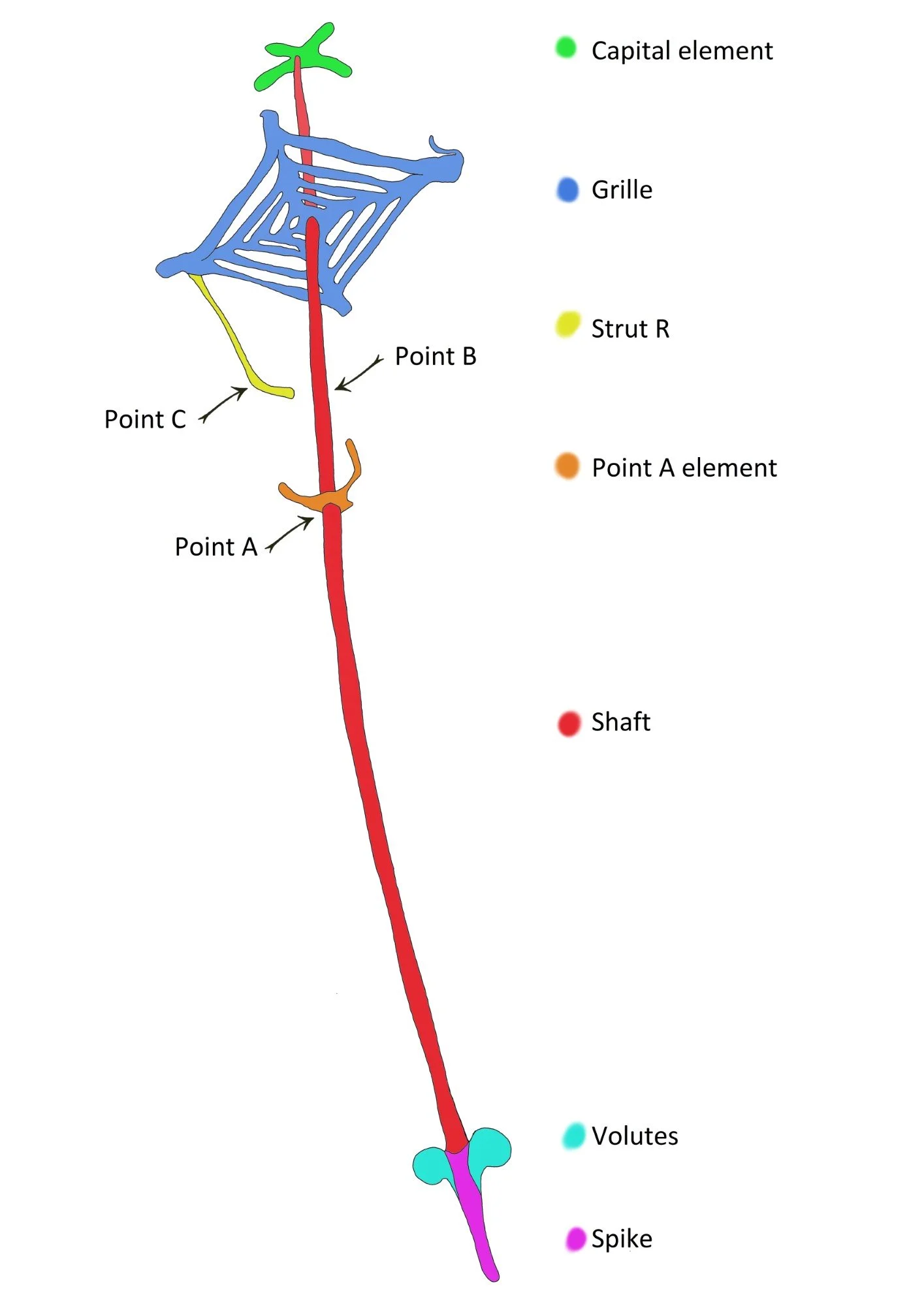
In the subfield of experimental archaeology, researchers use historic and pre-historic methods and materials to recreate different artifacts and items in the archaeological record. By doing this we learn how peoples of the past made the things we find during excavation, which adds to the context of the life people lived at that particular time period. This week we discuss 3 examples of experimental archaeology in the news including the boomerang as a multi-use tool, how large pots were created in Crete, and the reinterpretation of an artifact found at Sutton Hoo.
Links
Wood sharpens stone: Boomerangs used to retouch lithic tools
TAS 111 - Sutton Hoo episode: https://archpodnet.squarespace.com/archaeology/111
A Proposed New Appearance of the Iron Stand from Sutton Hoo, Based on Existing Material
Contact
Chris Webster
Rachel Roden
ArchPodNet
APN Website: https://www.archpodnet.com
APN on Facebook: https://www.facebook.com/archpodnet
APN on Twitter: https://www.twitter.com/archpodnet
APN on Instagram: https://www.instagram.com/archpodnet
Affiliates
Virtual Reality Experiences with Rock Art and Cultural Heritage with Blue Planet and Eric Hanson - Rock Art 89

Eric Hanson of Blue Planet is a specialist in employing virtual reality applications to the study and conservation of cultural heritage resources. He has pioneered the development of sophisticated methods to capture rock art and other indigenous imagery so that the general public and interested researchers can immerse themselves in a three-dimensional virtual gallery within the natural and cultural landscape. The technology has come a long way and the experience is now other worldly. Hanson's cutting-edge efforts allow for a 360 degree and parallax sensitive encounter.
Transcripts
Links
Contact
Dr. Alan Garfinkel
ArchPodNet
APN Website: https://www.archpodnet.com
APN on Facebook: https://www.facebook.com/archpodnet
APN on Twitter: https://www.twitter.com/archpodnet
APN on Instagram: https://www.instagram.com/archpodnet
Affiliates
What's Benin Going On? - Dirt 206
We meant to tackle this question before, but we can’t wait any longer! The Benin Bronzes have received media attention lately in a series of newsworthy announcements to repatriate them from various museums in North America and Europe to Nigeria. What are these alliterative artifacts, and how did thousands of them disappear from the Kingdom of Benin only to appear by the hundreds in museums overseas?
Links
The Brutish Museums: The Benin Bronzes, Colonial Violence, and Cultural Restitution (via Bookshop)
The Brutish Museums: The Benin Bronzes, Colonial Violence, and Cultural Restitution (via Worldcat)
Story of cities #5: Benin City, the mighty medieval capital now lost without trace (The Guardian)
This Art Was Looted 123 Years Ago. Will It Ever Be Returned? (New York Times)
Horniman to return ownership of Benin bronzes to Nigeria (Horniman Museum and Gardens)
Benin Bronze ”permanently removed” from Jesus hall (The Cambridge Student)
Major new archaeology project on site of new museum in Benin (British Museum Blog)
Recovering the Brilliance of a Benin Bronze (Metropolitan Museum of Art)
Contact
Email the Dirt Podcast: thedirtpodcast@gmail.com
ArchPodNet
APN Website: https://www.archpodnet.com
APN on Facebook: https://www.facebook.com/archpodnet
APN on Twitter: https://www.twitter.com/archpodnet
APN on Instagram: https://www.instagram.com/archpodnet
Affiliates
Where in the World? Part Six: The Zooarchaeology of Antarctica - Animals 50
Welcome to the final episode of our miniseries focusing on the zooarchaeology of various world regions. This episode is centred around Antarctica, focusing on the natural history and anatomy of the most prominent wild and domesticated species found throughout the continent. Tune in to learn about exploration expeditions gone wrong and interestingly named Guernsey cattle.
Transcripts
Links
Headland, R. (2012). History of exotic terrestrial mammals in Antarctic regions. Polar Record, 48(2), 123-144.
Kelly, N. et al. (2012). Strategies to obtain a new circumpolar abundance estimate for Antarctic Blue Whales: survey design and sampling protocols. IWC SC/64/SH10.
Senatore, M. X. (2020). Things in Antarctica. An archaeological perspective. The Polar Journal, 10(2), 397-419.
Skinner, L. A. (2014). Archaeological excavation and artefact conservation at the Heroic-Era expedition bases, Ross Island, Antarctica. Journal of Glacial Archaeology ISSN (online), 2050, 3407.
https://polarjournal.ch/en/2021/06/24/antarctic-explorers-let-sled-dogs-starve/
https://www.courthousenews.com/scientists-sound-alarm-on-invasive-species-in-antarctica/
smithsonianmag.com/history/sacrifice-amid-the-ice-facing-facts-on-the-scott-expedition-96367423/
Contact
Alex FitzpatrickTwitter: @archaeologyfitz
Simona FalangaTwitter: @CrazyBoneLady
Alex’s Blog: Animal Archaeology
Music "Coconut - (dyalla remix)" https://www.youtube.com/watch?v=_2UiKoouqaY
Affiliates
Humans are the GOAT - Ruins 124
In this episode, Connor and David take the reins while Carlton settles into his new position at in Bloomington.
After establishing Connor hasn’t seen Amazon’s “The Rings of Power” yet, they decide to delve into the topic of “how to not be offended by bad science.”
The two spend the 3 segments discussing how the media inaccurately advertises scientific research, and how that affects scientists
Transcripts
Contact
Instagram: @alifeinruinspodcast
Facebook: @alifeinruinspodcast
Twitter: @alifeinruinspod
Website: www.alifeinruins.com
Ruins on APN: https://www.archaeologypodcastnetwork.com/ruins
ArchPodNet
APN Website: https://www.archpodnet.com
APN on Facebook: https://www.facebook.com/archpodnet
APN on Twitter: https://www.twitter.com/archpodnet
APN on Instagram: https://www.instagram.com/archpodnet
Affiliates
A Cultural History of Glacier National Park - TAS 187
We recently spent some time in Glacier National Park, and while we were there we took a tour of the park lead by Jack Gladstone, a member of the Blackfeet Nation in Montana. We were blown away by not only his cultural knowledge of the area, but also his amazing singing and songwriting! We just had to share (with Jack's permission of course!) some of the tour, plus some information on the prehistoric peoples of the area, the historic development of Glacier into a national park, and some of the recent archaeology they have found in the park.
Links
Contact
Chris Webster
Rachel Roden
ArchPodNet
APN Website: https://www.archpodnet.com
APN on Facebook: https://www.facebook.com/archpodnet
APN on Twitter: https://www.twitter.com/archpodnet
APN on Instagram: https://www.instagram.com/archpodnet
Affiliates
Working in the Middle East with Paul - ArchaeoTech 187
On this episode Paul tells us all about doing CRM in Saudi Arabia for the last few months. We talk about the field methodologies they used, how they stored and processed data, and just what working over there is generally like. Thanks so much to Ed Gonzales-Tennant for subbing in and welcome back Paul!
Transcripts
Links
Contact
Chris Webster
Twitter: @archeowebby
Paul Zimmerman
Twitter: @lugal
Email: paul@lugal.com
ArchPodNet
APN Website: https://www.archpodnet.com
APN on Facebook: https://www.facebook.com/archpodnet
APN on Twitter: https://www.twitter.com/archpodnet
APN on Instagram: https://www.instagram.com/archpodnet
Affiliates
Animals With Jobs (How Domestication Works) - Dirt 205
Anna saddles up to lead Amber on a faunal adventure! We’ll discuss the changes that happen when humans start influencing animal breeding. We’ll also cover the origin stories of a few of the most prevalent domesticated species. But don't worry, we cover some examples of "non-typical" domestication too, plus a case of animal coworkers. We’ll even tackle the question… have we humans domesticated OURSELVES??
Links
Dog domestication and the dual dispersal of people and dogs into the Americas (PNAS)
DNA traces cattle back to a small herd domesticated around 10,500 years ago (UCL)
Understanding the origins of European domestic pigs (Natural History Museum)
The Domestication of Pigs: Sus Scrofa's Two Distinct Histories (ThoughtCo)
Ancient Egyptians may have given cats the personality to conquer the world (Science)
Early Holocene chicken domestication in northern China (PNAS)
Buried with Snails (Smithsonian Tropical Research Institute)
Insects: The Disregarded Domestication Histories (Animal Domestication)
On Horseback Among the Eagle Hunters and Herders of the Mongolian Altai (New York Times)
Contact
Email the Dirt Podcast: thedirtpodcast@gmail.com
ArchPodNet
APN Website: https://www.archpodnet.com
APN on Facebook: https://www.facebook.com/archpodnet
APN on Twitter: https://www.twitter.com/archpodnet
APN on Instagram: https://www.instagram.com/archpodnet
Affiliates
The Best Vehicle for CRM: Cars, Trucks, or SUVs? - CRMArch 248
What kind of vehicle is the best for archaeology? Resident gearhead Andrew Kinkella leads the other hosts down the rabbit hole of gas mileage, durability, expense, features, and ultimately to the ultimate question in the realm of archaeology vehicles: Do you need 4x4 or not?
Transcripts
Links
Follow Our Panelists On Twitter
Bill @succinctbill; Doug @openaccessarch; Stephen @processarch; Andrew @AndrewKinkella, Chris W @Archeowebby, @DIGTECHLLC, and @ArchPodNet
Blogs and Resources:
Bill White: Succinct Research
Doug Rocks-MacQueen: Doug’s Archaeology
Stephen Wagner: Process - Opinions on Doing Archaeology
Chris Webster: Random Acts of Science
Andrew Kinkella
ArchPodNet
APN Website: https://www.archpodnet.com
APN on Facebook: https://www.facebook.com/archpodnet
APN on Twitter: https://www.twitter.com/archpodnet
APN on Instagram: https://www.instagram.com/archpodnet
Affiliates
Dr. Andrew Kinkella: FRAUD! - Pseudo 100
As a celebration of the 100th episode of the Pseudoarchaeology Podcast, I turn my pointed critique inward upon myself to reveal the ways in which I myself am a fraud! Please, don't listen! I am so ashamed.
Transcripts
Contact
ArchPodNet
APN Website: https://www.archpodnet.com
APN on Facebook: https://www.facebook.com/archpodnet
APN on Twitter: https://www.twitter.com/archpodnet
APN on Instagram: https://www.instagram.com/archpodnet
Affiliates
ENCORE Settlers of Cerutti: Evaluating Claims About the Cerutti Mastodon Site - Ep 123
ENCORE: To kick off the new year, the boys invite Dr. Shane Miller (Mississippi State University; Ep. #21) and his friend Dr. Jesse Tune (Fort Lewis College) to investigate the controversy surrounding the Cerutti Mastodon Site.
The conversation is a holistic discussion from different perspectives about evidence, ethics, Indigenous Sovereignty, and good science.
Guest Contacts
Dr. Shane Miller, Twitter: @TheDurtyTowel
Contact
Instagram: @alifeinruinspodcast
Facebook: @alifeinruinspodcast
Twitter: @alifeinruinspod
Website: www.alifeinruins.com
Ruins on APN: https://www.archaeologypodcastnetwork.com/ruins
ArchPodNet
APN Website: https://www.archpodnet.com
APN on Facebook: https://www.facebook.com/archpodnet
APN on Twitter: https://www.twitter.com/archpodnet
APN on Instagram: https://www.instagram.com/archpodnet
Affiliates
Archaeology After Dark - TAS 186
In the past, nighttime urban activities have been overlooked by archaeologists, In this episode we interview Nan Gonlin and Meghan Strong about their latest edited volume that focus on the ancient nocturnal landscape and lightscape.
Links
Contact
Chris Webster
Rachel Roden
ArchPodNet
APN Website: https://www.archpodnet.com
APN on Facebook: https://www.facebook.com/archpodnet
APN on Twitter: https://www.twitter.com/archpodnet
APN on Instagram: https://www.instagram.com/archpodnet
Affiliates
Petroglyph Education Foundation with Matt Zubia - Rock Art 88
Matt Zubia joins Dr. Alan Garfinkle to talk about his involvement with the upcoming Ridgecrest Petroglyph Festival. They discuss some of the Native American groups that are being invited to the festival and what it means for the area and culture represented at the festival.
Transcripts
Links
Contact
Dr. Alan Garfinkel
ArchPodNet
APN Website: https://www.archpodnet.com
APN on Facebook: https://www.facebook.com/archpodnet
APN on Twitter: https://www.twitter.com/archpodnet
APN on Instagram: https://www.instagram.com/archpodnet
Affiliates
Hopping Over to Himyar - Dirt 204
For the first half of the first millennium CE, Himyar was based in what is today Yemen and flourished thanks to its role in inter-regional trade. We’ll discuss the political landscape of ancient southern Arabia, the conversion of the Himyarite dynasty from polytheism to Judaism, and recently published research on environmental factors that contributed to the Himyarite state’s decline and eventual conquest.
Links
Zafar, Capital of Himyar, Seventh Preliminary Report, February–March 2007-2008
A Late Antique Christian king from Ẓafār, southern Arabia (Antiquity)
Contact
Email the Dirt Podcast: thedirtpodcast@gmail.com
ArchPodNet
APN Website: https://www.archpodnet.com
APN on Facebook: https://www.facebook.com/archpodnet
APN on Twitter: https://www.twitter.com/archpodnet
APN on Instagram: https://www.instagram.com/archpodnet
Affiliates
Not just naked blue barbarians - Tea Break 4

This month Matilda focuses on the prehistory of Scotland, and specifically that enigmatic carved stone symbol known as the Pictish Beastie. Is it a dolphin? Is it an elephant? Is it a unicorn? To help uncover the mystery of this symbol and provide some background context about Pictish society is guest Hamish Findley Lamley, owner of Pictavia Leather. Join the journey to hear all about the different cultures in Scottish prehistory, the significance of standing stones, and why you would make a zebra-skin sporran.
Links
Guest Contact
Hamish Findley Lamley
email: Hamish@pictavialeather.co.uk
insta: @pictavia.leather
fb: /PictaviaLeather
Contact the Host
Email: matilda@thearchaeologiststeacup.com
insta: @the_archaeologists_teacup
twitter: @ArchaeoTeacup
ArchPodNet
APN Website: https://www.archpodnet.com
APN on Facebook: https://www.facebook.com/archpodnet
APN on Twitter: https://www.twitter.com/archpodnet
APN on Instagram: https://www.instagram.com/archpodnet
Affiliates
Eatin' Good In Your Motel Room - CRMArch 247
Cooking your own meals in your motel room while out in the field is an excellent way to save money. In this episode, we will discuss the ways folks have cooked in their motel room, find healthy choices while traveling, and avoid making bad culinary decisions that will hold you back while doing fieldwork.
Transcripts
Links
Planetary Designs Double Shot French Press Coffee Mug, Mocha
Bodum Travel Press, Stainless Steel Travel Coffee and Tea Press, 15 Ounce, .45 Liter, Black
Eating Well as an Archaeological Field Technician - Bill White
Follow Our Panelists On Twitter
Bill @succinctbill; Doug @openaccessarch; Stephen @processarch; Andrew @AndrewKinkella, Chris W @Archeowebby, @DIGTECHLLC, and @ArchPodNet
Blogs and Resources:
Bill White: Succinct Research
Doug Rocks-MacQueen: Doug’s Archaeology
Stephen Wagner: Process - Opinions on Doing Archaeology
Chris Webster: Random Acts of Science
Andrew Kinkella
ArchPodNet
APN Website: https://www.archpodnet.com
APN on Facebook: https://www.facebook.com/archpodnet
APN on Twitter: https://www.twitter.com/archpodnet
APN on Instagram: https://www.instagram.com/archpodnet
Affiliates
aDNA and Stone Tools with Beth Potter - Ruins 122
On this episode, we are back with new content! We talk with Beth Potter, who is a PhD Candidate at the Department of Anthropology at the University of Kansas. We talk about Beth first's archaeological conference at age 13 and her experience there. Beth then describes her experience going to a small state-school called Harvard University. We delve into her experience in French Canada and what brought her there. She then deep dives into her scientific research and how one gets aDNA from stone tools.
Transcripts
Literature Recommendations
Lithic Analysis by George Odell
Ancient DNA analysis by Orlando et. al in Nature Reviews Methods Primers
The Fifth Beginning: What Six Million Years of Human History Can Tell Us By Robert L. Kelly
Guest Contact
Instagram: @blpotter13
Twitter: @bpotz13
Contact
Instagram: @alifeinruinspodcast
Facebook: @alifeinruinspodcast
Twitter: @alifeinruinspod
Website: www.alifeinruins.com
Ruins on APN: https://www.archaeologypodcastnetwork.com/ruins
ArchPodNet
APN Website: https://www.archpodnet.com
APN on Facebook: https://www.facebook.com/archpodnet
APN on Twitter: https://www.twitter.com/archpodnet
APN on Instagram: https://www.instagram.com/archpodnet